On a regular day in May, the calls of migratory waders and other shorebirds foraging in sprawling mudflats fill the air in the southern reaches of Chennai. May is the dry season for the Pallikaranai Marsh, when water levels naturally recede, exposing the critical feeding and breeding grounds that attract hundreds of bird species to this globally recognised urban wetland.
But this year is different. The mudflats are gone. In their place is a stagnant expanse of water. This unusual water level during the dry season is not due to early rains. Indiscriminate construction within the marsh is blocking the natural flow of water.
A detailed ground-truthing assessment conducted by the environmental group Suzhal Arivom and vetted by ecological experts has revealed severe blockages in the marsh’s two most vital arterial channels: Okkiyam Maduvu and the Perumbakkam outlet. This causes two big problems:
- Sewage pollution and biodiversity loss, including disappearing birds
- The risk posed by Metro viaduct pillars being installed within the active waterway.
Ongoing construction has reduced the 90-metre-wide waterway to a mere 10-metre bottleneck. If authorities fail to take corrective action, South Chennai may face heavy flooding during the upcoming Northeast monsoon.
A protected marshland under threat
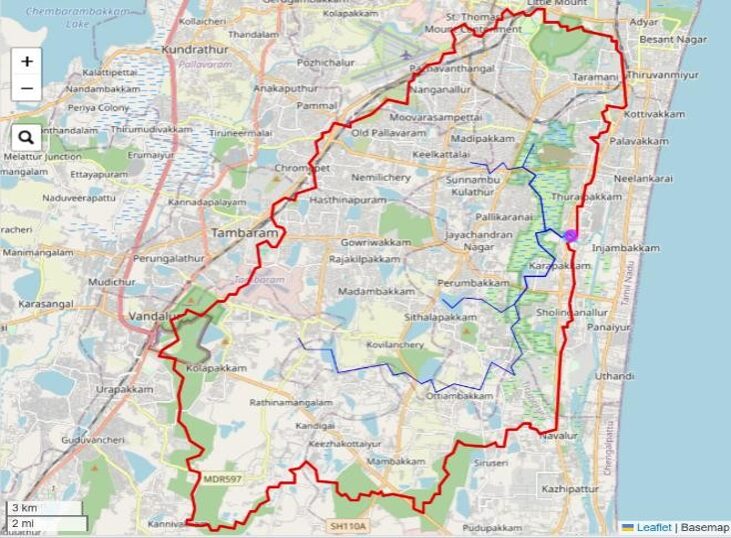
Designated as a Wetland of International Importance under the Ramsar Convention in 2022, the Pallikaranai Marsh spans a massive 230 square kilometre catchment area that runs from Guindy to Siruseri. Notified as a Reserved Forest under the Tamil Nadu Forest Act, 1882, this largely freshwater wetland acts as South Chennai’s natural sponge. It recharges local aquifers, buffers surrounding residential neighbourhoods against heavy downpours during monsoons, and nurtures over 625 species of flora and fauna, including 200 bird species.
The marsh’s ecology is shaped by its seasonal water levels, flow, and tidal exchange with the Bay of Bengal through the Okkiyam Maduvu channel, which gives it its vital saline quality. Today, that system is collapsing.
Two critical waterways blocked
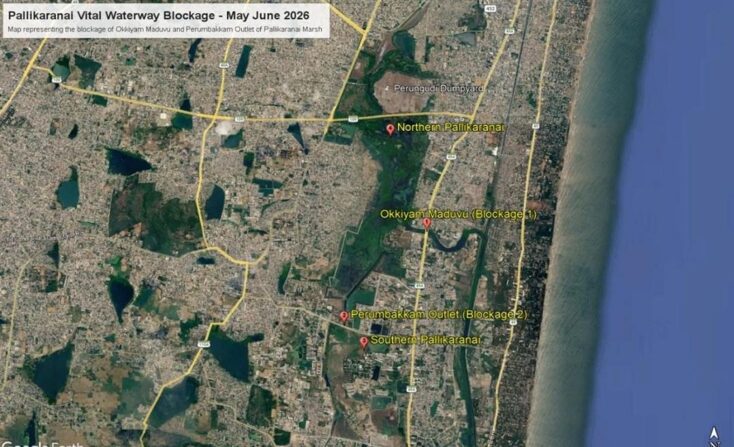
The field investigation done in May and June 2026 documented the barriers at these outlets and their implications.
1. The obstruction at Okkiyam Maduvu (OMR)
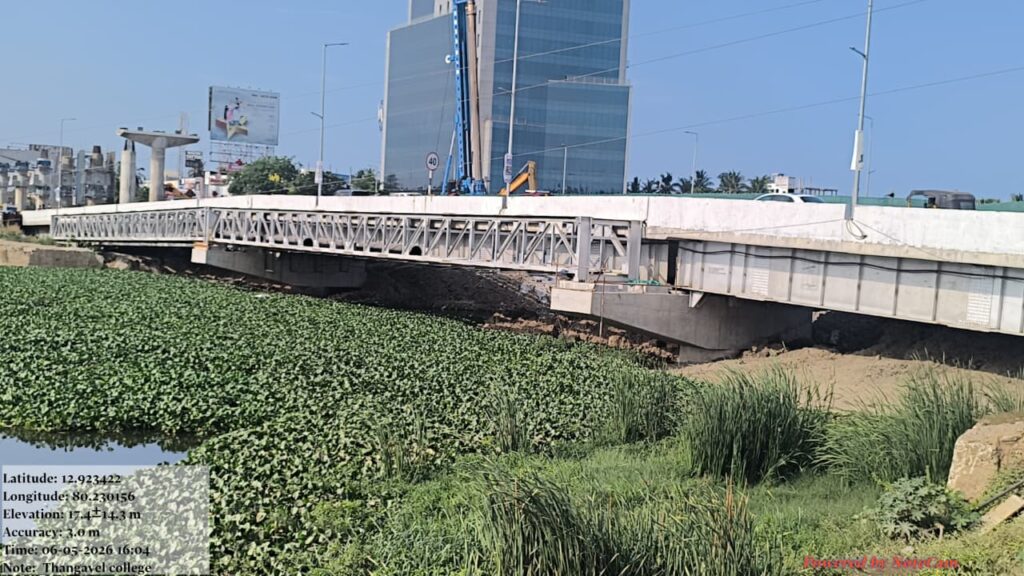
During field observations taken up between May 6th and mid-June, researchers observed heavy construction activity under the Old Mahabalipuram Road (OMR) bridge near Thangavel College. Permanent pier columns for Phase 2, Corridor-3 of the Chennai Metro Rail are being built here, and this work has severely narrowed the marsh’s main outlet. Because the water flow is blocked, stagnant water has allowed water hyacinth (Eichhornia crassipes) to spread rapidly. Satellite images from Google Earth and Airbus confirm the damage.
Read more: Pallikaranai’s 1-km buffer zone sparks debate on housing rights, encroachment and ecology
This narrowing of the channel has stopped the tidal flushing necessary to maintain brackish biodiversity. Moreover, the temporary barriers, earthworks, and bunds currently blocking the channel would require two to three days of heavy mechanised excavation to clear. A sudden heavy downpour or cloudburst substantially increases flood risk across surrounding residential areas, including Velachery, Pallikaranai, Medavakkam, Perumbakkam, Sholinganallur, and Karapakkam localities that experienced severe inundation during the 2015 Chennai floods.
The core problem
During Cyclone Michaung, obstructions and plant debris at the over 90-metre bridge at Okkiyam Maduvu blocked floodwaters and caused massive flooding across South Chennai. In response, the government decided to widen the vents of the bridge. The widened waterway measures 140.11 metres at the inlet face, where floodwater first enters the crossing, and 200.02 metres at the outlet face, which the CMRL insists is 205 metres.
Even though the bridge was widened, the water quickly encounters a downstream bottleneck near Kannagi Nagar, where the Okkiyam Maduvu narrows to just 92 metres. This again increases flood risk. At Okkiyam Maduvu, multiple bridges and Metro pillars already form three transverse rows across the waterway. Future elevated road columns will add further permanent obstructions. During floods, this will slow down the water flow, which may back up and overflow into roads and residential areas.
2. The blocked Perumbakkam outlet
Another major obstruction is at the Perumbakkam outlet. This is the principal drainage pathway for the southern part of the Pallikaranai marsh complex. It drains a 140 square kilometre catchment area through the Okkiyam Maduvu.
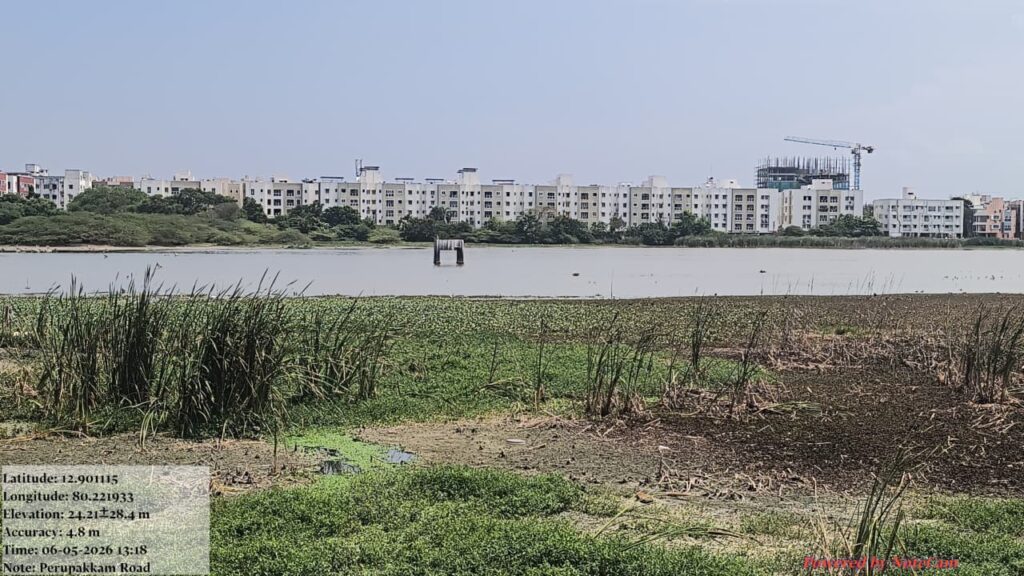
Field checks throughout May revealed that this vital pathway has been choked by construction debris, demolition rubble, and unauthorised structural filling. With its sole drainage channel blocked, water has built up in the Sholinganallur and Perumbakkam marshlands, causing serious ecological problems.
The ecological consequences of a marsh in distress
The consequences of these blockages are already visible across the wetland’s northern and southern sectors.
The disappearance of the flamingos
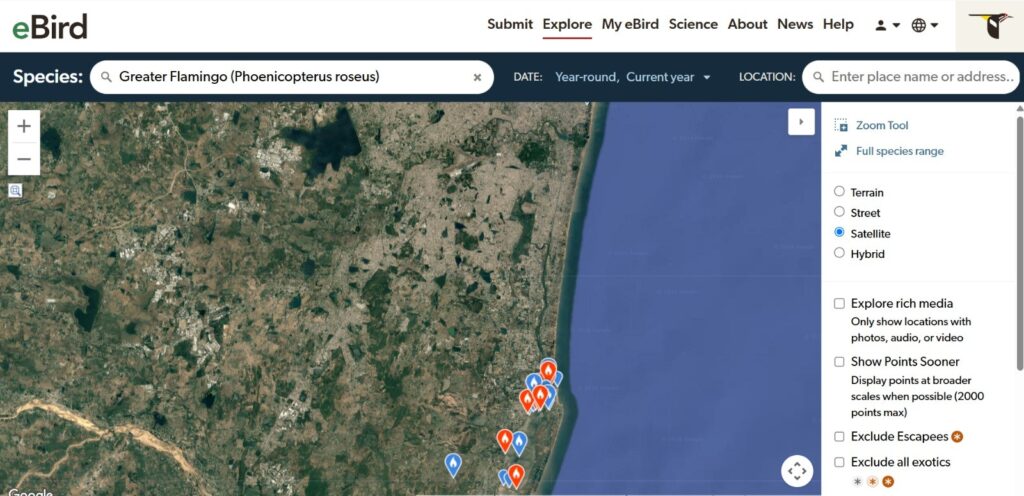
At Okkiyam Maduvu, tidal inflow from the sea has been blocked. This has destroyed the shallow brackish environment needed by organisms like brine shrimp and cyanobacteria that support bird life. Pallikaranai is famous for being one of the rare urban wetlands hosting both Greater and Lesser Flamingos. Yet, in 2026, field surveys and citizen science records on the eBird platform confirm a devastating milestone: zero flamingos have been recorded in Pallikaranai this year.
Invasive species create “dead” zones
Instead of the natural drying cycle, the marsh is now waterlogged with trapped, untreated sewage and leachate seeping from the adjacent, unlined Perungudi dumpyard. This stagnant, nutrient-heavy water has triggered an outbreak of mat-like, invasive water hyacinth.
These dense weed mats create hypoxic “dead zones” by cutting off sunlight and stripping the water of dissolved oxygen. Predatory African catfish (Clarias gariepinus), an invasive species, thrive in these conditions, affecting native fish populations and amphibians. In turn, this wipes out the primary food base for nesting waterbirds.
The destruction of breeding grounds
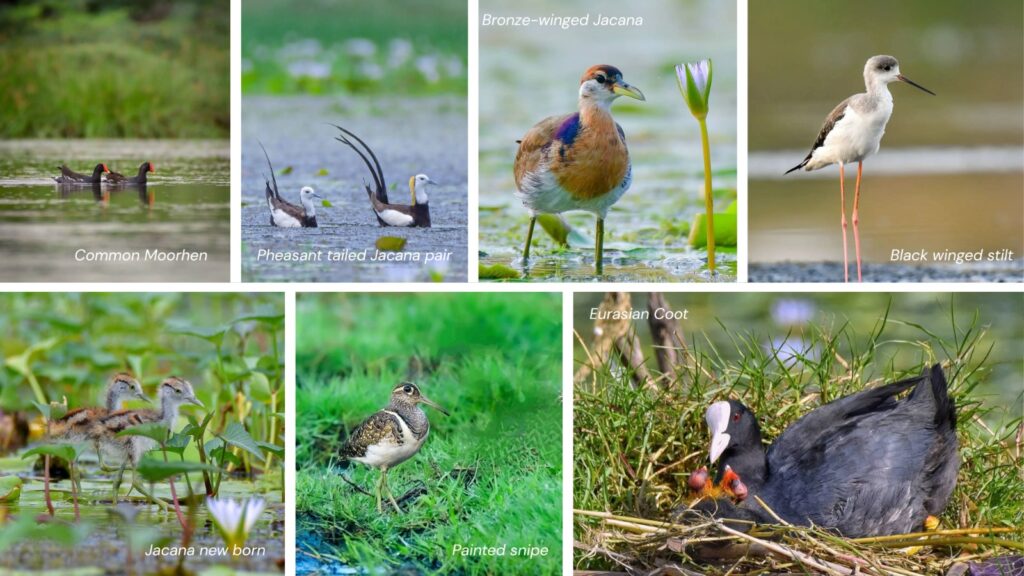
May and June mark the peak reproductive season for resident, ground-nesting waterbirds, including Black-winged Stilts, Red-wattled Lapwings, Little Ringed Plovers, Pheasant-tailed Jacanas and many other bird species. By keeping the marsh artificially waterlogged during what should be the dry season, the construction projects have drowned the low islands, sandbars, and mudflats these birds require to lay eggs, dealing a severe blow to regional bird populations.
Legal violations and the path forward
Apart from the ecological challenges, there are legal implications too. These structural alterations within the Pallikaranai Marsh represent a direct breach of the Wetlands (Conservation and Management) Rules, 2017, under the Environment (Protection) Act, 1986. The rules prohibit any non-wetland conversion or permanent construction within designated Ramsar zones. Continued neglect risks landing Pallikaranai on the Montreux Record—the international register for global wetlands facing imminent ecological collapse.
A review of CMRL’s internal Environmental Impact Assessment (EIA) for Corridor-3 reveals major gaps. The report incorrectly claims the alignment is “not within a protected eco-sensitive area” despite running directly through the core wetland. Moreover, there is no dedicated hydraulic impact study for the Okkiyam Maduvu crossing.
Instead, the CMRL could adopt more sustainable alternatives. Its own Phase 2 DPR recommends such a solution. Instead of building multiple concrete piers inside the waterway, authorities could deploy a clear-span, cable-stayed bridge system without putting a single pillar in the water. Thus preserving its full carrying capacity. Also, the project needs an independent hydraulic study to halt construction and do a redesign to ensure South Chennai’s flood safety.
Demands for immediate action
The closure of these waterways is nothing short of a disaster. Suzhal Arivom urges the Tamil Nadu State Wetland Authority (TNSWA) to immediately take ownership of the site and coordinate with the Greater Chennai Corporation (GCC), CMRL, the Water Resources Department and the Forest Department to enforce the following immediate actions:
- Clear the Okkiyam Maduvu bottleneck: Remove any newly-constructed temporary structures and other obstructions from the OMR bridge channel to restore its natural width.
- Restore the Perumbakkam outlet: Excavate and clear all construction debris, demolition rubble and other barriers to restore natural drainage from Sholinganallur and Perumbakkam Marsh.
- Remove invasive plant species: Clear the dense water hyacinth choking both waterways to allow water flow and prevent oxygen depletion.
- Commission an independent Hydraulic Review: Halt any new, permanent pier installations or other construction in the Okkiyam Maduvu, until an independent hydraulic safety review and sustainable engineering evaluation are conducted.
- Put information boards: Inform the public about CMRL’s ongoing and proposed projects by displaying the details at the site.
With Chennai regularly being battered by cyclones and floods, saving the Pallikaranai Marsh is vital, considering its role as a buffer against climate change.
The full report can be read here.