The City and Industrial Development Corporation of Maharashtra (CIDCO)’s decision to appoint Australian aviation consultancy Avisure to study bird movement around the Navi Mumbai International Airport has raised fresh questions about the future of Navi Mumbai’s wetlands.
The agency has cited the ongoing study as grounds to defer legal protection for DPS Flamingo Lake, arguing that no irreversible decision should be taken until the assessment of bird-related aviation risks is complete.
But bird movement around the airport is not being studied for the first time.
Findings of BNHS
More than a decade ago, the Bombay Natural History Society (BNHS) was asked to study bird movement around the proposed airport site.
Importantly, the BNHS study was already part of the airport’s official environmental assessment process. Its findings were considered during planning for the Navi Mumbai International Airport and helped inform understanding of bird movement and aviation-related risks in the area.
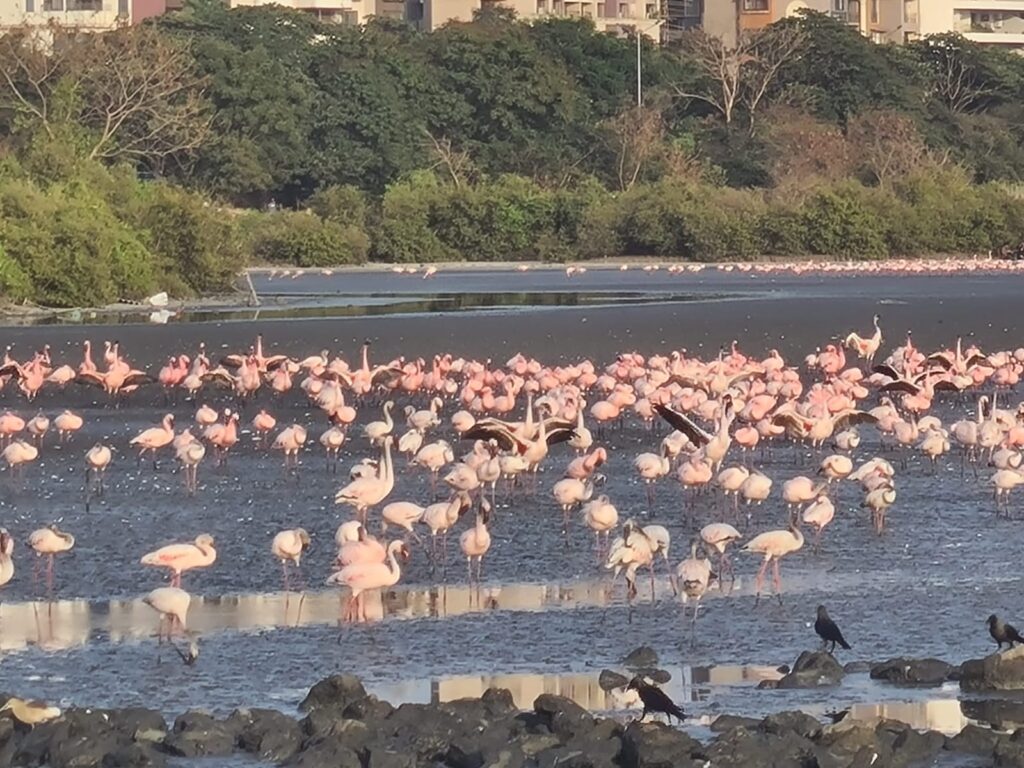
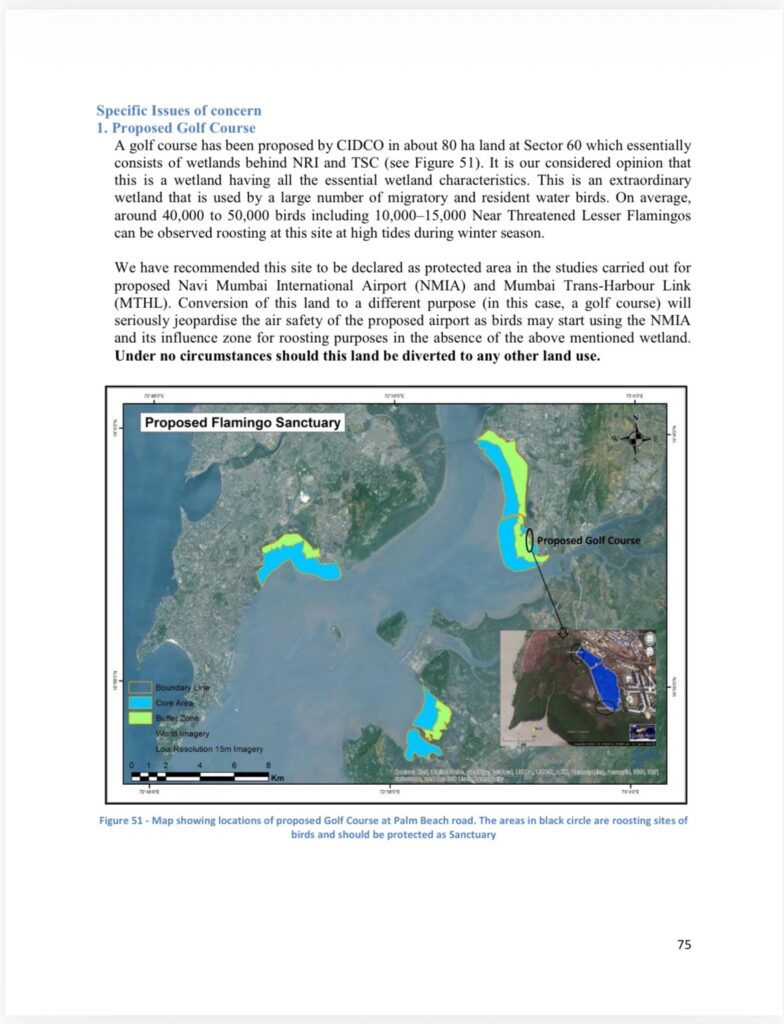
Over five years, researchers tracked birds across the airport area and nearby wetlands, including DPS Lake, the NRI wetland, the TS Chanakya wetland and Panje.
One of their key findings was that flamingos and other waterbirds do not stay in one place. As tides rise and fall, birds move between mudflats, mangroves and inland wetlands, using different habitats for feeding and resting. The study identified the wetlands around NRI and TS Chanakya as important high-tide roosting sites and recommended that they be protected.
Read more: Photo essay: Flamingo city in Navi Mumbai
Why does this matter for aviation safety?
The common assumption is that wetlands near airports increase the risk of bird strikes. But the BNHS study suggested the issue is more complicated.
Its warning was that if important wetlands are lost, birds will not simply disappear. They may shift to other locations, including areas closer to airport operations. In fact, the study noted that losing key roosting sites could increase the likelihood of birds congregating in and around open areas within the airport zone.
Protecting wetlands and managing aviation safety are not necessarily opposing goals. Understanding where birds go when habitats are altered is an important part of airport planning.
CIDCO’s latest move
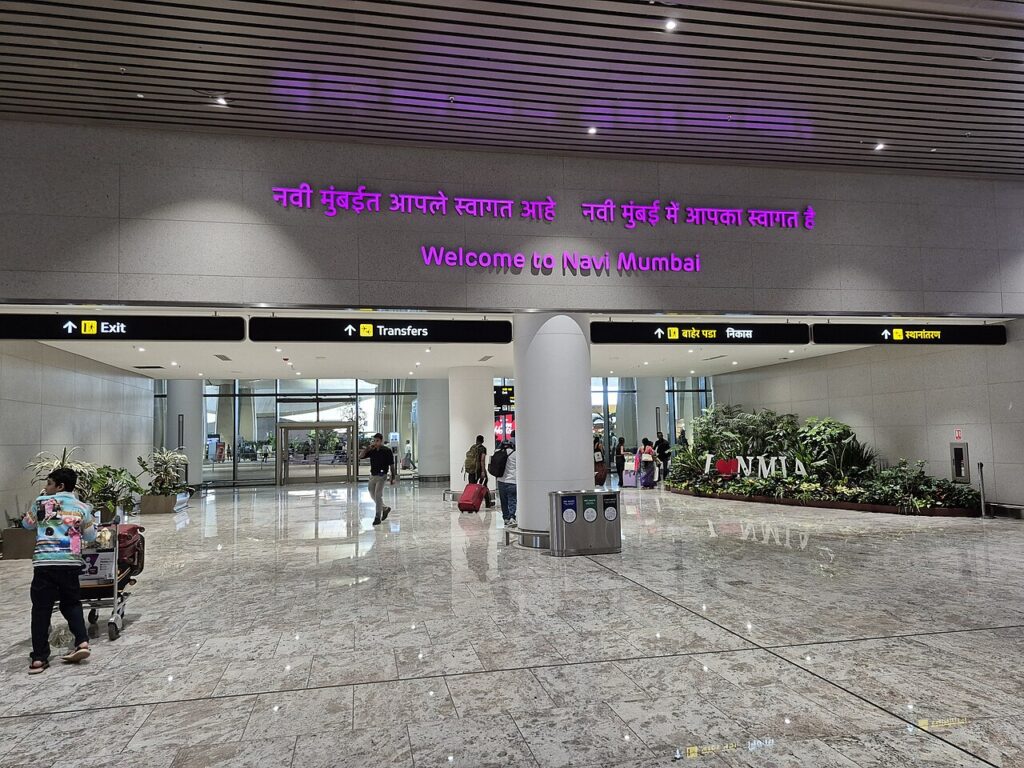
In May 2026, while responding to a proposal from the Mangrove Cell seeking conservation reserve status for DPS Flamingo Lake and restoration of its tidal channels, CIDCO said its consultant, Avisure, had advised that no irreversible conservation measures should be undertaken until a bird hazard assessment was completed. The agency subsequently relied on that advice to seek a deferment of the conservation reserve proposal.
The move has drawn attention because the National Green Tribunal (NGT) has already directed CIDCO to approach the Salim Ali Centre for Ornithology and Natural History (SACON) for further studies on flamingo habitats, development impacts and conservation planning around DPS Lake. The tribunal also allowed airport-related concerns to be included in that study.
Notably, none of the respondents mentioned that BNHS has already completed detailed studies that include specific recommendations for airport safety. This means there are now multiple studies examining similar questions.
Read more: In the destruction of wetlands, is CIDCO above the law?
What is at stake?
DPS Lake, NRI wetland and TS Chanakya wetland form part of a larger network of habitats used by flamingos and other migratory birds. Many of these wetlands are already under pressure from development, habitat degradation and changing land use.
The outcome of the Avisure study could therefore have consequences far beyond airport planning. It is also being used as a reason to delay conservation reserve status for DPS Flamingo Lake.
That is why the key question remains unanswered: if extensive studies had already been carried out by BNHS and accepted by all concerned, why are new studies by SACON and Avisure being commissioned? Any delays in protecting these wetlands raise the question of whether passenger lives are being put at risk to keep these wetlands available for real estate development.
If CIDCO had any apprehension about the BNHS recommendations, it should have been raised before the inauguration of the airport. The airport is now operational, and there have so far been no publicly reported major conflicts between flamingo movement and flight operations.
[Writing assistance provided by Aruna Natarajan]
Flamingoes fly very flat,directly from the Seawoods pond, to the creek’s banks to and fro.at very low heights. ample videos from Mr. Sunil Agarwal’s posts, depict these.In fact many of those Towers are much higher than this altitude.No way, any flight paths can be at those altitudes.. Without that pond, there will be zero flamingoes in the whole of Navi Mumbai..It must be conserved at all costs..
Why BNHS long term study & its recommendations are being ignored by all the parties concerned including by Honourable Forest Minister certainly raises the doubt of collusion between Cidco & Forest department .Why new studies are required when long term study of BNHS is available for taking decision?