Urban cleanliness is not just a matter of aesthetics—it’s a reflection of civic responsibility, public health, and environmental stewardship. Across India, citizen-led initiatives are redefining what it means to take ownership of public spaces.
In Mumbai, the Bandra ALM 33 community is striving to make their neighbourhood zero-waste through an initiative that educates citizens on effective waste management through small changes. They have monitored waste collection by actively engaging with waste pickers, and are motivating households to segregate and compost waste through awareness sessions.
Similarly, the Sustainability Improvement through Multiple Projects for a Lovelier Environment (SIMPLE) group in Thalambur, Chennai, which includes like-minded individuals from various RWAs in the locality, have successfully managed to divert more than 50 metric tonnes of garbage from going to the landfills.
SIMPLE aims to ensure cleanliness by educating residents and guiding them through the process of segregation of household waste. This includes collecting recyclables for responsible recycling and composting organic waste at home. Additionally, waste reduction is promoted by encouraging residents to adopt the 5Rs: Refuse, Reduce, Reuse, Repurpose, and Recycle.
The experiences of individuals leading these community-based initiatives offer valuable insights for groups currently involved in similar efforts or those seeking to learn more.
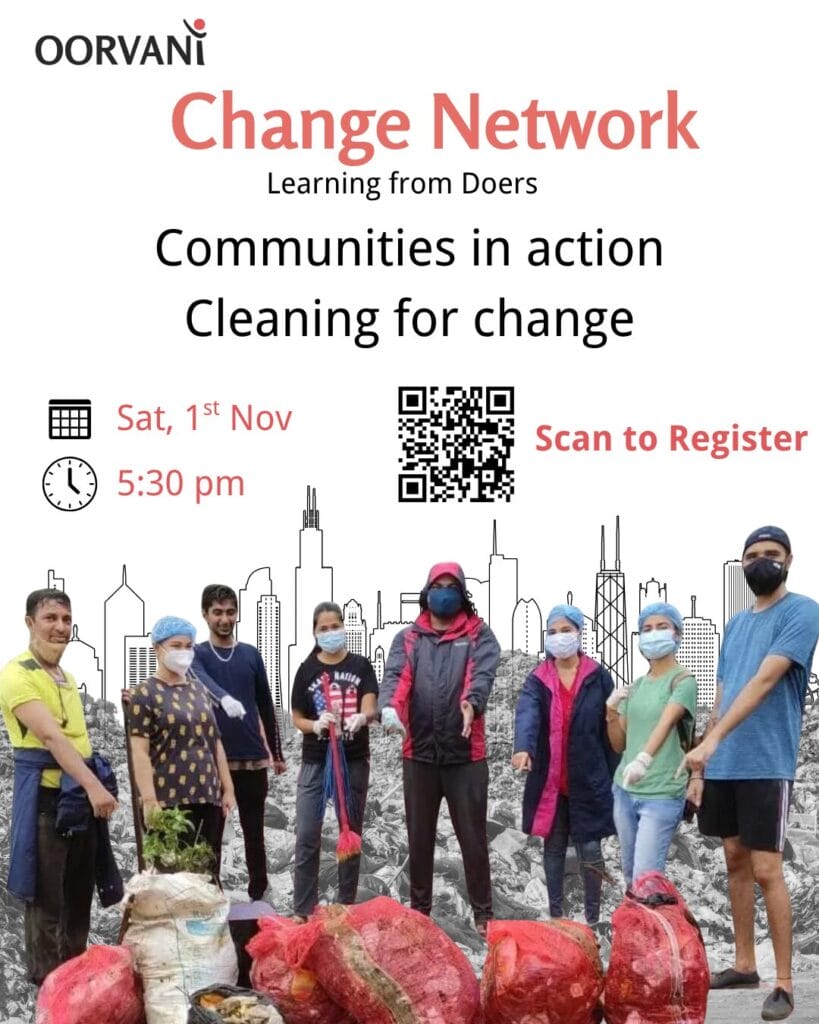
In the third session of the Oorvani Change Network, we bring together changemakers who have turned everyday acts of cleaning into powerful movements for community transformation.
What is Oorvani Change Network?
It is a monthly online meet-up for active citizens across cities — a space to share, learn, and act.
Each month, we feature two or three speakers or civic initiatives from two different cities — individuals or groups who have led impactful community-based efforts. They will share their journey, learnings, and practical solutions to local issues. The session invites citizens to engage directly, ask questions, and explore how similar approaches can be adapted to their own contexts.
Event title
- Title: Communities in action: Cleaning for change
- Day and Date : Saturday, November 1st
- Time: 5:30 pm
- Register: https://bit.ly/cleaningforchange
Speakers
- Mario Fishery, editorial board member of AGNI (Action for Good Governance and Networking in India) and trustee of the Mumbai Citizens Forum
- Ashish Patel, trustee, Children’s Movement for Civic Awareness (CMCA India)
- Gowtham B, founder of Walk for Plastic, is a mechanical engineer from Chennai