78.2% seropositivity rate in Chennai
The fourth round of serosurveys revealed that the city has an overall seroprevalence rate of 78.2%. Conducted by the Greater Chennai Corporation (GCC), the Indian Council of Medical Research’s National Institute of Epidemiology (NIE) and the National Institute for Research in Tuberculosis (NIRT), 7000 samples were collected from 204 streets in 51 wards spread across all zones.
The results showed that Tondiarpet had the highest seroprevalence of 83.3% and Madhavaram the lowest of 72.5% of the 15 zones in Chennai. Corporation Commissioner Gagandeep Singh Bedi stated that vaccination coverage would be increased in zones like Madhavaram, Alandur and Perungudi, where seroprevalence was low.
Source: The Hindu
Read more: Things to know about post COVID complications
On-street parking system to be expanded
The civic body is mulling over expanding the on-street parking system to more localities in the city in order to streamline parking. A vehicle user is required to pay the fixed charges to park their vehicle on the street. This system deters indiscriminate parking on the city roads.
The city has 5,000 Equivalent Car Spaces (ECS) (parking spaces) on 23 roads that include Pondy Bazaar and streets in Purasawalkam, Anna Nagar and Besant Nagar. In the upcoming plan, the corporation plans to increase the ECS to 12,000 by the end of August and further expand to 19,000 by mid-September. Some of the streets that are in consideration are RK Mutt Road, Evening Bazaar Road in Park Town, and a few streets in Doveton.
Source: The New Indian Express
Read more: Street parking to be charged soon in city: Raj Cherubal, CEO, CSCL
Smart City projects does not benefit vulnerable communities: Study
A study by Information and Resource Centre for Deprived Urban Communities (IRCDUC), an NGO working for the urban poor, shows that only 7 of the 37 smart city projects in Chennai created a direct impact on the vulnerable sections of the city. This translates to spending Rs 3.89 crore of Rs 184.21 crore expenditure towards benefiting vulnerable communities. The report also added that only Rs 0.77 crore is spent directly for low-income settlements.
Giving some instances, the report said the smart city implemented the art village project in Kannagi Nagar resettlement site but failed to address their problems surrounding livelihood and access to facilities such anganwadi centres and drinking water.
The study added that the Smart Bikes project was implemented in uptown localities that benefited only the affluent communities. There were three programmes targeting Persons with Disabilities (PwDs), of which three were located in T-Nagar thereby leading to negligence of PwDs across the city.
Reacting to it, the civic body stated that Area Based Development (ABD) was a common concept in Smart Cities. As part of this, a location is selected and a major share of projects are implemented in the same location.
Source: The Times of India | The New Indian Express
Madras HC questions corporation over providing vending certificates
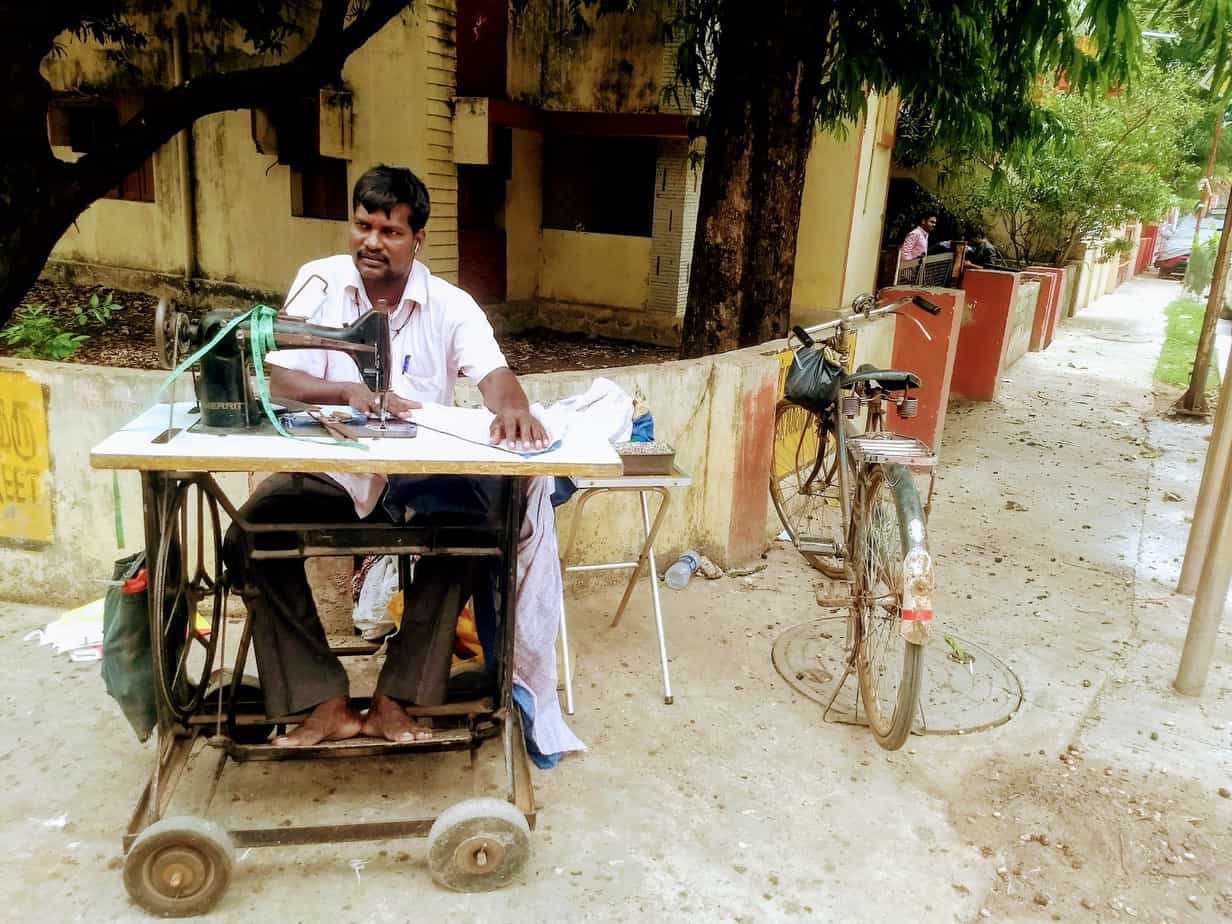
While hearing a PIL that called for the effective implementation of the Street Vendors (Protection of Livelihood and Regulation of Street Vending) Act of 2014, the Madras High Court directed the corporation to provide an explanation on when vending certificates would be provided to mobile and stationary vendors in the city. This rule is mandated in Section 4 of the Street Vendors Act.
The corporation’s counsel stated that the town vending committees had already been formed across the city after holding elections. However, the PIL argued that the vendors are facing obstacles as they have not been given the certificates that provides statutory protection to the vendors.
Source: The Hindu
[Compiled by Bhavani Prabhakar]