Kannada signboards issue deepens
Governor Thaawarchand Gehlot sent back to the cabinet an ordinance on the use of 60% Kannada in commercial signboards. He advised the government to pass it through the Assembly. Traders have demanded that the deadline for implementation should be extended beyond February 28th.
Meanwhile, Bruhat Bengaluru Mahanagara Palike (BBMP) Chief Commissioner Tushar Girinath said that the civic body has issued notices to 49,241 shops for not following the name board order. He said that only 16,813 shops have boards with 60% Kannada display. He asked zonal officials to take strict action if shops fail to implement the order by February 28th.
Girinath also said that property tax collection, the most important source of income for the corporation, needs to be implemented effectively.
Source: The Hindustan Times, The Hindu, The New Indian Express
Read more: Kannada signage rules in Bengaluru: A history
Frog species discovered
‘Sphaerotheca Varshaabhu’ is a new, unknown species of burrowing frog, a genus that welcomes rain, as it emerges out of its burrows during the early showers. The lead researcher in a team of national and international researchers, Deepak P, chanced upon the species during a routine biodiversity survey with advanced genetic analysis, morphological studies and bioacoustics.
Researchers said that its discovery is a significant milestone in biodiversity research, highlighting the resilience of wildlife in unexpected urban ecosystems. The findings have been published in a peer-reviewed scientific journal, Zootaxa.
Source: Deccan Herald, The Hindu
Peripheral Ring Road project tender issued
The Bangalore Development Authority (BDA) has floated a tender for bids to develop a 74-km Peripheral Ring Road (PRR) in a Public Private Partnership (PPP) model, at Rs. 27,000 crore. It will operate on a design, build, finance, operate and transfer (DBFOT) basis. The road will have eight lanes with a service road to the city. It will also include cloverleaf junctions, flyovers and underpasses, railway over bridges, railway under bridges, vehicular underpasses or overpasses, toll plazas, transport zones, culverts, minor and major bridges and utility ducts along and across the road.
It is a “green corridor” project that will undertake the road’s operation and maintenance for a lease period of 50 years, on a revenue sharing basis through the PPP mode. It aims to decongest traffic by allowing transiting vehicles to connect with suburbs, linking Tumkur Road and Hosur Road through roads traversing Hesaraghatta, Doddaballapur, Ballari, Hennur-Bagalur, Old Madras, Hoskote-Anekal and Sarjapur.
The eight-lane access controlled expressway will form a semi-circle and slice through the three taluks of Bengaluru North, Bengaluru East and Anekal.
Source: Deccan Herald, The New Indian Express
Read more: Missing last mile connectivity: Sarjapura Road residents want better bus routes
Basava Award for Teltumbde
Civil rights activist and academic Anand Teltumbde, an accused in the Bhima Koregaon case, was felicitated with the Basava Rashtriya Puraskara by Chief Minister Siddaramaiah for his contributions to social justice and equality through speeches and writings.
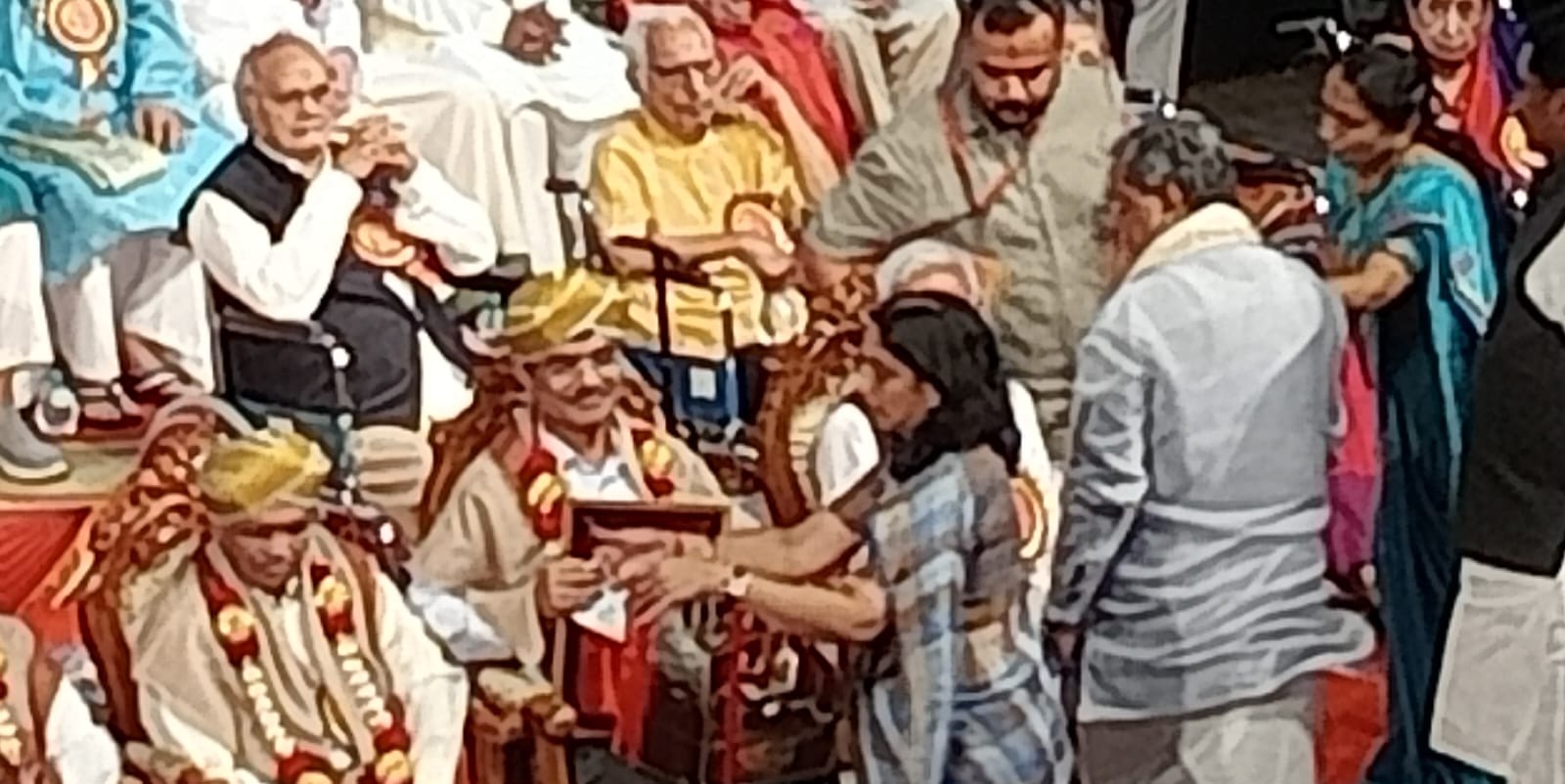
He was among 75 eminent personalities honoured with lifetime achievement awards by the Kannada and culture department for 2020-21, 2021-22, 2022-23 and 2023-24. The Basava Rashtriya Puraskara honours those involved in social reforms and communal harmony.
Teltumbde said he was grateful to Karnataka and quipped that “Maharashtra has indeed bestowed the greatest honour by sending me to jail.”
Source: Indian Express, The Hindu
Sahaya 2’s double escalation feature
The BBMP’s has introduced a new feature in its mobile app Sahaaya 2.0, which will permit citizens to escalate unresolved complaints twice. Many citizens had complained that the BBMP closed tickets without addressing underlying issues. BBMP Special Commissioner Munish Moudgil explained that it would be implemented in a day or two. He said that they had trained their call centre staff to reopen closed tickets by gathering feedback from complainants. On average, it got almost 300 complaints everyday.
He noted that while the BBMP’s solid waste management, electrical, and forest departments were prompt, issues related to the engineering department, especially on pothole filling, were ignored.
Source: Deccan Herald
[Compiled by Revathi Siva Kumar]