In 1996, on a train to Bhilwara, Prakash Mandoth had to sit next to the toilets throughout his journey. That’s when he realised how broken India’s railway system is and vowed to fix it. Since then, he has made Bengaluru’s long-delayed dream of a suburban railway, proposed in 1983, as his personal mission. For over 26 years, he has petitioned, emailed decision-makers, met with officials, and voiced his thoughts at public hearings to turn this vision into a reality.
However, much to the frustration of Prakash and citizen activists like him, the Bangalore Suburban Rail Project (BSRP) has seen inordinate delays because of governance gaps and political apathy. It has been four years since the foundation was laid but the project is nowhere near completion. In fact, two of the four proposed corridors are yet to see any construction activity.
“People are really upset. I am also upset because I have taken up this issue regularly, as the Bengaluru Metro and the BSRP will give a big relief to commuters when it finally comes,” says Prakash, who is President of the Bengaluru Metro and Suburban Rail Passenger Association.
Other Bengaluru residents express similar sentiments:
“Suburban rails could have provided relief from the traffic.”
“The government lacks intent in the project.”
“The delay reflects a major governance gap.”
“Existing regional rail infrastructure could be used better.”
While the authorities drag their feet, regular commuters suffer. What will it take for the government to get the BSRP up and running?
Recent updates
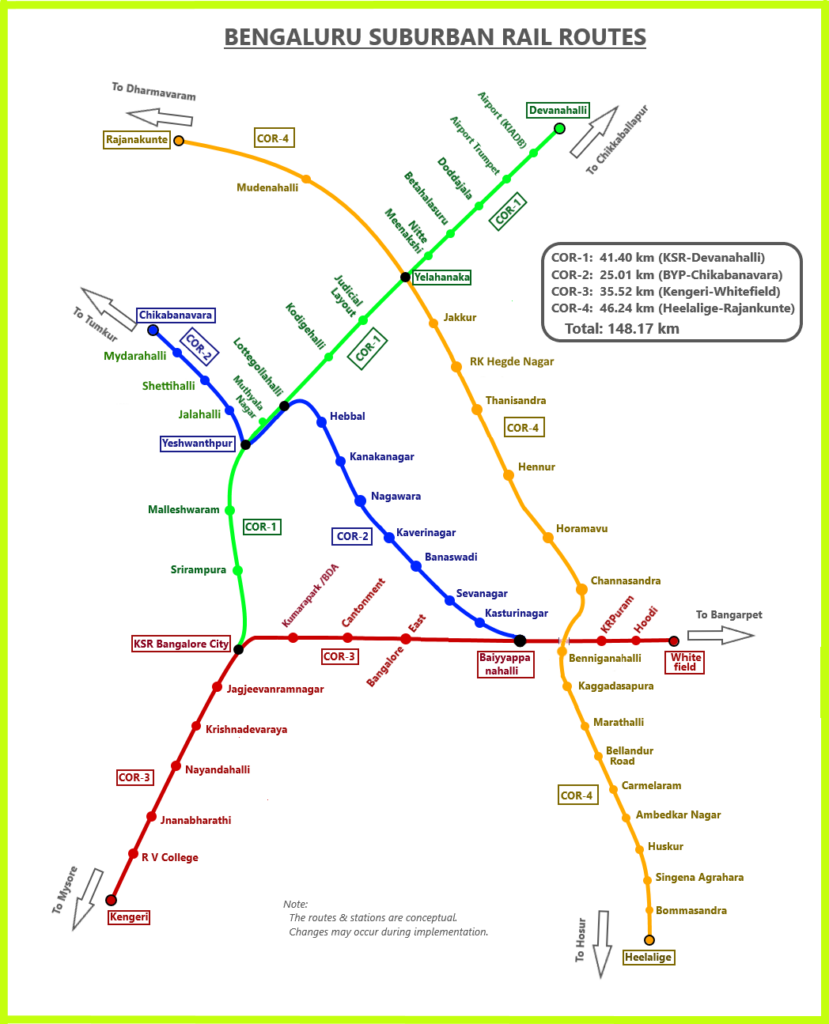
But first, to understand the delay and its impact on citizens, let’s look at the latest updates across the four proposed corridors:
Corridor 1 (KSR Bengaluru to Airport):
- The alignment was approved in January 2026, but land acquisition is still in progress.
- The project was prioritised in 2020, to enable faster connectivity to the airport by October 2023. However, its priority was later downgraded.
Corridor 2 (Benniganahalli to Chikkabanavara):
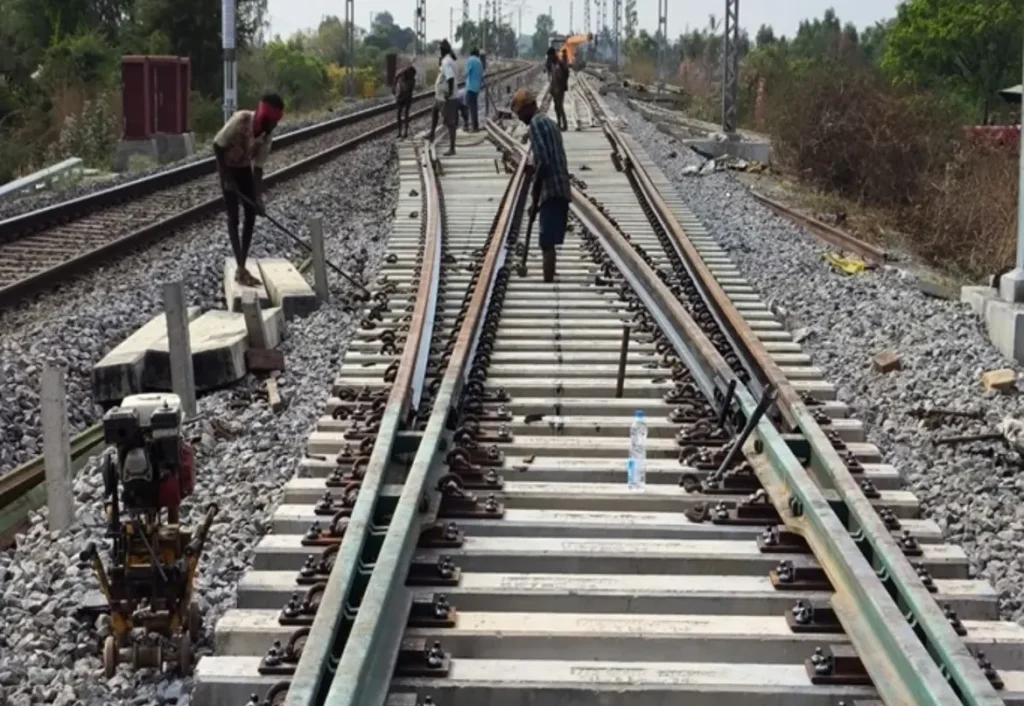
- Construction started in 2022. Larsen & Toubro, the construction company, terminated its contract with K-RIDE (Rail Infrastructure Development Company-Karnataka), the implementing agency in 2025.
- Following this, fresh tenders have been awarded and the construction is ongoing.
- Initially targeted to be completed by 2026, the deadline is pushed to December 2028.
Corridor 3 (Kengeri to Whitefield):
- Alignment was approved in December 2025. Land requirement as per approved alignment is being finalised.
Corridor 4 (Heelalige to Rajanukunte):
- L & T withdrew the contract for this corridor as well, causing a major setback. Tenders are still being invited.
- Construction is expected to be completed by June 2029.
Construction on Corridors 1 and 3 is yet to begin. Despite this, both corridors are now slated for completion in 2030, nearly four years behind the original deadline.
Cpt Naveen via Wikimedia Commons.
How can citizens check progress?
Commuters can follow the progress of the project through the Samparka Newsletter, a bi-monthly published by K-RIDE. However, the publication lacks full transparency. While land acquisition hasn’t happened in two of the corridors, the newsletter doesn’t disclose how much land is pending acquisition.
People can still use the information to track the progress of the project.
“Citizens’ pressure matters a lot for faster completion of the project,” says Rajkumar Dugar, Founder and Convenor of Citizens for Citizens.
Read more: Will Bengaluru’s suburban rail project speed up?
Root causes: Why is the BSRP delayed?
Citizen Matters contacted K-RIDE officials multiple times to understand what caused the delays and how the agency is addressing them to keep the project on track. However, we did not receive a response.
Citizen activists who regularly interact with officials and participate in public consultations point to several systemic governance failures:
Lack of leadership
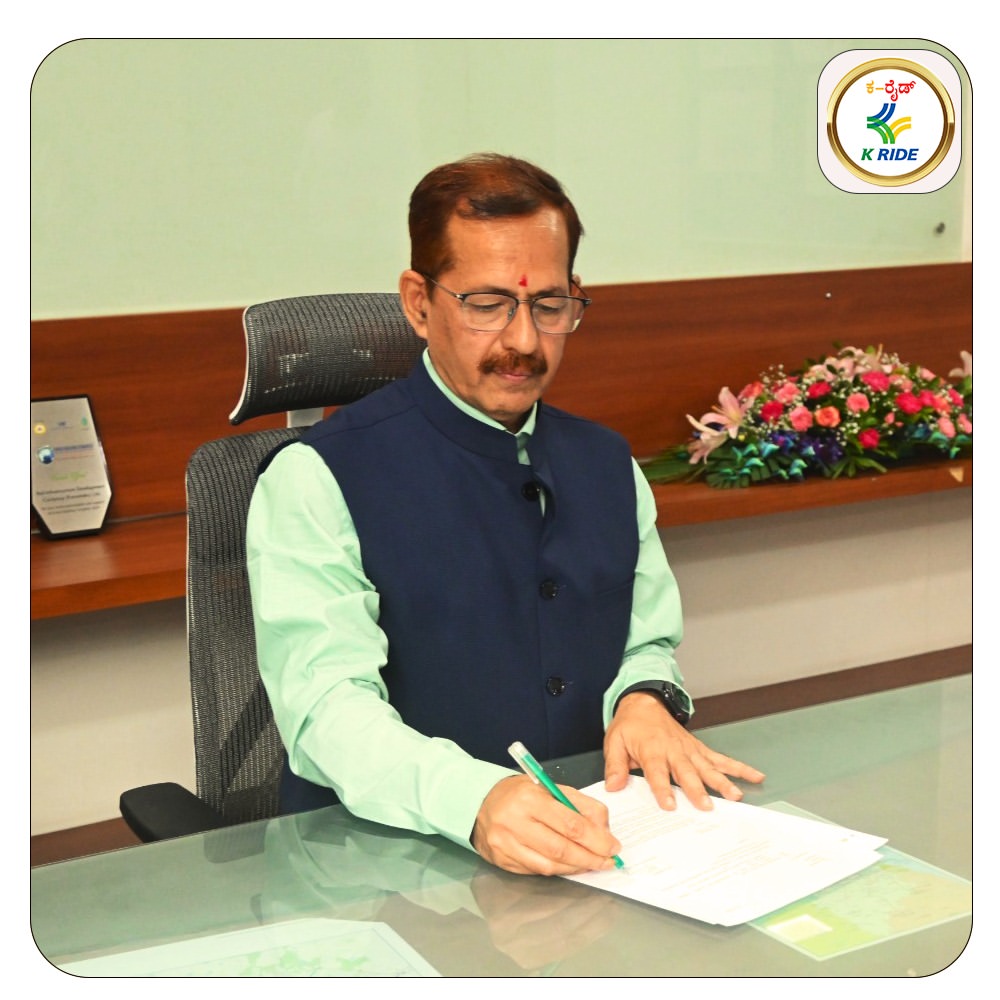
Until November 2025, the Managing Director position at K-RIDE was frequently filled by IAS officers rather than technical experts. In December 2025, Lakshman Singh, a 1996-batch Indian Railway Service of Engineers (IRSE) officer, was finally appointed as MD. “A technical MD was desperately required for quick decision-making. IAS officers often lack specific knowledge of heavy civil construction, engineering, and railways, which caused significant initial delays,” Prakash Mandoth explains.
Contractor disputes and design delays
Construction giant L & T’s abrupt withdrawal from Corridors 2 and 4 in August 2025 cost the project massive time and resources. The construction giant alleged that K-RIDE failed to provide basic infrastructure support, providing only 8.2% of the contracted land. They also cited frequent changes in project managers and delayed design approvals.
Delay in approval by South Western Railways
Bureaucratic friction between agencies has routinely stalled progress. “The Corridor 1 alignment was held up by South Western Railways for 62 long months,” notes Rajkumar. “Can you believe it? Hours before a PRAGATI (Pro-Active Governance and Timely Implementation) meeting—a platform designed to fast-track lagging projects—the alignment was suddenly approved.”
Lack of political will and accountability
Activists allege that there is no political interest. “MP Tejasvi Surya and minister Ashwini Vaishnav, used to vocally demand a change in K-RIDE’s management. Now that a railway-background MD is in place, the same politicians have not conducted a single progress review, despite multiple requests,” Rajkumar adds.
The lack of government intent is also voiced by a K-RIDE official in a Money Control article: “If the state had displayed even a fraction of the urgency it is showing for the tunnel road project, the suburban rail project would likely have been on schedule.”
Cost of the delay
The direct financial consequence of these delays is a staggering 48% cost escalation, with the budget going up from ₹15,767 crores to ₹23,342 crores. But the indirect costs to the city are even more severe. Delays in developing public transport infrastructure mean more private vehicles on the road.
“A comprehensive study, if done, would reveal carbon emissions, fuel wastage, people commuting longer and related loss of man-hours,” Prakash said. “People are forced to spend more on travel.”
At least 70,000 cars go from the city to the airport, everyday, says Rajkumar. “If Corridor 1 between Majestic and the Airport terminal was ready by the time stipulated, major traffic points like Mekhri circle, Hebbal flyover, etc., would be less congested,” he said. “People are also going to bear the brunt of this, including interests for the loan for the project,” he added.
Read more: Proposed suburban rail policy: will it help Bengaluru’s commuter rail dreams?
The perception problem
Then, why hasn’t there been public outcry for the suburban rail, like the interest seen for new Metro routes? Activists believe it is a lack of awareness and a perception issue.
When people hear “suburban rail,” they often picture Mumbai’s overcrowded local trains, with passengers hanging from footboards and travelling in unsafe conditions. However, the BSRP is designed to be entirely modern, featuring air-conditioned, metro-styled coaches with automated closed doors.
Moreover, the government has ignored a much cheaper, immediate alternative: utilising the city’s existing tracks. “Bengaluru’s existing regional rail network infrastructure remains grossly underutilised,” said Sandeep Anirudhan, Founder Convenor of urban citizen movements such as Citizens’ Agenda for Bengaluru, and Bengaluru Mobility.
“BMTC operates commuter buses to peripheral areas like Tumakuru, Kanakapura, and Kolar. All these places already have existing railway tracks. If frequent trains were deployed on them, those buses could be repurposed for internal city routes,” adds Vivek Mathew, a computer engineer who uses data and maps to study urban transit. “These existing lines also connect the districts surrounding Bengaluru, something even the upcoming BSRP lacks.”
Unreliable rail networks
According to Sandeep, automatic signalling, a centralised control system, and a few other upgrades would cost only around ₹10 crore per kilometre to create a reliable suburban rail system using the existing railway infrastructure. “Instead, around ₹400 crore per kilometre is being spent on Metro lines that run parallel to the existing rail network. This not only costs far more but also disrupts the city through fresh land acquisition, the demolition of properties, the felling of trees, and the disturbance of established neighbourhoods.”
The barrier to this alternative is that the system is currently unreliable. Trains are infrequent and often delayed. Drawing from personal experience, Sandeep says, “I once missed a train to Delhi because I relied on this service, and the train arrived two hours late.”
“If the system offers frequent, dependable service, people will shift from road to rail almost immediately,” he adds.
Fixing the root cause
While there’s been some progress over the last six months, a sustained push is required to ensure the revised deadlines are met.
Rajkumar, who creates social media videos to build public awareness, believes that real traction will only happen if the wider public starts making noise online. “There is a dedicated set of people who are keen on this, but they represent a very small minority,” he says.
To fix the root cause, Sandeep advocates for structural governance reform. He points to the failure to adhere to the fundamental constitutional mandate of the 74th Constitutional Amendment.
“According to the amendment, every metropolitan city should form a Metropolitan Planning Committee comprising elected local representatives, state and central government representatives, and experts such as urban planners, transport planners, ecologists, sociologists, etc. The tragedy is that our city has not built the institutional capacity prescribed by the Constitution and, therefore, does not adequately involve urban planners, transport planners, and other experts in the planning process.” “The city planning does not involve urban planners, transport planners, etc,” he adds.
This could also help address another major problem in the city’s public transport system: the absence of integrated multimodal transport planning. “Whether it is the suburban rail, the Metro, BMTC buses, roads, flyovers, tunnel roads, or elevated corridors, they are all planned as standalone projects,” says Sandeep. “Public transport should provide seamless first- and last-mile connectivity, with all modes of transport planned as an integrated network rather than in isolation.”
“Suburban rail is a fast, safe and cheap mass transport system followed by metro,” Prakash adds. If the city planning included an integrated mass transport system, the suburban rails would be prioritised, activists opined.
How will the project benefit the public
- Quicker commutes through air-conditioned, metro-style trains, while also reducing travel costs for commuters.
- Improved first- and last-mile connectivity, complementing Metro and BMTC services and creating a seamless transport network.
- Thousands of commuters off the roads, easing congestion on major corridors, particularly the airport route.
- Fewer private vehicles on the road would mean lower fuel consumption, carbon emissions and cleaner air.
So, how can you contribute: Follow the progress of the suburban rails project, question the officials and tell them your demands. “There is 1% of active citizens and 99% of passive citizens. And the passive citizens are completely clueless about it. So we should focus on educating people on what is possible if we support and demand better public transport,” says Vivek.