The Brihanmumbai Municipal Corporation has released the draft Zonal Master Plan for the eco-sensitive zone of Sanjay Gandhi National Park (SGNP). The civic body is inviting suggestions and objections till October 17.
However, environmentalists have raised concerns about potential ecological damage in the name of development, through the master plan. They allege that commercial activities are planned very close to sensitive ecosystems. Meanwhile, communities living in and around the park fear displacement, loss of livelihood and erosion of their cultural identity. They are also finding it difficult to submit their feedback, as the draft plan is in English.
Background
SGNP is home to a wide variety of endangered flora and fauna. It houses leopards, 300 bird species, 43 mammal species, around 150 butterfly species and several reptiles, amphibians and invertebrates. This major lung space of the buzzing city is also a perfect picnic destination for the citizens.
In 2016, the Ministry of Environment, Forest and Climate Change (MoEFCC) announced the area around the park as an eco-sensitive zone (ESG). The draft Zonal Masterplan aims to recognise the ecology around the park and regulate land use and further developments covering SGNP, Yeoor Hills, and Aarey Colony.
You can submit feedback through this simple WhatsApp Chatbot, by Civis, a non-profit platform that promotes increased citizen participation in the lawmaking process.
Read more: “For long, authorities have been unconcerned and apathetic about Mumbai’s ecology”
Key proposals: Zonal regulation
Here is a breakdown of the key proposals in the master plan,
The eco-sensitive zone is further divided into three zones, with specific rules for each:
Eco Sensitive Zone-1 (ESZ-1), or Settlement Zone
- Description: This zone includes existing and proposed areas, such as residential, commercial, institutional, and industrial sites, that are largely already developed.
- Function: ESZ-1 conforms to the local Development Plan (DP) and allows development with full development potential.
- Basis for Classification: These areas generally correspond to lower values in the vulnerability analysis, indicating a high concentration of developments.
- Exclusions: This classification excludes zones designated as No Development Zone, Restricted or limited Development Zones, Hill, Natural Areas, or Natural Waters.
- Activities allowed: Housing, shops, offices, eco-retreats, restaurants, schools, hospitals, cultural and religious places, parks, and public utilities like roads, bridges, water and power plants. Agriculture and eco-friendly industries are allowed. Repairs and redevelopment of existing buildings are permitted, as is expansion of villages and tribal settlements.
- Regulated activities: Projects like malls, multiplexes, marriage halls, petrol pumps, small non-polluting industries, IT parks, warehouses, and agro-based units need an Environmental Management Plan approved by the ESZ Committee.
Eco Sensitive Zone-2 (ESZ-2), or Regulated Development Zone
- Description: These areas are not developed and are typically zoned in existing Development Plans as No Development Zone, Restricted or limited Development Zones, Hill, Tree clad, or Natural Areas.
- Function: Development in ESZ-2 is vulnerable from an environmental perspective and must be regulated.
- Basis for classification: These areas are environmentally rich and are considered an immediate extension of the forest area with similar ecological characteristics, receiving higher scores in the vulnerability analysis in the plan.
- Activities allowed: All activities allowed in ESZ-1 are also permitted in ESZ-2, unless specifically prohibited.
- Permitted (general): Repairs and reconstruction of existing structures in villages, gaothans, and housing societies approved under the Development Plan.
- Permitted (with Environment Management Plan): Residential & Commercial: Homes, townships, hostels, shops, markets, offices, and banks (as per DP).
- Tourism & Food: Lodges, eco-retreats, restaurants, and canteens.
- Social Infrastructure: Schools, colleges, hospitals, clinics, police stations, libraries, cultural centers, old age homes, religious places.
- Recreation: Eco-tourism, parks, playgrounds, gyms, clubs, and sports centers.
- Agriculture and agro-based: Farms, orchards, nurseries, and non-polluting agro-industries.
- Infrastructure and utilities such as roads, bridges, telecom towers, renewable energy projects, and water-supply systems.
- Major transport projects (highways, railways) need special environmental and wildlife mitigation approval.
- Other regulated activities include no tree felling and effluent discharge without prior permission from the government. No NTFP collection allowed
- Prohibited: Large malls or IT parks within 1 km of SGNP, polluting industries, sawmills, mining or quarrying, dams, thermal plants, and new slums or encroachments.
Eco Sensitive Zone-3 (ESZ-3), or Ecological Fragile Areas
- Description: This zone is designated for areas containing environmentally rich features whose preservation is of utmost importance from an ecological point of view.
- Inclusions: Examples include areas under mangroves, Tree Clad hill areas, Coastal Regulation Zone-1 (CRZ-1) areas, and a mandatory 50-meter buffer area.
- Function: Generally, no development or construction activities are permitted in this zone, and all prohibited activities listed for ESZ-1 and ESZ-2 remain prohibited here.
- Basis for classification: These areas scored very highly in the vulnerability analysis, signifying their critical ecological significance (e.g., Mangroves near Versovaand Vasai Creek area).
- Prohibited: All activities allowed in ESZ 1 and ESZ 2 are prohibited in this zone.
- Regulated: Only essential, conservation-related, or community activities are permitted under strict oversight. Forest and tribal livelihood activities, Forest protection and conservation infrastructure, Educational eco-tourism (with prior approval) and Wildlife corridors and essential city-level infrastructure (only if state-approved). All require an Environmental Management Plan (EMP) and wildlife mitigation plan.
- Special provision: Rehabilitation of Adivasi families and eligible encroachers displaced from SGNP is allowed from anywhere in the ESZ, including ESZ-3.
Other key proposals
Immediate Impact Area (IIA):
Zones with highest human-animal conflict are identified. Fencing, awareness campaigns, compensation and other mitigation measures are planned.
Eco-tourism development:
Areas like Vihar Lake and Kanheri Caves are selected for controlled eco-tourism opportunities like nature trails. The number of visitors will be strictly monitored to avoid overuse.
Slum rehabilitation:
Families in eligible slums (tribal communities) will be relocated to housing projects outside sensitive areas. Tribal settlements will be integrated with livelihood support.
Ban on harmful activities:
Industrial units, mining, and quarrying in prohibited areas are to be removed or strictly regulated.
Infrastructure upgrades:
Waste management, drainage and transport systems will be improved in the ESZ to reduce environmental pressures
Fire and disaster management:
Annual fire lines, patrol teams, and disaster response plans to protect the park.
Impact on vulnerable communities and the ecology
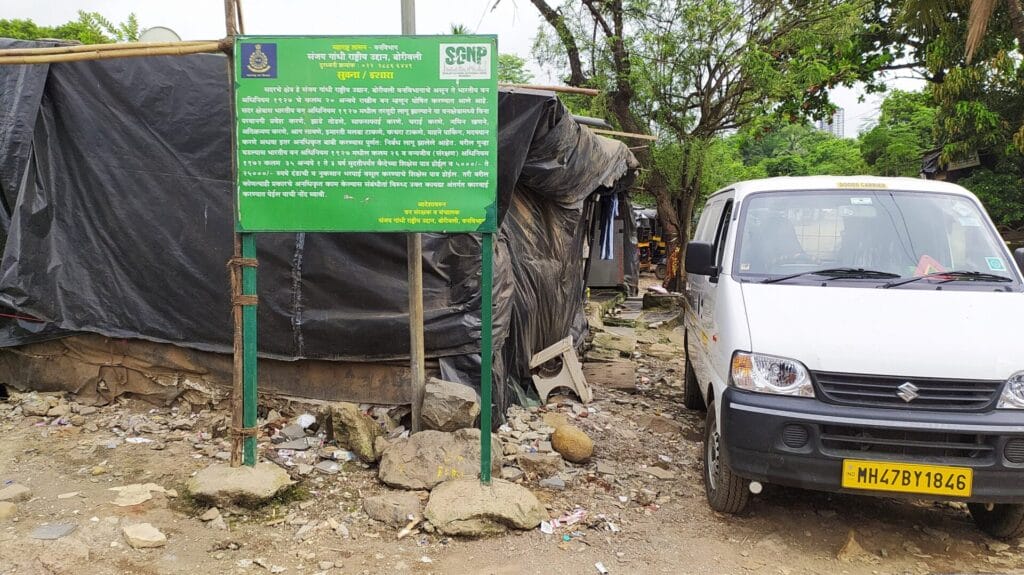
The master plan could directly impact the livelihoods of people living within and around the park, including vulnerable populations such as tribal communities and slum dwellers. According to the plan, tribal communities are prohibited from engaging in activities such as the collection of Non-Timber Forest Products (NTFP) in ESZ 3.
A major concern is that the draft plan fails to distinguish between tribal settlements and slum dwellings. Tribals fear that their homes may be treated as encroachments, potentially leading to displacement.
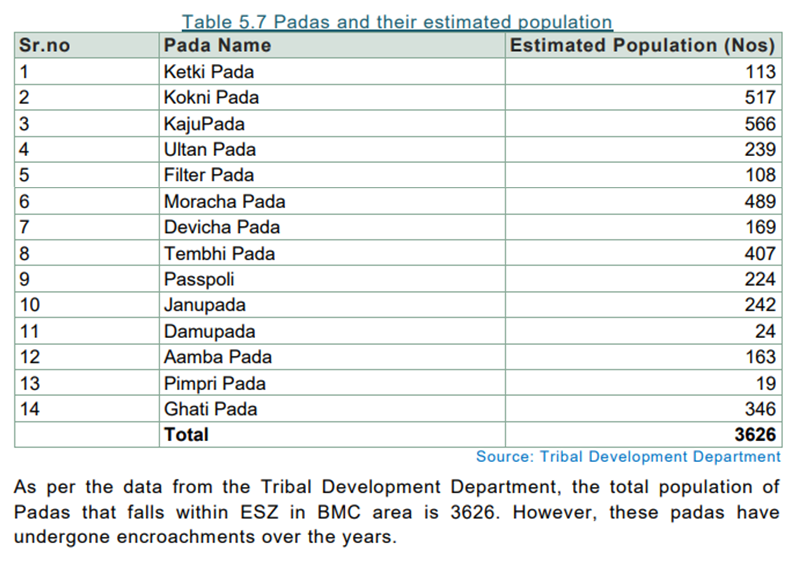
Rakesh Gholap, a social worker and member of Muse Foundation, a youth-led group, explains that the padas, which are hamlets inhabited by Adivasi communities, are at risk of removal, threatening their way of life. The draft identifies 43 padas: 28 in the Mumbai Suburban District and 15 in the Thane District, with 14 located within the ESZ. “The draft categorises padas as slums, and the communities are afraid that their cultural identity will be lost,” Rakesh says.
Environmental activists are particularly concerned about the classification and the extent of activities allowed in ESZ 2, particularly the many real estate activities. While the draft plan does not reveal how much green cover or waterbodies fall in the ESZ 2 boundaries, the draft clearly states that this zone is “environmentally rich” and ranks high in the plan’s Vulnerability Rankings (Rank 4) due to the presence of waterbodies that the plan states is crucial for biodiversity.
Activists also suggest that the zone should not be divided into three levels. “Very little area has been categorised as ESZ-3, which has the strictest regulation,” Rakesh says. “The ecology can be protected and benefited only if the entire area is considered as one zone.”
Read more: Lives, livelihoods and art: What keeps Warlis rooted in Sanjay Gandhi National Park
Feedback system not accessible
While the plan will have a direct impact on the tribal community, they complain that they could not understand the master plan completely, as the 300-page document was released only in English. “The tribal development department or the municipal corporation did not take any effort to inform the tribal community about the plan,” Rakesh adds.
A Hindustan Times report mentions that an objection letter was submitted by the Koltipada Adivasi Gaothan Gram Sabha. The letter emphasised the direct impact that ZMP can have on their livelihoods. In the letter they also urged the BMC and the state tribal welfare department to appoint officials who could explain the plan in a language they understand and clarify its implications.
On October 8th, Rakesh Gholap who resides in Thane had to travel for around one and half hours to BMC in South Mumbai to file his objection. Earlier that day, when he went to the Thane Municipal Corporation (TMC), officials told him that only the BMC collects feedback. The corporation did not provide any facilities to send the feedback via an e-mail, which would have been rather simple, Rakesh says. “While five different jurisdictions including TMC, BMC, Mumbai Metropolitan Region (MMR) are involved, collecting feedback in only the BMC is an isolating move that avoids public confrontation,” he adds.
To submit feedback online, Civis, a non-profit platform has built this whatsapp chatbot. Do submit your feedback.