“What happens when we remove this natural infrastructure of the city? What happens if it floods? What happens if the air quality (index) goes really high?” asks Pooja Domadia, a member of the Save Mumbai Mangroves campaign.
These are questions that many Mumbaikars have as work begins on the Versova-Bhayandar Coastal Road, which is set to affect 45,000 mangrove trees. In March this year, the Supreme Court dismissed a petition challenging the Bombay High Court order to greenlight the cutting of mangroves for the project.
Is the SC decision a fatal blow to the movement? The BMC has already begun felling mangroves to make way for the 26.3 km Coastal Road. But citizens have not given up. Here’s what they are doing, and how you can be involved.
The legal battles
Environmental activists and concerned citizens have been using litigation, creating awareness about the impact of losing mangroves, organising protests on the ground, and even using artistic expression to draw attention to the issue.
Historically, the judiciary has protected mangroves in Maharashtra. A 2018 judgement, passed by Justice A. S. Oka and Justice Riyaz I. Chagla, froze mangrove felling in the entire state. Any agency wishing to cut mangroves henceforth requires the green light from the Bombay High Court.

In December 2025, the Bombay HC gave the go-ahead for the construction of the 26.3 km coastal road. A division bench of Chief Justice Shree Chandrashekhar and Justice Gautam Ankhad, while permitting the BMC to cut the mangroves, kept the plea open for a decade, asking the civic body to submit yearly reports on the status of compensatory mangrove plantations.
The NGO Vanashakti had approached the Supreme Court in the last week of February, challenging this order. Dayananad Stalin, founder of Vanashakti, said, “The fact is that the court has refused to help us. People will protest. What we are asking from the courts or the government is that, please consider options which will reduce the impact on the number of mangroves.” Interestingly, Justice Oka also criticised the project.
Read more: Mangroves vs Mumbai Coastal Road: Development at what cost, ask citizens
Citizens don’t give up
The court’s decisions appear final, but citizens are not giving up. Stalin says, “What is being destroyed belongs to the citizens. They realise it. They are fighting it.”
When individual citizens band together for a cause, something powerful builds up. Save Mumbai Mangroves is a group of citizens from all walks of life. Sonika Bhasin is the impetus behind the group, bringing people together.
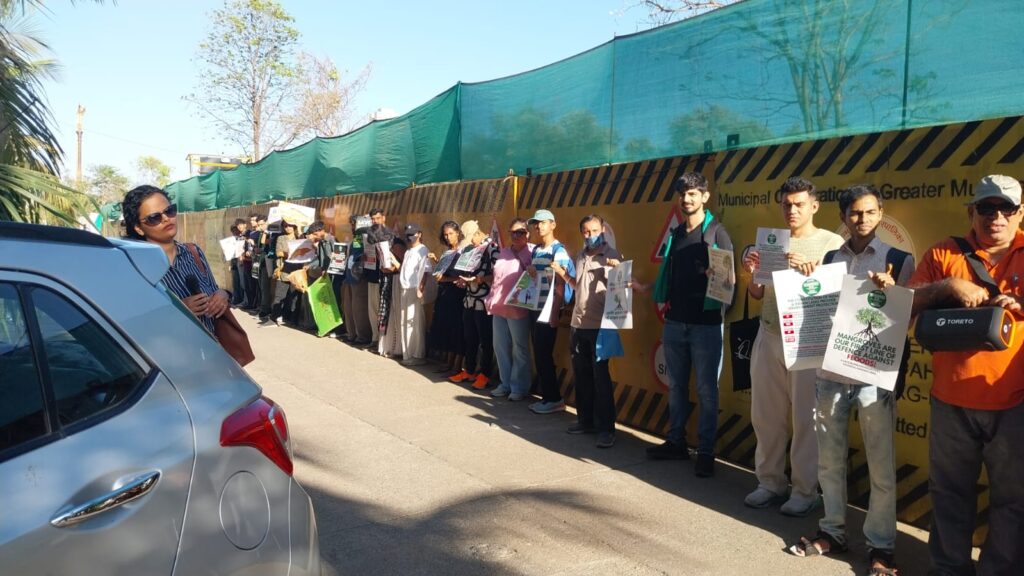
Pic: Save Mumbai Mangroves
The group has already organised multiple protests so far along the Versova-Bhayandar stretch. Dhiraj Bhandari, a fisherman from Charkop, said that the fishing community also joined Save Mumbai Mangroves in their protests in the area.
The group has a multi-pronged approach. Volunteers carry out on-site monitoring to ensure the authorities follow the law. Another group of volunteers is involved in research. They have also put together documents to help people educate themselves on the issue. Their latest initiative is‘Sundays for Mangroves,’ a call to assemble peacefully with placards every Sunday. The first such gathering took place on 5th April at Turzon Point in Charkop.
Art as resistance
Nishna Mehta, a theatre maker and the founder of Nature Narratives, offered her writing skills to the Save Mumbai Mangroves group to raise awareness about the issue. The collaboration has resulted in a street play, Mangrove Mudda, which also has a catchy rap. Nishna uses the performance to engage audiences on the issue.
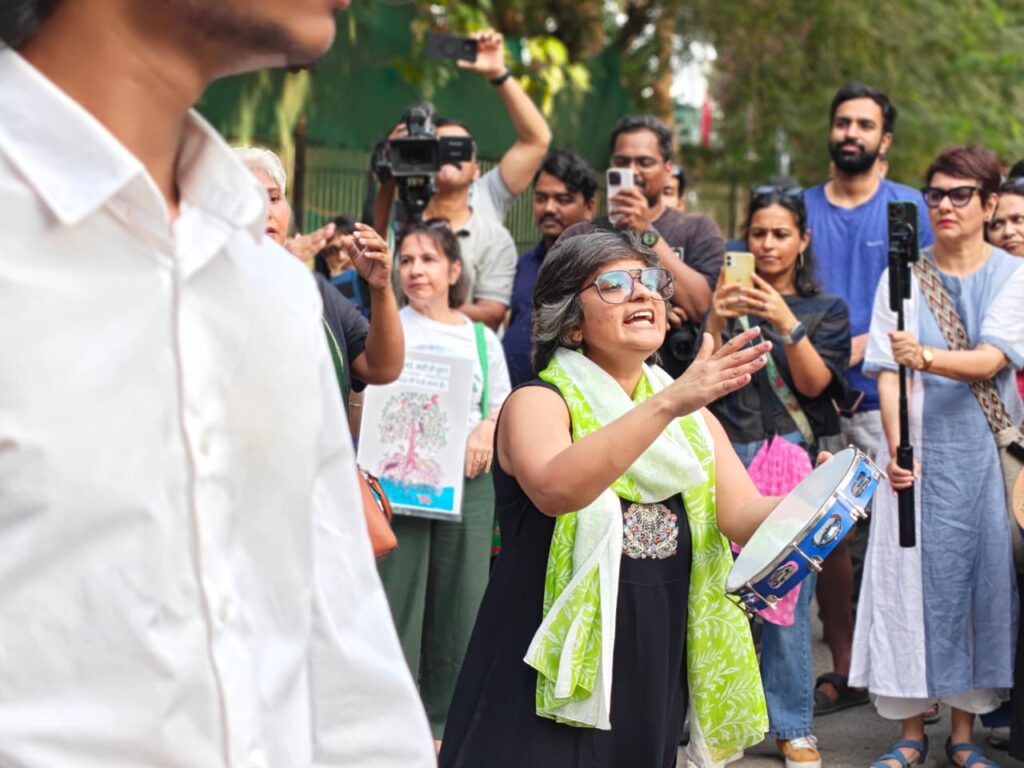
Nishna says, “Every time we perform, there are some edits based on updates. So, the recent edit has some comments about the Supreme Court judgment. Initially, when we wrote this, it was about ‘kyun kaat rahe ho?’ (why are you cutting the trees?). But now it is ‘ped kat chuke hain’ (trees have already been cut).”
The play incorporates typical sentiments and attitudes expressed by people about the chopping of the mangroves — ‘what can we do?’, ‘this is for our development’, ‘it does not make a difference to me’, etc.
Nishna has performed the play at rallies in Charkop and Versova. Now they are trying to take the play to smaller community spaces, such as housing societies, schools, and colleges.
Read more: When the Earth hurts, we hurt: Understanding eco-anxiety and eco-grief
What can you do?
Vidushi Kala of Save Mumbai Mangroves says, “What citizens should actively do is send their objections to MoEFCC ( Ministry of Environment, Forest and Climate Change). They can also raise their concerns with BMC and request that they address it.”
The group has a pre-drafted email that is available on their Instagram page.
Stalin stresses the importance of writing individually to authorities such as the PMO and the Chief Justices to make their dissent heard. He adds that Mumbaikars must be aware of any on-ground protest taking place, and should join them.
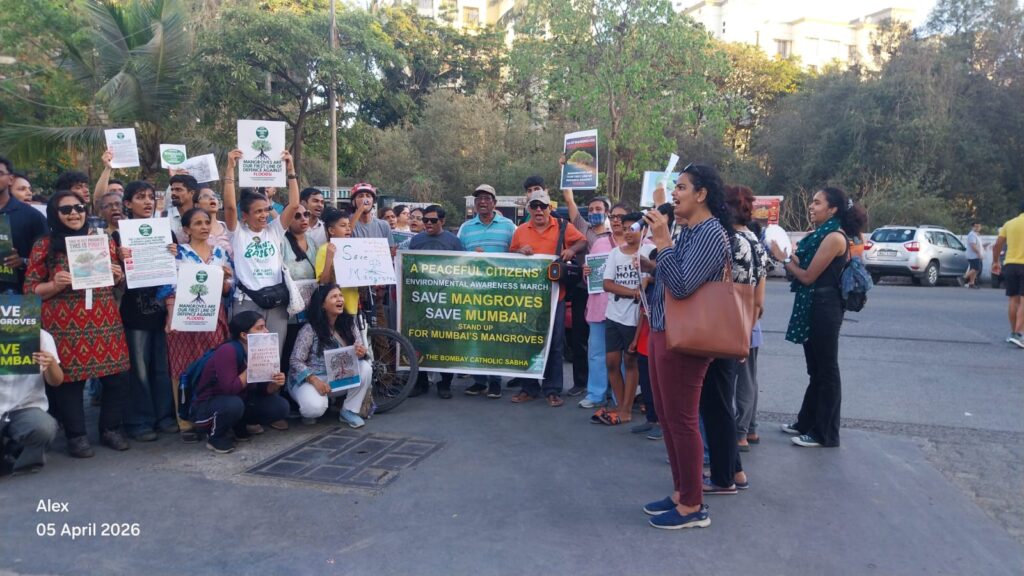
Vidushi also advises citizens to speak to as many people as possible, especially to children, so that the issue does not die down. She believes that this will create awareness about the importance of mangroves for Mumbai’s survival. They have resources and information about the impact of this decision.
Concerned citizens can also volunteer with them. Their Instagram has a call for volunteers to help with various aspects of the campaign. The group has also appealed to citizens to join the protests they organise. You can also join their WhatsApp group.
The group also suggests filling out this form reporting violations by the BMC, and clicking photos with a GPS camera app to capture timestamped, geo-tagged images of illegal mangrove cutting or use of machinery.
Nishna says that concerned citizens can also invite the street play to their housing society.
“We are not coming to this issue with a stance that something should or should not be created. As citizens, we have a right to our lands or forests. We want the government to just consider us when we make certain demands or certain representations in front of them. You can tell us how we can do this and minimise the damage to the ecology,” says Vidushi.
Also read:
- Chennai Corporation’s sponge parks: Nature-based solutions or cement-lined pits?
- As rainfall patterns change, how can Mumbai administrators plan for flood management?
- Climate laws must enforce heat mitigation measures: Professor Vidhya Venugopal