Every time the city floods, which is every year, Mumbaikars find their own ways to deal with it. Despite preventive measures by the Brihanmumbai Municipal Corporation (BMC), such as desilting storm water drains or making underground water storage tanks, besides putting up pumping machines, floods continue to be a monsoon routine for Mumbai. Rich or poor, slum dwellers or high risers, there is no escaping the impact of floods on the lives and livelihoods of Mumbaikars. And as we saw in our earlier story, those who have their homes on the periphery of rivers like Dahisar are often the worst hit, retaining walls built by the BMC notwithstanding.
Read more: Retaining walls fail to provide flood respite for Mumbai’s riverbank residents
BMC upbeat about retaining walls
While residents say that the retaining walls have done little except for allowing them some extra time before the floods hit them, authorities sound a different take.
“About 70% of these retaining walls have already been built and it has shown remarkable success in containing the issue of flooding. We have even managed to get walls built along water bodies on land belonging to other agencies like Central government land and even those belonging to defence forces,” says Rohit Trivedi, deputy chief engineer (storm water drains) of western suburbs of the Brihanmumbai Municipal Corporation (BMC).
These structures were recommended by the BRIMSTOWAD (Brihanmumbai Storm Water Disposal System) project way back in the 1990s, but implementation picked up momentum post the 2005 floods. Since then, the walls are being built along rivers and their tributaries and the network of nullahs running across the city, he informed. The height of these retaining walls varies between 3 feet and 8 feet, as decided after various technical surveys. The precise height of each is based on factors such as the level of the land alongside the river.
“However, currently, the process of building these walls is hampered by structures (residential or commercial units), whose rehabilitation elsewhere has been held up. Most project affected people or PAP (people living in the areas where walls are to be built) refuse compensation. They insist on rehabilitation at the site or closer to their current residence, which becomes difficult,” says Trivedi. An estimated 10,000 structures (in slum settlements) around the three rivers – Dahisar, Posar and Oshiwara – are pending rehabilitation, while about 3400 have already been rehabilitated, he informs us.
Are walls the solution to floods?
Environmental groups in Mumbai have approached the courts questioning the rationale behind building retaining walls as a solution to the problem of flooding, even demanding that these be pulled down. However, the Mumbai Metropolitan Regional Development Authority (MMRDA), in an affidavit, staunchly maintained that these helped in flood control during monsoons and stated that they also “helped in protecting the river from encroachments and soil erosion.”
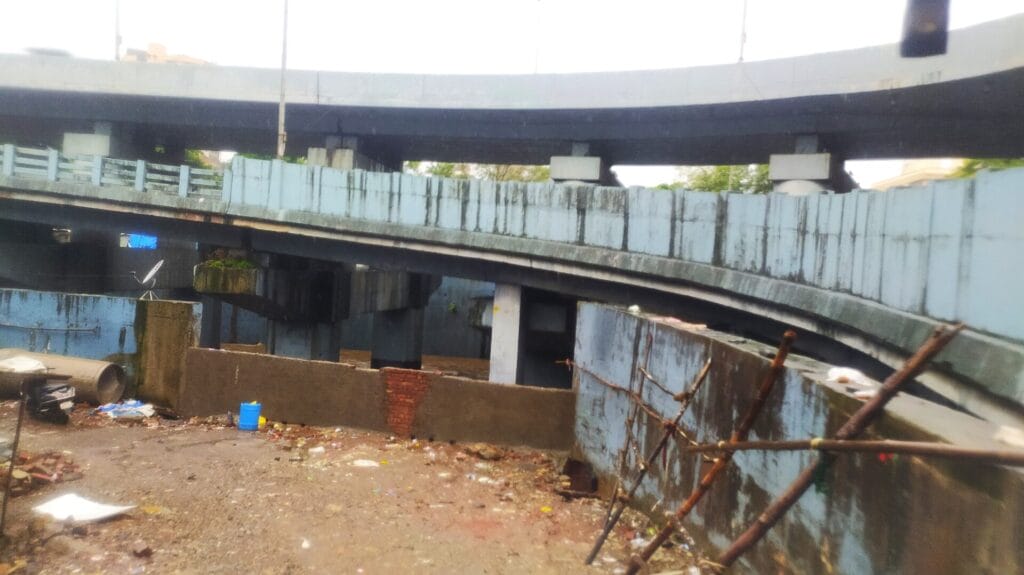
Environmental activists like Stalin Dayanand, Director of nonprofit Vanashakti, co-petitioner in pleas seeking removal of retaining walls along rivers to rejuvenate them, says, “Retaining walls should not have been built in the first place as they disconnect rivers from the land along them. The retaining walls of the rivers have been built to demarcate land along rivers and to facilitate their development by both private and government agencies.”
Stalin points out that since the walls came up, many buildings have come up on river basins. Over 620 acres of prime property at BKC was reclaimed and generated thanks to the retaining wall that came up along Mithi river, he tells us. “In fact, the MMRCL’s own office has come up inside the flood plains of Mithi river, which is a direct violation of Coastal Regulation Zone rules,” says Stalin.
What could bring relief to the people
Local residents are emphatic that their only chance of freedom from the woes of regular flooding lies in relocation to higher floors in a slum rehabilitation authority building. However, that has been eluding them for quite some time.
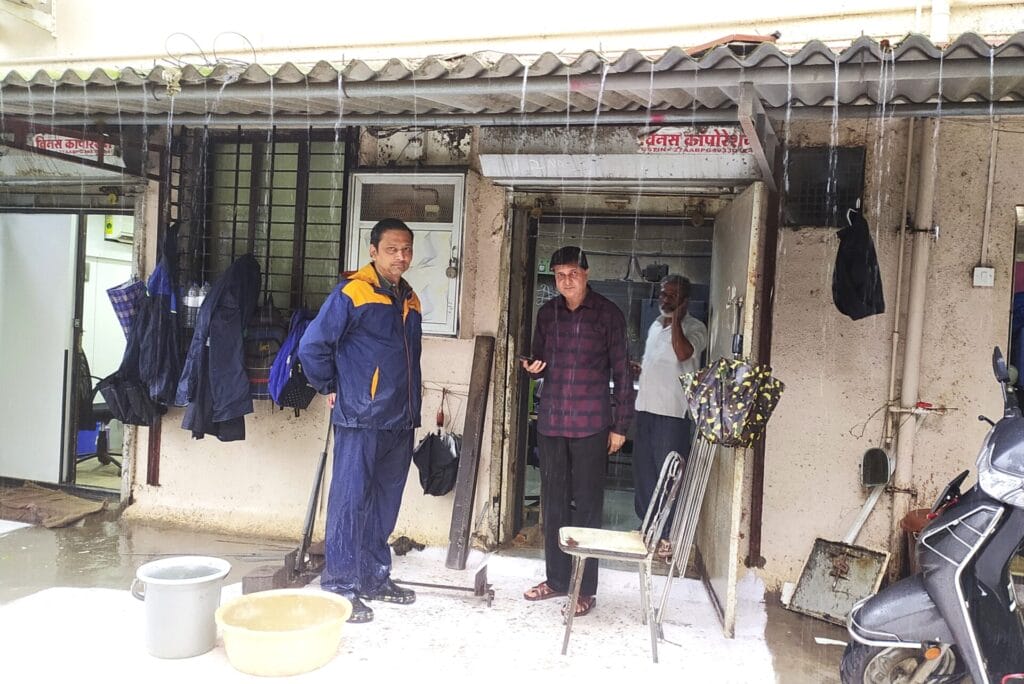
Suraj Tayde, whose house is next to the wall along the Dahisar, says that many of his neighbours closer to the river have received slum rehabilitation houses in various areas from Jogeshwari to Malad and even Mira Road. But the process of shifting people out has slackened since COVID, though Suraj continues to pin his hopes on rehabilitation.
Local ward officer of R-North ward Nainish Vengurlekar says that the issue of flooding has been sorted in the area since the retaining walls have been built. “Currently, we do not have any proposal for shifting out any more people to slum rehabilitation projects in that area. Unless the local residents manage to get some developer to rehabilitate them, that is.”
Local legislator Manisha Choudhary is more forthcoming about the exact challenges facing slum rehabilitation in that area. “Many of the slums here are either under the Eco-Sensitive zone (ESZ) or come under the airport funnel zone, as they are owned by the Airports Authority of India (AAI). There are thus height restrictions for buildings, discouraging builders from taking up rehabilitation work here. These challenges to slum rehabilitation work are currently being contested for relief in the Supreme Court (SC),” she says.
Gopal Jhaveri, founder of River March explains: “The issue is that most of the slums have come up on the ESZ of the Sanjay Gandhi National Park and cannot be allowed to build on it. So, the only way out for the residents staying alongside the rivers is to be accommodated in flats available with the government for Project Affected People (PAP). Many of those living in close proximity were shifted to many different areas. The last I heard on this was that the State government currently doesn’t have enough PAP houses to accommodate more people.”
Gopal remarks that only a government with strong will and determination can see this rehabilitation process through, because it will require a lot of effort spanning co-ordination from multiple ministries. Like Stalin, he too feels that walls are no solution, as they kill rivers, the biodiversity around and disrupt their relationship with the land. “Ideally, rivers should have trapezoidal slopes alongside which must facilitate free interaction between the land and the rivers,” he says.
In order to provide relief, therefore, the state government should consider accommodating residents along the river in other projects. The ongoing case in the Supreme Court could perhaps take a more humane view to provide housing for the residents here. Till then, authorities must provide more effective flood alerts, warning residents well in advance and not on the verge of floods, as it plays out currently.