Ennore gas leak: Residents demand closure of factory
Residents of Ennore continued their protests against the Coromandel International Limited, after leakage of ammonia gas from the company’s pipeline late night on December 26 left many people giddy and gasping for breath, while others fainted. While 52 residents from Periyakuppam, Chinnakuppam and surrounding villages were hospitalised, many have already evacuated from the area because of the strong smell and eye irritation. The fertiliser plant has temporarily downed shutters after a notice for closure was issued by the Tamil Nadu Pollution Control Board (TNPCB) to suspend operations. However, residents from the affected villages are demanding permanent closure of Coromandel International, as they feel that the toxic gases being let out from the plant poses a grave threat to people living in the vicinity.
People from about 30 villages in Ennore have formed a collective to oppose the operations of the company and want authorities to order its permanent closure. Residents in the fishing villages in Ennore are still to recover from the oil spill in Manali that has affected flora and fauna, and livelihoods of fisherfolk. The ammonia gas leak comes as a double blow. Meanwhile, the National Green Tribunal has told the TNPCB to evaluate the situation and file a report on the ammonia gas leak.
Sources: The Hindu | The Indian Express
Read more: Oil spill in Chennai’s Manali area can cause irreparable damage to Ennore Creek wetland
Two COVID-19 deaths reported in TN
The Directorate of Public Health and Preventive Medicine (DPH&PM) has said in a bulletin that there were 172 active cases of COVID-19 in Tamil Nadu as of Friday, December 29, of which 96 cases have been reported from Chennai. According to the directorate, a 55-year-old woman with co-morbidities, who tested positive for the COVID-19 virus died of pneumonia and acute pulmonary edema at the Rajiv Gandhi Government Hospital in Chennai. Another patient, a 36-year-old man with co-morbidities died in a private hospital in Thiruvallur. These are the first two COVID-related deaths in four months in Tamil Nadu. Residents can call the directorate’s 24-hour helpline, 104 or control room numbers: 9444340496/8754448477 for medical assistance.
Source: DPH&PM bulletin
Kilambakkam bus terminus to be opened today
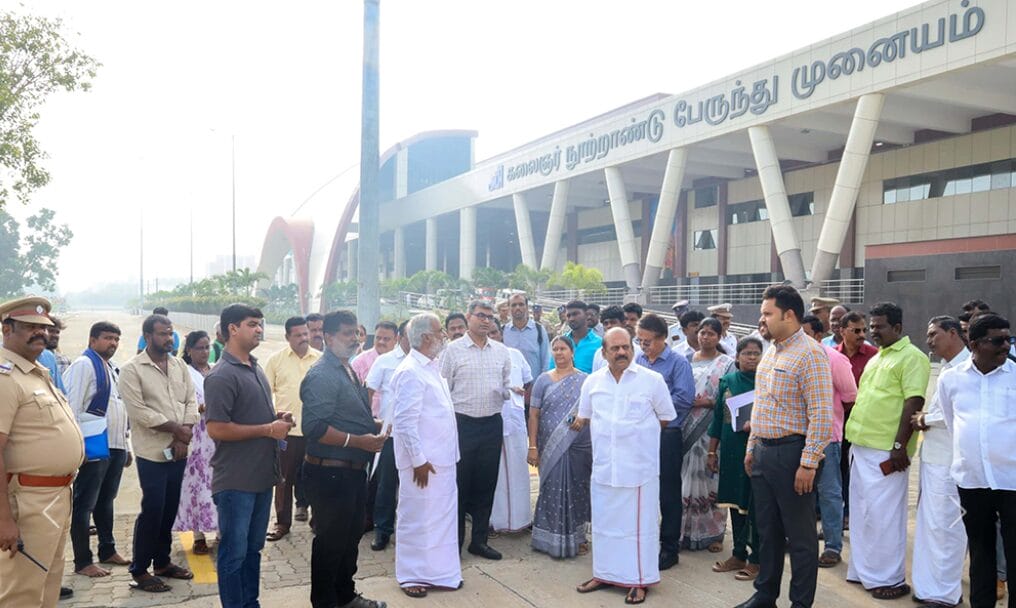
After a series of delays and setbacks, the Kalaignar Centenary Bus Terminus in Kilambakkam is set to open to the public on Saturday, December 30. In an attempt to decongest traffic in the Koyambedu area, the Chennai Metropolitan Development Authority (CMDA) took up work on the bus terminus few years ago at a cost of ₹393 crore.
Once operational the Kilambakkam terminus is supposed to serve around one lakh commuters every day. After inspecting the ongoing work at the site, CMDA Minister P K Sekar Babu said that majority of the construction work at the site and facilities for passengers had been completed but waterlogging in the nearby roads and in the terminus had delayed the opening. The project includes amenities such as restaurants, restrooms and shops for passengers.
Sources: The Indian Express | DT Next
Read more: Many reasons for Chennai residents to rely on private water tankers
Water supply by Metrowater soon for two wards in Valasaravakkam
The Chennai Metropolitan Water Supply and Sewerage Board will initiate 24-hour water supply to Ramakrishna Nagar and Majestic Colony areas in Valasaravakkam zone by March in a trial run of its ₹69-crore water distribution project. As part of this project smart meters will be installed in over 2,400 household that will measure consumption of water in these homes. According to Metrowater officials that presently flow meters are bring installed in these pipelines to detect any water leakage or decrease in pressure.
Source: The Hindu
Desilting of Adyar river to be undertaken
Dredging of the Adyar river to remove silt will be undertaken by the Water Resources Department, according to a report in the Times of India. This project has been undertaken at a cost of ₹11 crore and the department aims to remove two lakh cubic metres of silt. A lot of solid waste including construction debris, plastic and wood waste is blocking the mouth of the rive and removing the silt would ensure free flow of water in the river, according to officials of the WRD.
Source: The Times of India
[compiled by Sahana Charan]
Also read:
- How Chitlapakkam remained flood-free during the recent Chennai rains
- Tech triumphs over cyclone: IITM team helps 2,000 residents log flood water levels in Chennai