Chennai experienced its hottest day of the year this week
On Tuesday 22nd March, Chennai residents experienced high humidity and searing heat. The weather stations in Nungambakkam and Meenambakkam recorded a maximum temperature of 37.6 degree Celsius and 38 degree Celsius respectively, around 4 degree Celsius above average for the day.
According to experts from the Meteorological Department, the extreme heat has been triggered by the Westerlies and Northwesterlies from the land. In addition, there was a deep depression that crossed Myanmar, which could have contributed to the heat. Sea breeze was also obstructed on Tuesday by a trough that prevailed in the lower troposphere, as per reports of officials.
Last year, the temperature peaked at 38.3 degree celsius around the same time of the year. In fact, Chennai hit its all time highest temperature in 1953, when stations recorded 40.6 degree celsius on March 29th that year.
Source: The Hindu
Read more: Understanding Chennai summers: Where did the sea breeze go?
Water level reduces in Chennai reservoirs
The water level in a number of important reservoirs of the city have reduced compared to what it was the previous year. These reservoirs include: Poondi, Cholavaram, Redhills, Kannakottai Thervoyikandigai, and Chembarambakkam.
According to PWD officials, the dip could have been caused by the heat wave in the city as well as the reduced flow of Krishna River from Andhra Pradesh. Last year, there was increased inflow from the Krishna River and the catchment areas received a good amount of rainfall from the monsoons in 2020.
This year however, since PWD authorities requested officials in Andhra Pradesh for the flow of Krishna River to be reduced, as reservoirs were already brimming due to heavy rains in December, the levels have seen a dip.
Source: The Times of India
Corporation schools to get infra upgrade
Spurred by the increase in enrolment rates at schools run by the Greater Chennai Corporation, the civic body has decided to undertake crucial upgrades to schools under its care. The number of students who have enrolled in schools run by the GCC increased due to the economic impact of COVID-19. The enrollment has crossed 1 lakh over the past two years.
The 281 schools under GCC will see an increase in the number of classrooms available by 600. The new classrooms will be able to accommodate a total of 24,000 students at 40 per classroom. There will also be upgrades to other facilities such as washrooms. Old and dilapidated buildings in schools will be reconstructed. The number of smart classrooms is also set to increase across schools.
Source: The Hindu
Read more: How to minimise food wastage at Koyambedu market
Koyambedu vendor eviction drive met with protests
Local vendors have opposed an eviction drive by the Koyambedu Market Management Committee (KMMC) to clear encroachments from around the Koyambedu market. The KMMC undertook eviction to clear the market area of unauthorised vendors who had been reselling discarded supplies and using single-use plastic bags which have been banned in the state.
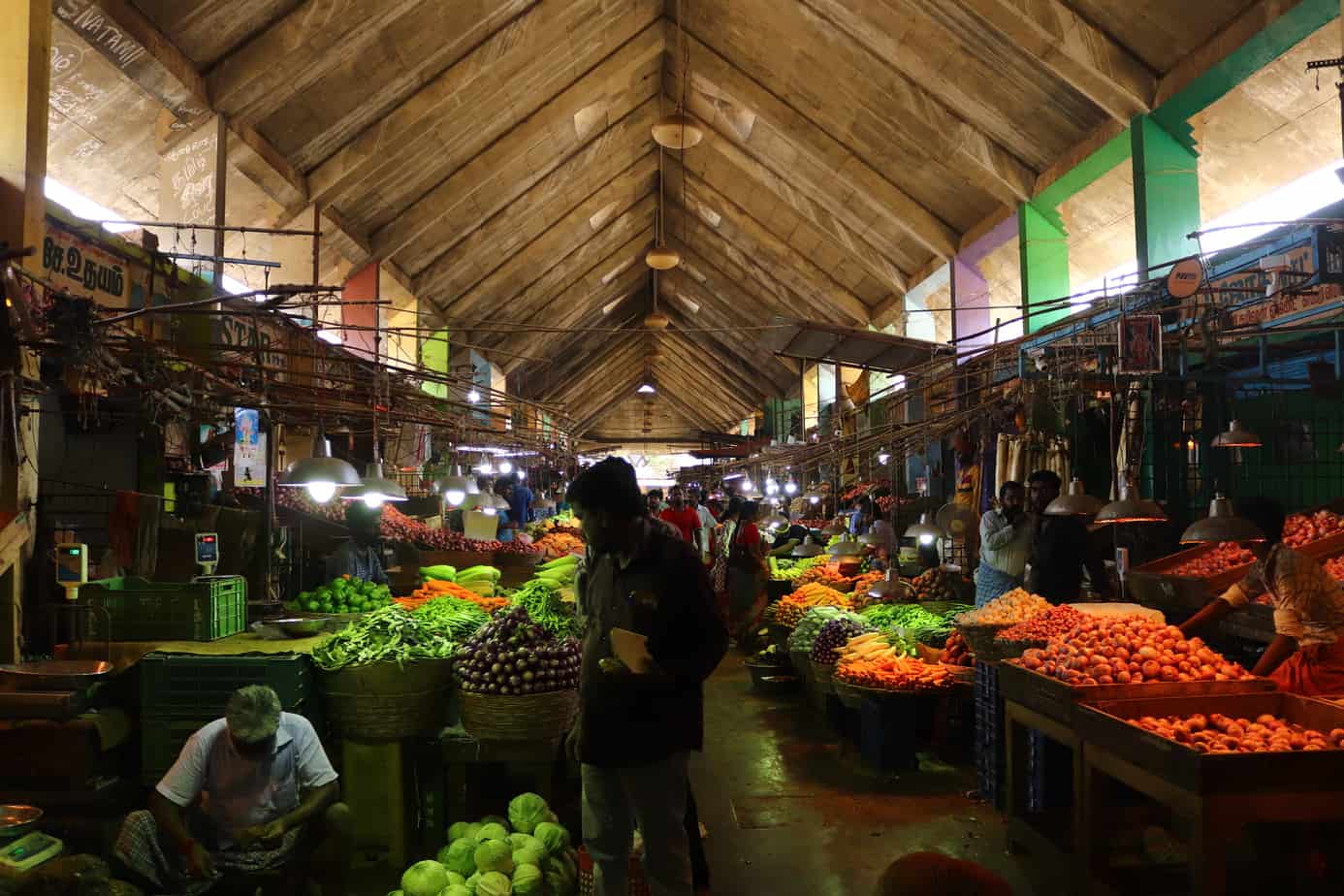
The move was met with protests by the street vendors whose livelihood would be affected by the eviction. Around 500 such vendors would be impacted by the move. They staged a demonstration against removal of street vendors, citing that it would be against the Street Vendors (Protection of Livelihood and Regulation of Street Vending) Act, 2014. The vendors demanded allocation of a space for them instead of forced eviction.
Source: The Hindu
CMRL refloats tender for Sholinganallur-Siruseri line
The Chennai Metro Rail Limited (CMRL) refloated a tender for the metro rail line from Sholinganallur to Siruseri. The line will span 10 km and have nine elevated stations. An earlier tender was cancelled with a view to optimise construction speed and costs associated with the project to the tune of Rs 250 crore. This line is expected to be operational in three years.
The construction of this stretch will be completed with funding from the Asian Development Bank. Earlier reports suggested that CMRL was looking to cancel this section of the project. This was met with protests from residents of OMR who are of the view that the metro rail will be a game changer for public transport in the IT corridor.
Source: The Times of India | DT Next
[Compiled by Savitha Ganesh and Aruna Natarajan]