For homemaker Rani, alternate evenings are dedicated to a few rounds at the 2,456 sq m Sharma Park in Chennai’s T Nagar, playfully chasing her two granddaughters across the sanded area. But there are a few things she is worried about. “It’s hot throughout the year at the park. It has unwatered, withering plants, and this area is often prone to rowdyism,” Rani says, pointing to strewn water bottles and food packets behind some benches. However, as she spends all day sweating in her kitchen, these few hours in the open air are immensely valuable.
In an earlier article, we explored how parks in Chennai are shrinking. Here, we examine facilities in 10 city parks and what is needed to make them accessible.
Read More: Chennai has 835 parks, but overall green spaces have shrunk
Often, parks across cities are not used to their full potential due to a lack of shade from scattered trees, broken benches, or maintenance and safety issues, points out Nivedha GG, landscape architect.
From maintenance to timing, are these parks accessible?
A crucial issue is timing: around 525 public parks were reported closed between 11 am and 4 pm in 2021. Post-pandemic, these restrictions were lifted, with the GCC recommending parks be open from 5 am to 9 pm.
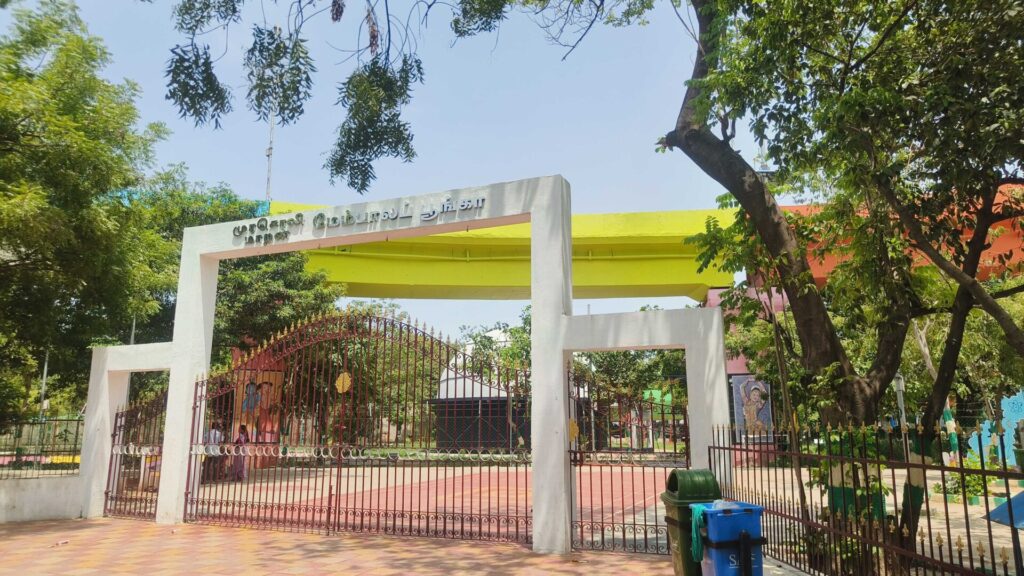
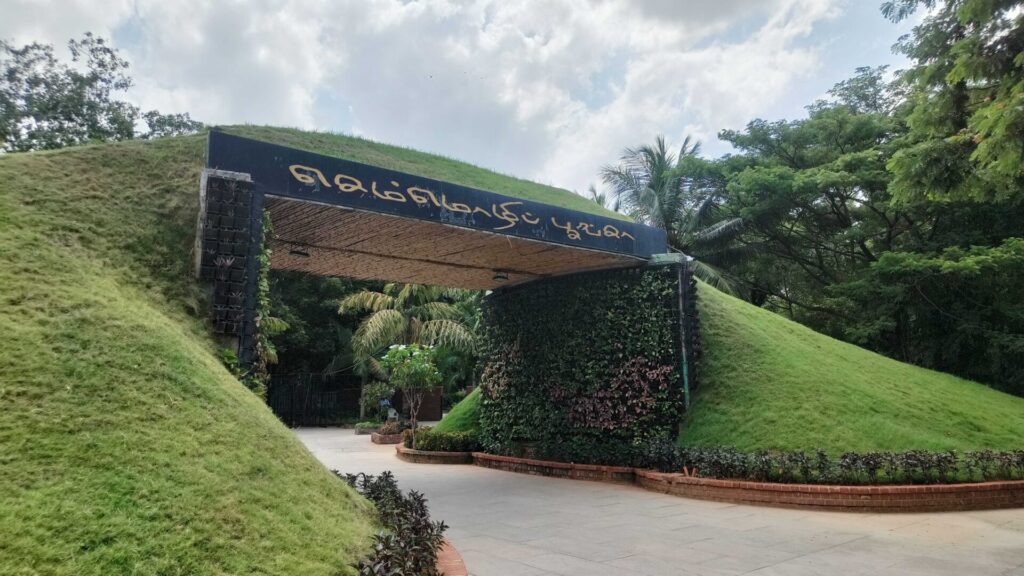
Skip to now, in July: Citizen Matters visited 10 parks across Chennai and found that half were closed at noon and opened by 4 pm. This included GCC parks like Murasoli Maran Flyover Park, two corporation parks in Perambur, and Koyambedu Eco Park. Some other parks continued to stay open till 8 pm, like in Anna Nagar West, or Semmozhi Poonga in Teynampet.
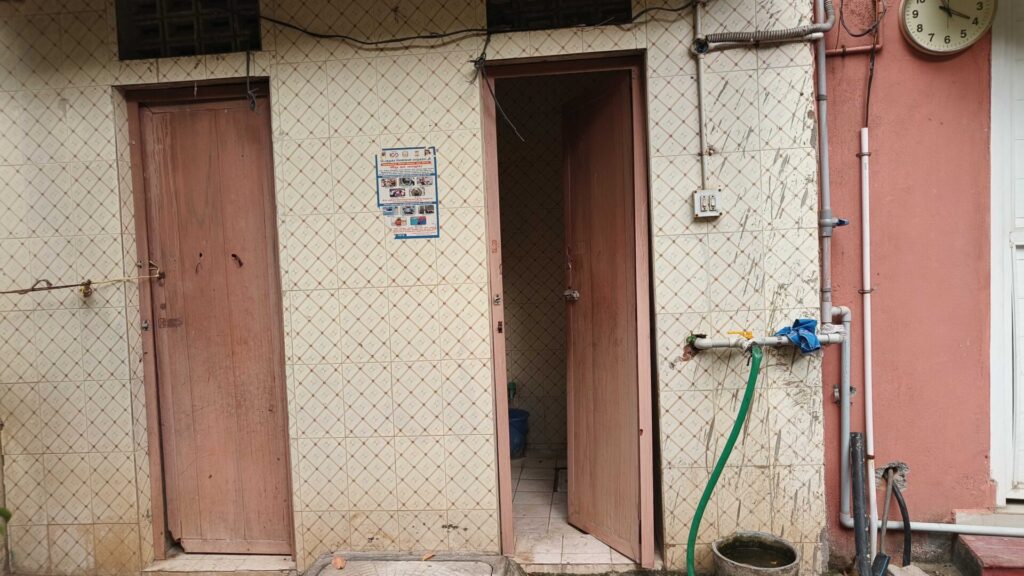
Basic amenities such as toilets, drinking water, and play equipment are lacking in many parks. Unlike older corporation parks, newer ones, such as the 3.59-acre eco-park under the Koyambedu flyover, feature amenities like an amphitheatre, a skating rink, and a yoga hall. “But the park gets really hot because of the heavy concrete use, and its location ensures high noise and air pollution,” says Sathish S, a visitor.
Read more: Commuters, vendors bear the brunt of rising air pollution in Chennai’s Ambattur
Unnecessary concretisation of parks in recent times has affected their role as environmental buffers. At Nageswara Rao Park in Mylapore, over 70% of green cover has been razed to make way for concrete, says resident Supraja Srinivasan. “They first cut the trees to build a storm water drain, and now trees have been uprooted for “modernisation,” she adds. Areas with high traffic and high concrete density intensify urban heat. Residents also flag how the park was previously an ecological sink, absorbing rains, but now surrounding areas flood without this function.
What we found in our audit:
| Sl No. | Park | Access at noon | Maintenance issues | Amenities |
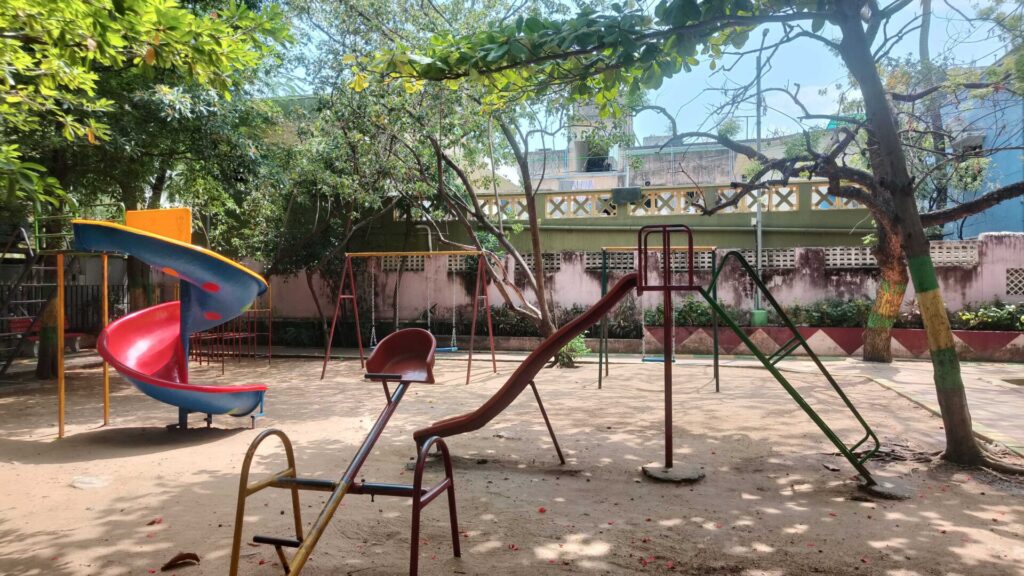
| 1. | Semmozhi Poonga, Cathedral Road | Open | Walkers say ₹75 entry fees is too high. Poorly maintained benches, play equipment. High green cover but heat persists, say walkers. | Security guard at all times. Adequate lighting. |
| 2. | Metal Box Park, Gil Nagar | Closed | Broken pathways, broken toilet doors. Trees not pruned on time by GCC. Needs sand at the playground pit. Gym equipment is faulty, needs to be changed. | |
| 3. | Murasoli Maran Flyover Park | Closed | Construction material at the entrance | |
| 4. | Venus Park, Perambur | Open | Adequate green cover., but entrance is near a bus stop, so easily missed. | Adequate gym and play equipment. |
| 5. | Kennedy Square Park, Perambur | Closed | Issues of substance abuse near park causing safety concerns. | |
| 6. | Koyambedu Eco Park | Closed | Ornamental plants, concrete use. | Facilities like skating rink, children’s play area, outdoor gym, amphitheatre, public toilet, drinking water, eight-walking lane. |
| 7. | Mudhal Avenue Park, Ashok Nagar | Cracked walkway | Parking facilities available and good green cover. | |
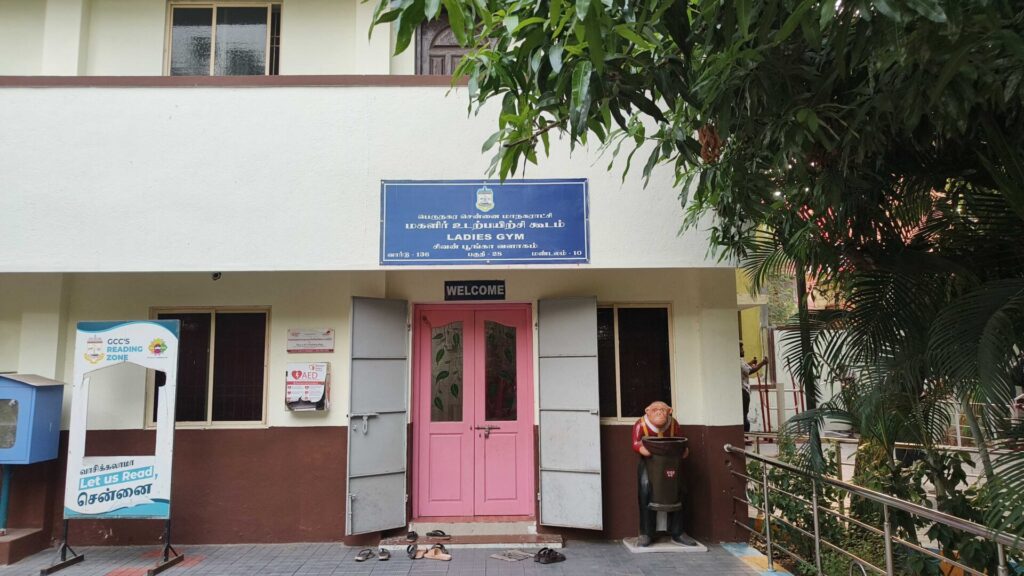
| 8. | Sivan Park, Vadapalani | Open | Ramp and tactile paths, ladies gym, RO water, reading corners, and badminton courts. | |
| 9. | Sharma Park, T Nagar | Closed | Garbage dumped in the park, poor maintenance | |
| 10. | Anna Nagar West Corporation Park, I Block | Open | Lack of adequate lighting | Adequate green cover |
The politics of parks and privatisation
Historically, parks have been accessible spaces for the broadcast of information, such as radios set up in Panagal Park; it has been the base camp for working-class movements and have seen the origins of political movements. The Dravida Munnetra Kazhagam party traces its first speeches to the now-Arignar Anna Park, Royapuram, in the 1940s. The first red flag was raised in India at Chintadripet’s Napier Park on May Day, 1923, and continues to be raised every May 1. Sanitation workers staged a protest here last year against being transferred to a private solid waste management firm.
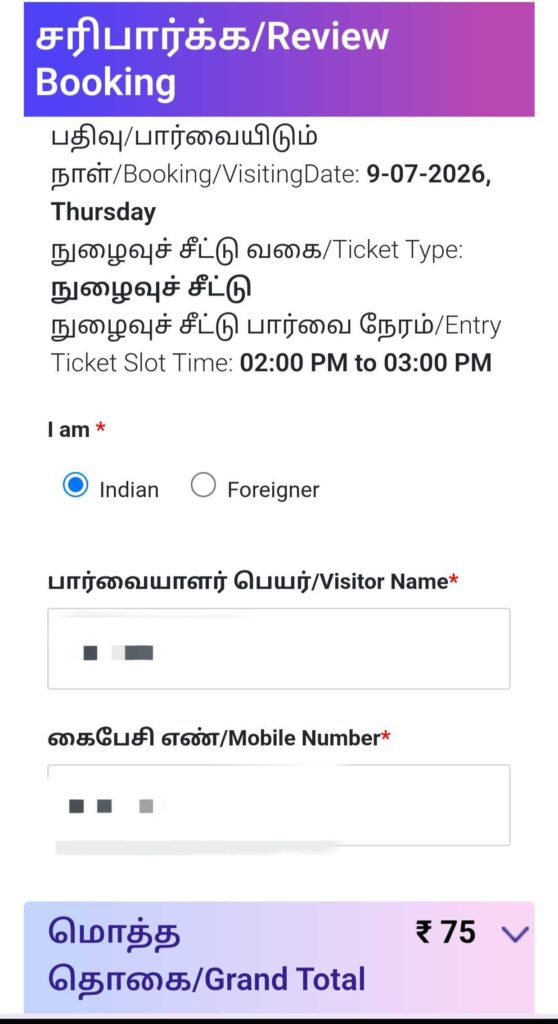
Apart from concrete use, parks have also become commodified private spaces, requiring entry fees. For instance, at Semmozhi Poonga, visitors have to register online and pay ₹75 via WhatsApp for a two-hour visit. “We paid a lot to visit this park, but it is not worth it due to poor maintenance. Kalaignar Centenary Park is better, but also expensive,” says Anu, a first-time visitor.
Ticketing limits access
This trend continues across the city with a single-time entry costing ₹20 at Tholkappia Poonga, ₹25 at Chetpet Eco Park and ₹100 at Kalaignar Centenary Park. Parks requiring entry fees will impact daily-wage workers and communities who need places of rest the most, but already lack access to high-quality parks and green spaces.
In Perambur, the recently-opened STEM Park requires an entry fee as well. “Why are public spaces becoming increasingly commercial ones? The same has happened with Manali Lake, which was originally proposed as a public recreation area. If they’re going to start charging entry fees, what’s the point of calling them public spaces?” asks resident Raghukumar Choodamani. At Satyamurthy Nagar Park, he flags dilapidated overhead water tanks and light electric wires coming loose at Murasoli Maran Park.
“Parks are a middle-class luxury rather than a public space for the working class,” says Sujata Mody, president of Pengal Thozhilalar Sangam. She recalled an incident where union members were barred from meeting in a Tondiarpet park. Mody argues that instead of expanding city green cover, the DMK government prioritized vertical growth by increasing the Floor Space Index. “Moreover, parks are often confined within gated communities, making them inaccessible to the public,” adds Ammu Pradeep.
Moreover, the origins of some parks are rooted in the displacement of communities like potters displaced to make way for Chetpet Eco Park, and more recently, SIPCOT Eco Park in Navalur, encroaching on a lake and displacing Irular communities.
“There’s a reduction in tree cover and pavement space, so women walking find it impossible to traverse from one job to another, in the heat,” says Sujata. Policy must move beyond green cover in parks and focus on greening cities, as working-class communities occupy pavements and streets as resting spaces, she highlights.
Experts and residents recommend:
- Keep the parks open at all times.
- Ensure accessibility like ramps and tactile paths, clean toilets, gym and play equipment.
- Plan parks to integrate walkways and neighbourhoods.
- Focus on greening outside of park spaces.