IMD issues orange alert over heat wave in Mumbai
The Indian Meteorological Department (IMD) has issued an orange alert in many parts of Maharashtra including Chandrapur, Akola, Wardha, Yavatmal etc. Mumbai too has recorded above average temperatures. On April 28th, Mumbai’s maximum temperature was 4 degrees above normal, at 37 degrees Celsius, while the minimum temperature was 25 degrees, which is considered normal.
IMD’s regional forecast suggests that sunny weather conditions will remain in coastal Maharashtra and Marathwada till May 2nd.
Source: The Indian Express
Read more: Rising temperatures in Mumbai call for mitigation measures, but where are they?
Another attempt by the BMC to mitigate floods in Mumbai
On April 28th The Brihanmumbai Municipal Corporation (BMC) held a two day workshop on flood risk and mitigation for the soon approaching monsoons. The workshop helped develop a comprehensive plan for flood mitigation.
According to BMC’s Additional Commissioner, P Velarasu, a lot of factors are at play when it comes to flood risk, like the distribution of rain, the number of stormwater drain outfalls, etc. 150 spots in Mumbai fall below sea level. “While Mumbai’s flood vulnerability may not be new, it is increasing every year, and hence no system will be able to cope with it,” he told The Times of India.
For 2022, the BMC has invested in building water pumping stations across the city that will help vulnerable areas in managing floods. They even plan on constructing more underground holding tanks, like the ones in King’s circle and Dadar’s Pramod Mahajan Udyan, that will control floods in below sea level areas.
Despite all these measures being put in place, it remains to be seen whether the BMC can assure a flood-free Mumbai.
Source: The Times of India, The Free Press Journal
Desilting drives in Mumbai to conclude just in time for monsoons
Desilting, a precautionary measure against waterlogging, is carried out every year near major drainage networks to ensure that water flows freely in the city. Desilting work involves removing sludge, clay and other sediments from the bottom of drainage spots. The drainage network in Mumbai spans over 2000 kilometres and desilting work in Mumbai is set to be completed by May-end, just in time for monsoon season.
The BMC’s annual drive of desilting water bodies like lakes and rivers has achieved 25% of their target, and they aim to reach the 50% mark by the first week of May.
Flood prone areas in the Oshiwara rivers, Mithi river and BKC are being prioritised.
Source: Hindustan Times
BMC releases list of dilapidated buildings in Mumbai
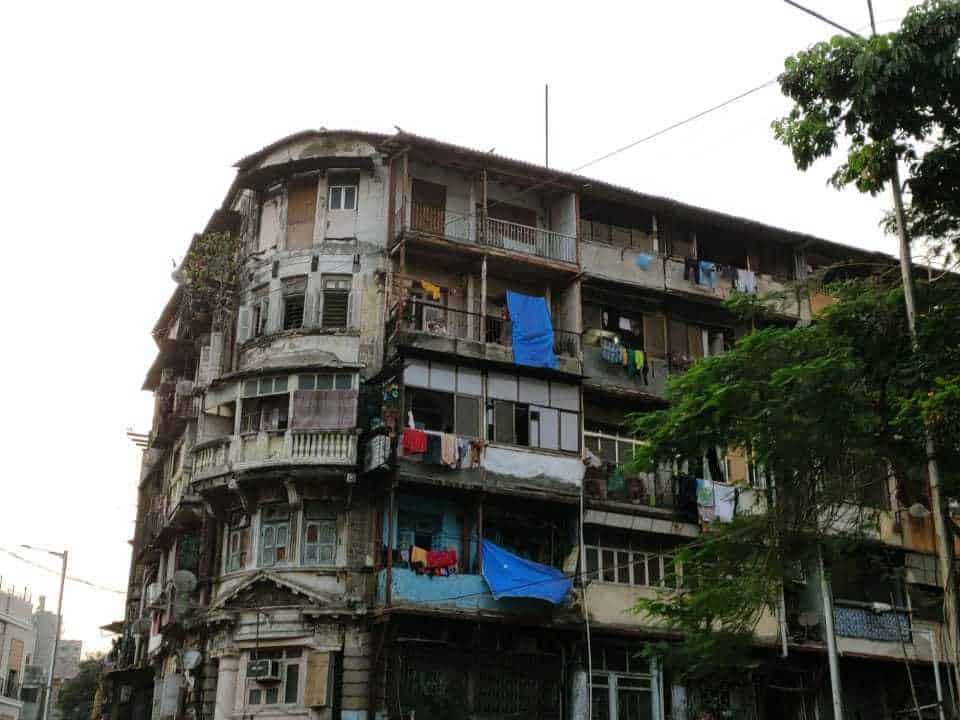
Every year, ahead of the monsoon season, the BMC releases a list of buildings that are dilapidated or unfit for habitation. This list is developed by studying the structure of buildings. If beams or pillars are bent or if foundation stones are worn out, the building is categorised as a C-1 structure, meaning it is a dilapidated structure.
This year the BMC has identified 337 residential buildings in Mumbai as dangerous. Notices are sent to owners of buildings that are over 70 years old to carry out structural audits.
163 of these buildings have been identified in the western suburbs, 104 in the eastern suburbs and 70 in south Bombay. Once these buildings are identified, residents are asked to redevelop it or demolish it altogether.
Source: Hindustan Times
Malaria elimination campaign reintroduced in high-risk wards
Mumbai’s plan to eliminate malaria was halted due to the pandemic, however the BMC plans to bring back the campaign in full force in wards that have continued to report a high number of cases.
In the running since 2017, when the city’s annual parasite index (API) – the number of confirmed new malaria cases in a specific year, per 1,000 individuals, for given country, territory or geographic area – was high, the city is currently working on an action plan to eliminate Malaria cases, an issue not new to the city. In 2019, 4,357 malaria cases were reported, 5,007 in 2020 and 5,193 in 2021. Among five parasite species that cause malaria in humans, two are commonly found in Mumbai – P. falciparum and P. vivax.
Mumbai’s average API remains below 1, but wards like ward A, C, E, F South and G South have an API of over 1. The action plan is focused on these areas.
Door-to-door case detection, blood sample collection, anti-larval treatment at construction sites, mosquito proofing water storage tanks, releasing guppy fish in open water bodies and wells and fogging and spraying of insecticides in places where water is accumulated are all part of the action plan.
Source: Hindustan Times
[Compiled by Radha Puranik]