As Chennai moves rapidly towards privatising its waste management, serious questions are emerging, not only about the impact on workers, but also on the city’s finances and transparency.
In the first part of this series, we saw how privatisation of waste management affects the workers. In this second part of our series, we investigate whether privatisation truly makes economic sense for the city. Today, 13 of Chennai’s 15 zones are managed by private companies, including Ramky Group and Urbaser-Sumeet. But a closer look reveals troubling gaps in accountability.
Read more: Status check: Key concerns remain as Chennai moves ahead with WTE plans
Is waste management privatisation linked to the waste-to-energy plant?
Take Zones 5 and 6, for instance. In 2025, the Greater Chennai Corporation (GCC) awarded a ₹276 crore annual contract to Delhi MSW Solutions, a Ramky Group venture. However, salary data shows that only around ₹92 crore goes towards paying sanitation workers. How is the remaining ₹184 crore being utilised? Unclear.
Even the monitoring mechanism raises concerns. The GCC has promised oversight by Independent Engineers, but half of their pay comes from the very contractors they are meant to audit. Can such a system be trusted?
The privatisation push does not stop there. Ramky-affiliated companies are set to control waste operations in Zones 1 to 8. They have also been awarded the contract to build and run Chennai’s upcoming Integrated Solid Waste Processing Facility and Waste-to-Energy plant, despite past operational issues in other cities and strong opposition from the local residents.
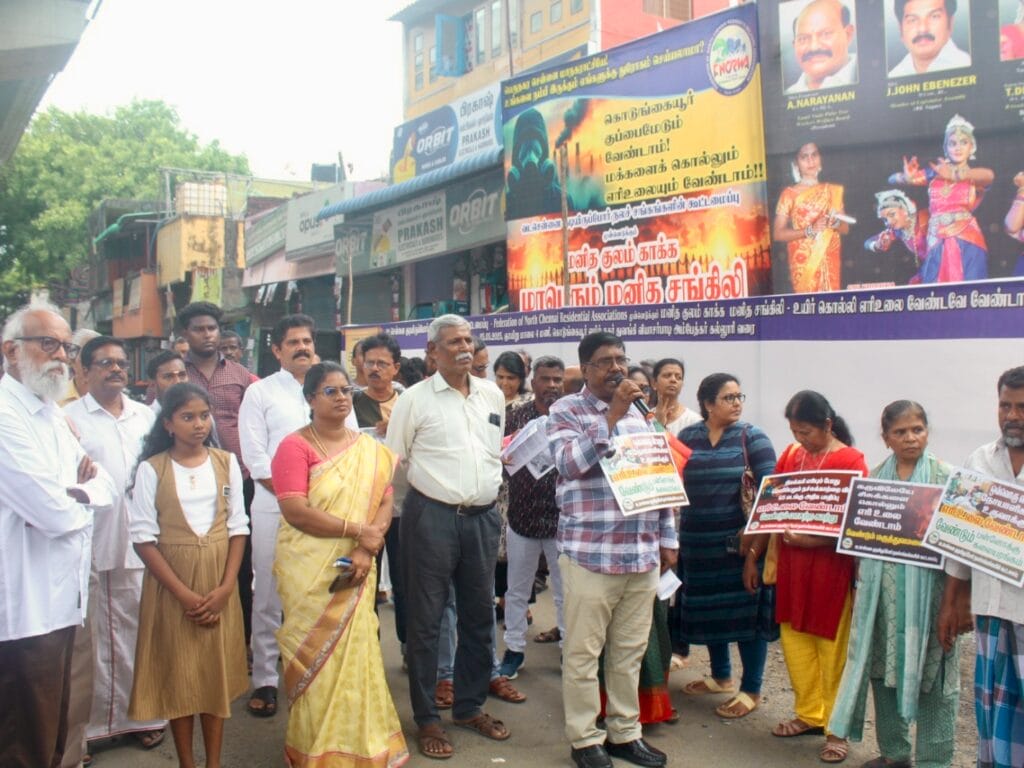
With little public consultation and no accessible data on contract terms, Chennai’s waste management is becoming more centralised, more expensive, and less transparent.
Shouldn’t the people of Chennai have a say in how their city is run and how their money is spent?
Watch the full video to know more.