Speed limits on major roads in fast-paced Mumbai
The Mumbai traffic police have declared speed limits on nine major roads of the city starting December 13th. The police said this was done to “prevent danger, obstruction and inconvenience to the public.” Some of these roads include, P.D Mello Road, Shahid Bhagat Singh Road ( 50 kmph), Haji Ali junction to Mahalaxmi Railway Station, Jogeshwari-Vikhroli Link Road and flyovers including Amar Mahal Flyover and Veer Jijamata Bhosale Flyover.
The police said this measure was initiated to avoid accidents caused by overspeeding.
After the traffic police announced this on X (Twitter), the commuters on social media had a field day with comments about slow moving traffic on these roads and how they would never reach the speed limit.
Source: The Economic Times
Wards get merely 15% of BMC budget
A report by Praja Foundation and Tata Institute of Social Sciences shows that the Brihanmumbai Mahanagar Palika (BMC) spends only 15% of its budget at ward level and the rest of it goes to various central programmes and requirements.
One of the key findings is the gap between wards in the island city and suburbs. The report says, “The top three wards in total (Capital + Revenue) ward budget estimates in 2023-24 are C Ward with per capita of 12,615; followed by B Ward – 12,223 and A Ward – 11,296 respectively. The bottom three wards in total (Capital + Revenue) ward budget estimates in 2023-24 are R/S Ward with per capita of 3,173; followed by R/N Ward – 3,361 and K/E Ward – 3,728 respectively.”
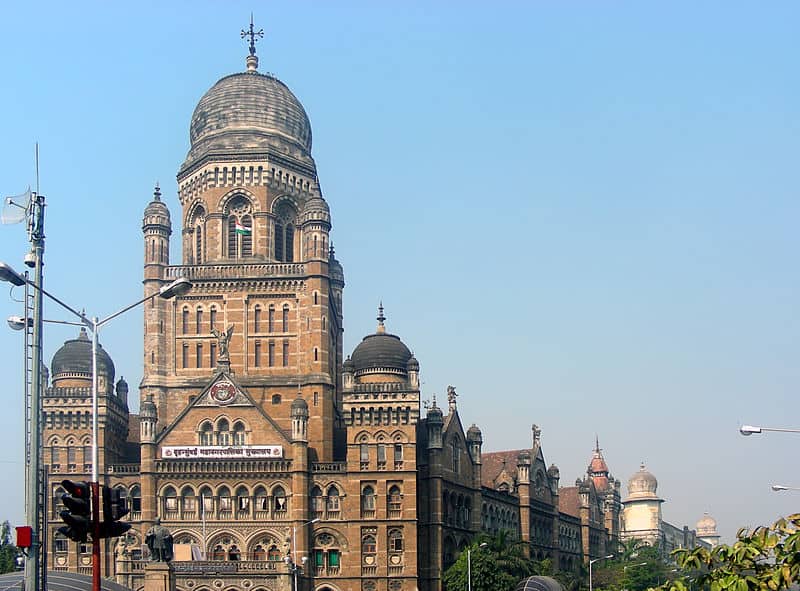
Milind Mhaske, chief executive officer, Praja Foundation was quoted as saying, “There is a significant budget which goes to the central department and some to the wards,” said. “If the quality of life is good in certain wards, it is because of better roads, good gardens and better civic amenities. So we wanted to understand what the per capita spend at that level on different amenities and services is, how it stacks against different wards and how it stacks against the overall budget.”
Source: Hindustan Times / Praja-TISS report
Read more: As BMC prepares to release its budget, a wishlist from citizens’ group MNCDF
Child abuse training helps two girls complain about uncle
During a lecture for children on good touch and bad touch, an essential training to identify and prevent child abuse, two girls aged 10 and 12 years, complained to the their teachers and social workers about their 35-year-old uncle in Dharavi, Mumbai’s largest informal settlement.
“During one such awareness programme two sisters told the NGO workers that they were sexually assaulted by their uncle – the husband of their mother’s sister who lived near by. He used to call the girls to play with his children and then touch them inappropriately. They have told us that they have been experiencing it since 2019,” the police officer was quoted as saying.
The accused is yet to be arrested.
Source: Hindustan Times
Contractor fined after cracks develop on new Aarey road
The BMC has issued a show cause notice and slapped a fine of Rs 10 lakh on the contractor for the shoddy job of repairs on the newly concretised (and yet to be finished) road in Aarey after it developed cracks. Mid-day, a local daily, reported earlier this month about the cracks on the road and the repairs were undertaken.
The asphalt road that was handed over by the state government to the BMC, is being concretised for better durability. However, activists have raised concerns about the quality, given the instances of cracks on the road. The project costs Rs 51.6 crore and the defect liability period is 10 years. The road, which connects Goregaon and L and T junction in Powai, will be fully concretised by 2025.
Source: Mid-day
Delicious record: Mumbai customer’s Rs 42 lakh Swiggy order
Rs 42.3 lakh. That is the total amount spent by a customer in Mumbai on Swiggy in 2023. As Swiggy, a major delivery app that delivers food, groceries and gourmet products, released their annual food delivery report, a customer from Mumbai made waves, with his order totalling Rs 42.3 lakh. The report, which gives interesting insights into India’s eating (or ordering!) habits, also revealed that Bengaluru was the “cake capital” and during the India-Pakistan cricket match one family in Chandigarh ordered 70 biryanis at once. During this match Swiggy got orders of 250 biryanis per minute on an average across India.
Source: Hindustan Times