Mumbai University exams to be conducted offline
Mumbai University will open its doors soon for undergraduate exams for this year’s summer session. A detailed timetable is yet to be released, but the exam committee has devised a broad outline.
Semester 2 will be offline for both regular and candidates with a backlog of exams, while Semester 4 exams will be entirely online for Arts, Science, and Commerce streams. Backlog candidates for Semester 1, 3 and 5 will appear for exams online.
A call on final semester exams will be taken based on data collected on vaccinated students and the public transport situation at the time.
For postgraduate courses, semester 2 and 4 will have regular and backlog exams offline, and semester 1 and 3 will both be online.
Source: Indian Express, Hindustan Times
BMC introduces ‘Waghoba Club’ to build wildlife awareness
On February 9th, Tourism and Environment Minister Aaditya Thackeray inaugurated a tiger sculpture at August Kranti Maidan to celebrate 200 years since the last tiger sighting in Mumbai in the Gowalia Tank.
To commemorate the event, schools operated by the Brihanmumbai Municipal Corporation (BMC) will introduce ‘Waghoba (tiger) clubs’ for all students, to build an awareness and understanding of Mumbai’s wildlife. The clubs will organise activities in schools, along with nature trails and field trips to Sanjay Gandhi National Park.
BMC’s Budget for 2022 has allocated Rs 31 lakh towards awareness of wildlife and biodiversity.
Source: Mumbai Live
Read more: Is concretisation killing trees in Mumbai?
Mumbai’s first viewing deck inaugurated at Dadar
On February 9th, Mumbai’s first viewing deck, Mata Ramabai Ambedkar Smriti Viewing Deck, was inaugurated by Mumbai Suburban Guardian Minister Aaditya Thackeray. Built on the Dadar shore in the span of a year, the viewing deck overlooks the Bandra-Worli Sea Link and is built on top of a non-functional storm water drain outfall. The BMC plans to make more viewing decks across Mumbai.
The deck can hold up to 40 people, and will be open to the public even at night. The cost of the project was estimated at around Rs 3 crore.
Source: Mid day, Indian Express
Mumbai placed 5th in new report on vehicular congestion in cities
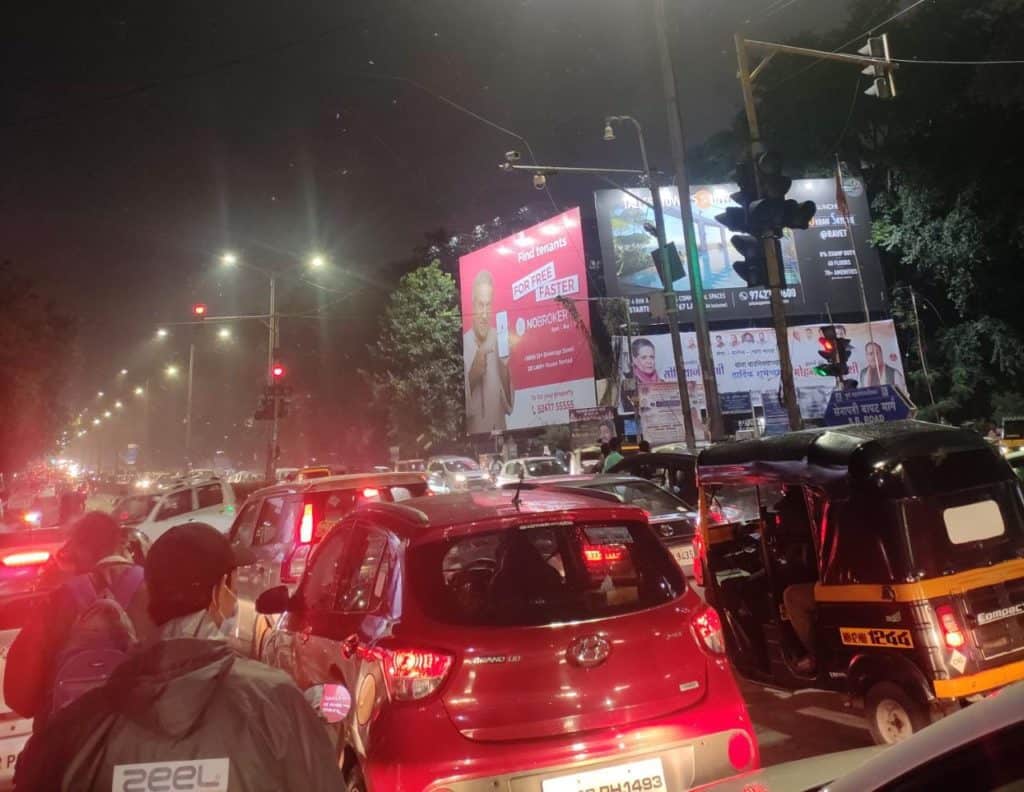
According to a new report released in February by TomTom Traffic Index, an international congestion report, India is placed 5th in the list of the most congested cities in terms of traffic. Mumbai has witnessed a 12% drop in vehicular congestion since 2019, but mainly because of pandemic and lockdown restrictions.
Mumbai witnessed its worst traffic conditions during festivities and monsoons in 2021.
Among four other cities mentioned in the report, Mumbai stood at 5th. Bengaluru at 10th, New Delhi at 11th, and Pune at 21st.
Source: Mumbai Live, TomTom Traffic Index
Only one sealed building in Mumbai since the beginning of the pandemic
As of February 8th, only one building was sealed in Mumbai, according to the BMC’s COVID-19 dashboard. The building is located in the Govandi, Deonar, Mankhurd area. Currently there are no active containment zones in the city.
In the beginning of the pandemic, over 66,000 buildings had been sealed in Mumbai.
BMC’s rule of sealing buildings was eased in the third wave, when the civic body sealed only those buildings where more than 20% of the flats tested positive. The lesser severity of the Omicron variant and a larger number of vaccinated citizens gave BMC an opportunity to ease restrictions. In the first two waves of the pandemic, buildings were sealed if there were more than five positive cases.
Source: Mumbai Live, Times of India
(Compiled by Radha Puranik)