The constant looking over one’s shoulder, being followed on the street, inappropriate touch and harassment on public transportation — every woman is familiar with this narrative. It was these issues that were highlighted when groups of young women in Mumbai were asked to create tableaux, depicting their everyday experiences, during a recent theatre workshop.
While the workshop facilitators did not set a specific theme, something striking happened. Group after group independently chose to portray the same issues: street harassment, eve teasing, gender discrimination and domestic violence. These were no longer just abstract concerns but pressing realities shaping how young women navigated the city and their own homes.
The tableaux reflected what the women face regularly and drew attention to what is often dismissed or minimised. In a city where women’s mobility and safety are important issues, these spontaneous performances revealed a generation ready to name their struggles and claim their constitutional rights.
Learning civic leadership skills
The workshop, part of Civis’ Civic Sisterhood Campaign supported by SAP, was designed to build civic leadership skills among young women. Participants were selected through partnerships with community-based NGOs and direct outreach to colleges. The campaign aimed to help young women understand their rights and engage confidently with local governance. Between July and September this year, it reached 358 participants from NGOs in underserved urban areas of Mumbai and Thane, as well as colleges across Mumbai.
The performances from the theatre workshop, facilitated by Mumbai-based company tafreehwale, were the final session of the four-part civic education programme. It provided creative expression and created a powerful bridge between abstract civic concepts and lived reality.
But what made these performances truly powerful was recognising that knowledge alone was not enough. While the workshops taught these young women about their rights and entitlements, they discovered through the theatre experience that understanding rights on paper is fundamentally different from knowing how to claim them in practice.
Read more: How can you protest in Mumbai? A citizens’ guide to rules and responsibilities
Gaps in knowledge of governance and policy
Before our workshops, we surveyed 52 young women and found major gaps between their civic knowledge and desire to participate. Only 55.8% knew what Right to Information (RTI) was for, 57.7% understood public consultations, and 46.2% were completely unaware that online government feedback platforms existed. This uncertainty affected their confidence, with 48% unsure about how the government works and 34% admitting they couldn’t explain how laws are made. Despite these gaps, their motivation was incredibly high, with 73.1 % wanting to join a young women’s civic leadership group, and 62% were eager to learn how they could influence laws and policies.
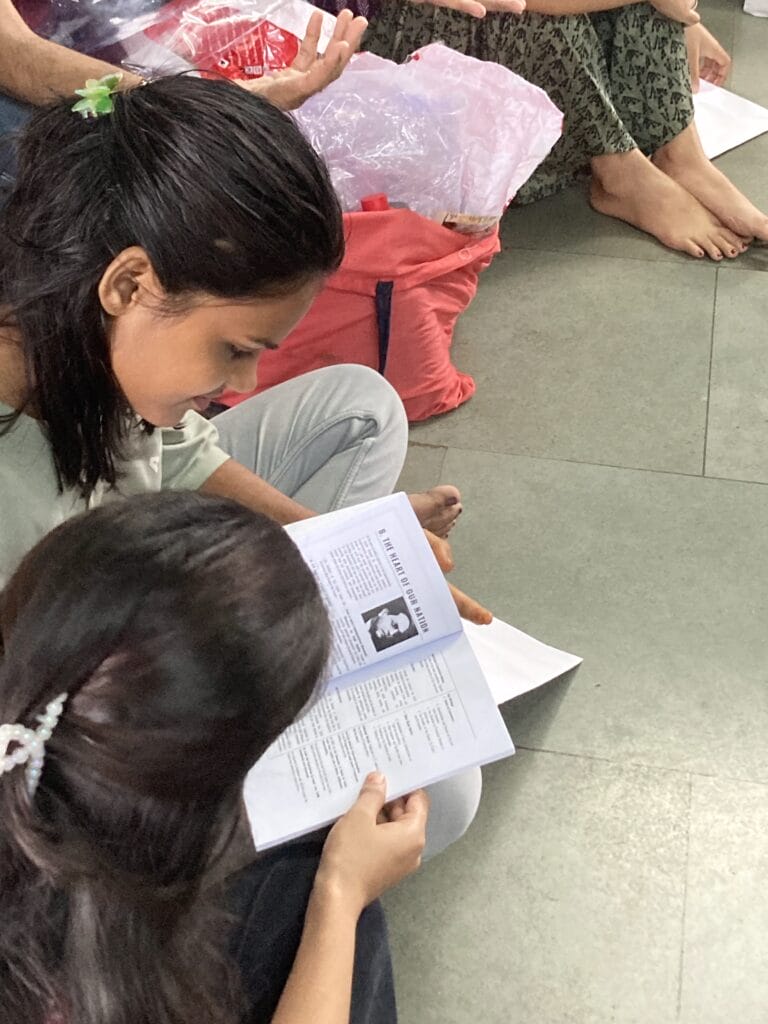
The civic education programme began with a workshop on foundational concepts: the Preamble, Fundamental Rights and Duties. It focussed on the often-overlooked contributions of women in fighting for gender inclusivity and drafting the Indian Constitution. Participants discovered inspiring women like Hansa Mehta, Dakshayani Velayudhan, Rajkumari Amrita Kaur, Begum Aizaz Rasul and others and their role in building India’s democracy.
Subsequent workshops unpacked government structure — how the legislature, executive, and judiciary function, and how laws move from paper to practice. The third workshop introduced practical tools that changed how participants viewed their relationship with the government. Many were surprised to learn about public consultations, the process through which the government seeks citizens’ input before making laws.
Voicing concerns, and demanding accountability
Moreover, learning about the Right to Information Act was a revelation. “Can we actually ask the government questions?” one participant pondered, genuinely surprised to find out that any citizen could file an RTI to demand answers about government actions. Many were empowered to discover that their voices could be part of governance and the law-making process, not just at the receiving end of it.
Suddenly, everything connected. The Right to Information Act became a tool to demand accountability. Questions surfaced: how many complaints about harassment were filed in this area? What action was taken? Public consultation became an opportunity to voice concerns about urban safety and participate in decisions affecting their neighbourhoods.
So, their fundamental rights weren’t just words in a textbook; they were protections that applied directly to their experiences. The street harassment they depicted in their tableaux wasn’t merely a social problem; it was a violation of their Constitutional right to freedom of movement (Article 19) and right to life with dignity (Article 21) that they had learned about in the first workshop.
The violence portrayed was no longer something to endure quietly. The right to Constitutional remedies was now rooted strongly in their minds.
Theatre as a tool: Creating transformative experiences, fostering agency
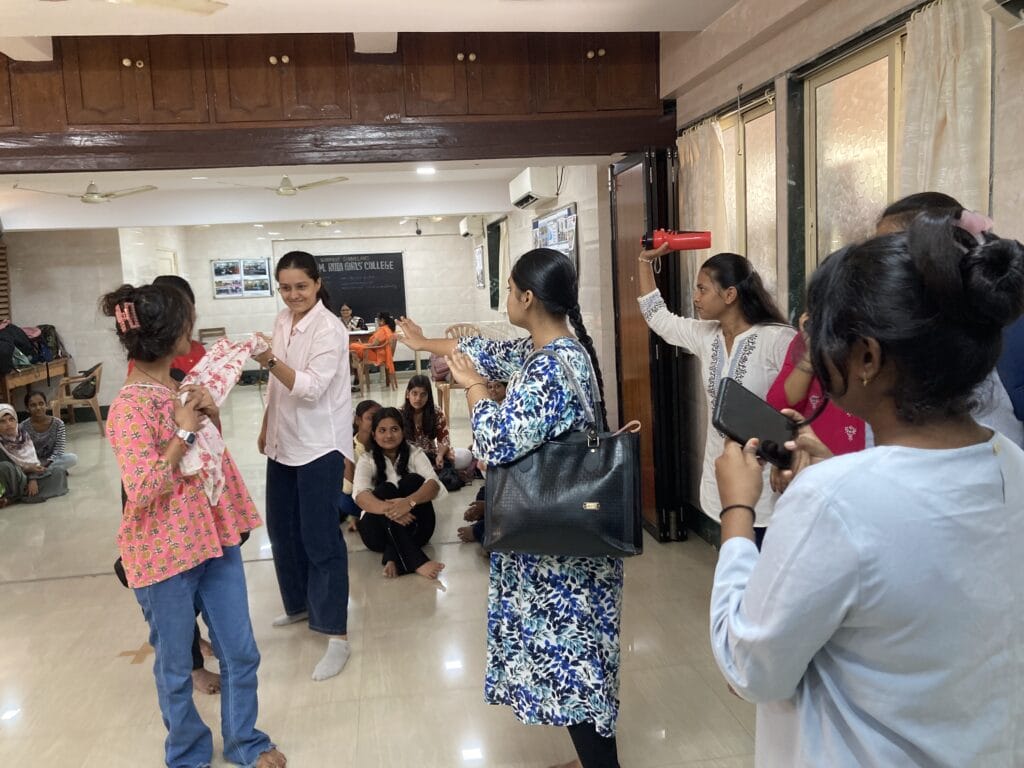
After creating their tableaux, participants sat together and discussed their performances. They spoke openly about the boundaries they navigated daily, including not being allowed to go out alone at night, relying on family members for support, and always waiting for others to step in when problems arose.
By depicting their experiences of harassment and violence, participants could see clearly how their constitutional rights were being violated. By learning about RTI, public consultation, and government structure, they discovered they had mechanisms to address these violations. The combination was transformative.
Through participatory learning, theatre and discussion of shared experiences, the workshop sparked civic awareness and confidence among the participants. As their understanding of rights and governance deepened, so did their sense of agency. When civic education is rooted in Constitutional principles and everyday realities, it empowers young women to advocate for safer, more inclusive communities.
Did these workshops end street harassment or domestic violence? No. But they did something crucial by helping young women see that the problems they face are not inevitable.
The way forward
This campaign has helped raise awareness in the short term. Going forward, Civis plans to work closely with community-based organisations to track civic engagement levels among young women in the long-term and provide ongoing support. It will also share relevant public consultations with participants whenever laws that affect them come up for public feedback.
“Hamare hak mein jo hai, uske liye ham hamesha khade rahenge’ (We will always stand for our rights),” declared one participant, capturing the essence of their transformation. For these young women in Mumbai and Thane, civic empowerment has taught them to shift from staying silent to claiming active agency. This journey has just begun.
thankyou sisterhood champion apne hme civic leadership,government structure,fundamental rights, RTI piles, articles,constitutional rights muze is ke bare me bhut hi acche se jankari mili pahile apne right ke bare me itne acche se jankari nhi thi but sisterhood champion ne bhut hi acche se ye sare right ke bare me bataya or samjhaya jise muze confidence hai ki agr kbhi apne ya kisi or ke right ke liye stand lena rha to me bina dare le sakti hu
thank to sisterhood champion. and Aman goharia sir.