The Citizen’s Charter for the Pallikaranai Watershed has called for watershed-based planning and immediate implementation of state policies to protect wetlands and waterways in one of Chennai’s most flood-prone areas. The charter, compiled by the Oorvani Foundation and the Chennai Wetlands Action Collective (CWAC), was released on Wednesday by the Pallikaranai Collective, a coalition of civil society organisations, environmental groups, resident welfare associations, activists and conservation experts striving to protect the Pallikaranai watershed region.
The report documents issues ranging from wetland degradation, encroachment by construction projects, sewage and solid waste pollution and blocked canals to poorly planned restoration works and disruptions to natural drainage. One of the major demands put forward by the collective is the constitution of an independent, specialised and interdepartmental committee, comprising subject-matter experts and people’s representatives, to undertake a comprehensive study of the policy and legislative gaps identified in this Citizen’s Charter.
“For the public, the charter is a collective reference to the key challenges facing the watershed, while providing a common platform to advocate for its protection and sustainable management. For government agencies, it is presented as a consolidated set of community-informed concerns, recommendations and priority actions, which can serve as a basis for further discussion, policy formulation and coordinated action,” said Bhuvana Raj, Community Anchor, Oorvani Foundation.
The report highlights that there has been an 85 per cent decline in Chennai’s wetlands in the past three decades, while indiscriminate urbanisation and widespread encroachment has led to the disapperance of 165 water bodies in the Pallikaranai watershed.
“The Pallikaranai Ramsar site is being occupied by government agencies like CMRL and real estate giants, which would worsen the flooding in OMR and Semmenchery. It is important that via this Charter, the concerns of the people impacted in these areas are addressed and consolidated for collective action, ” said Raju from CWAC.
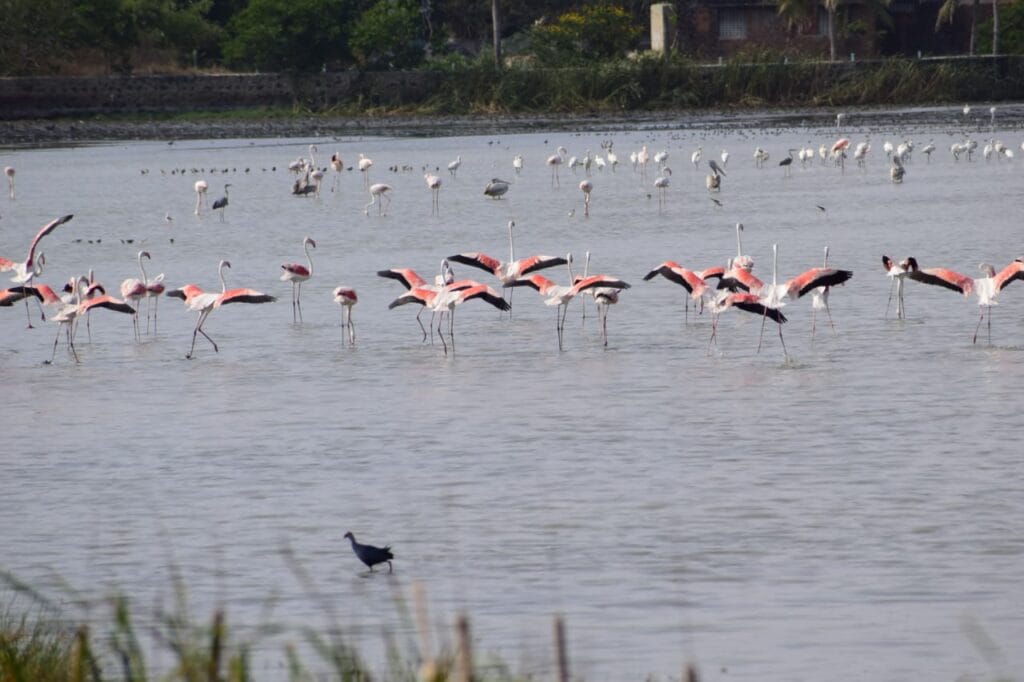
Read more: Where are the flamingos? How Metro construction is devastating Chennai’s Pallikaranai Marsh
Key demands mentioned in the charter
- The government should demarcate, map, protect and notify wetlands along with its floodplains as per the Wetland (Conservation and Management) Rules, 2017. They should follow the 2020 Guidelines for implementing the 2017 Wetland Rules, to prevent further encroachment and enact the Flood Plain Zoning Act in the state.
- A scientific template for lake restoration should be developed and adopted for all restoration projects, including CSR projects.
- The government should not allow concretisation of a lake or river area in the name of restoration or lake front development. Completed lake restoration projects like Navalur Lake, Raman Thangal Lake and Sholinganallur Lake should be audited and reviewed while proposed lake front development projects in Madambakkam Lake and Sembakkam Lake should be scrapped.
- Decentralised, catchment-based Sewage Treatment Plants (STPs) and Underground Drainage (UGD) should be planned in urban regions. Untreated sewage should not be drained into water bodies by ensuring strict action against violators.
- Segregation of waste at source in households, as per the Solid Waste Management Rules, 2026, effective from April 2026, should be implemented. Illegal waste transfer stations and dump yards on lakes like Nanmangalam Lake and Pallavaram Periya Eri should be removed and the lakes should be restored.
- Canals are critical for mitigating floods and therefore require regular restoration and maintenance. Canals should be desilted regularly, and sewage flowing into the canals should be prevented. Encroachment in canals like in Veerangal Odai should be removed. Concretisation of canals, retaining walls, cut-and-cover canals should be avoided unless it is absolutely necessary.
- All encroached infrastructure, illegal construction and proposed projects inside the protected Pallikaranai Ramsar site and its buffer zone should be dismantled to reclaim the marshland. The Greater Chennai Corporation should stop further dumping of waste into the Perungudi dumpyard and remove it from the marshland.
Read the full report here.