If Mumbaikars can gather for festivals, political rallies and celebrations, can they not rally for the right to breathe? That question and a sense of growing frustration and urgency were what led to the formation of the Human Chain for Clean Air — a citizen-driven movement demanding urgent government intervention.
For weeks, the AQI in Mumbai has crossed hazardous levels, affecting children, senior citizens and working professionals alike. Each of us has been noticing that people around us are constantly coughing, children are falling sick frequently, and senior citizens are struggling to walk without breathlessness. I realised that instead of complaining individually, we should come together as citizens and peacefully make our voices heard to push the government to take this concern seriously. Thus was born the idea of the Human Chain. It was conceived as a silent, non-political, citizen-led expression of collective worry.
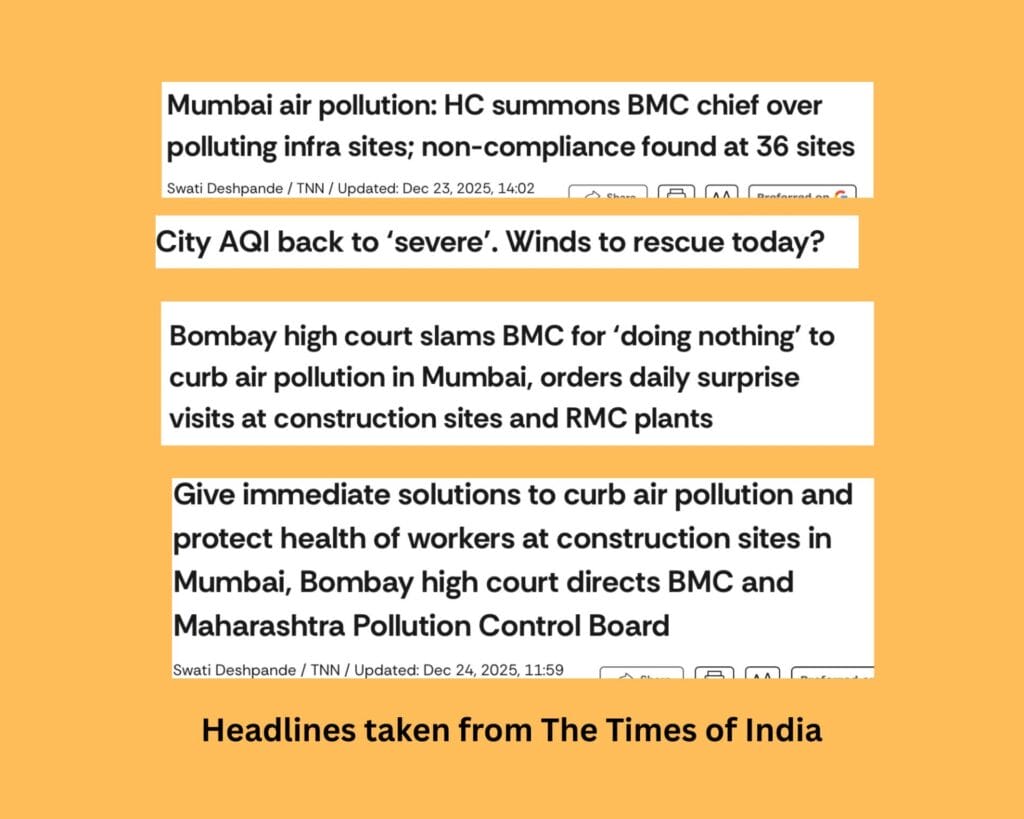
Read more: Mumbai air pollution: Airshed level governance critical for clean air
How it all started
We picked Carter Road to organise the first chain. This location fit the bill in every way. It is a public space where walkers, senior citizens, families, children and young people come daily. Some come to exercise their bodies; some to relax after a day’s work and to catch their breath. Children play in the open space under the watchful eye of caregivers. Since people gather here every day, we thought it would make participation natural and accessible.
Obtaining permission to organise the chain at Carter Road was challenging initially. However, the authorities cooperated after we explained the purpose of the protest to them. Moreover, they saw that it would be a peaceful, silent, citizen-centric initiative.
Read more: Winter pollution crisis in Indian megacities: What the CSE report says
The journey so far
What started as an idea with a small group of people soon snowballed into a movement. A few messages, calls to citizens, walkers, cyclists, students and resident groups helped it gather momentum. People who suffer the consequences of air pollution daily wanted a platform to express themselves, and the human chain provided them one.
Within hours volunteers came forward, families joined in, and more people kept asking how they could participate. What began as a small group turned into a long chain of citizens standing silently with masks and placards.
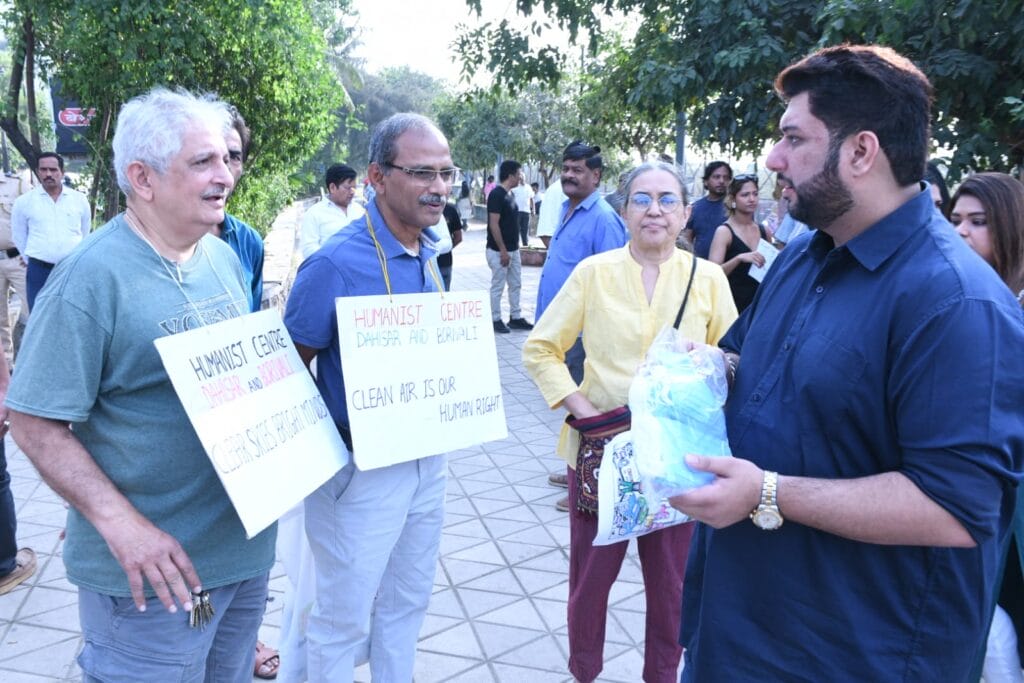
The response was overwhelming. Citizens joined not as individuals, but as one united voice for clean air. People came voluntarily — families, senior citizens, cyclists, pet walkers, students and even children. Many of them said this was the first time they had participated in any civic movement. This shows how deeply the issue has affected everyone.
We did not stop with this event. We started an online petition on change.org. The petition highlighted the fact that the AQI is worsening in Mumbai due to construction dust, road digging and toxic emissions. In fact, it has now become a public health emergency. We have received 479 verified signatures so far.
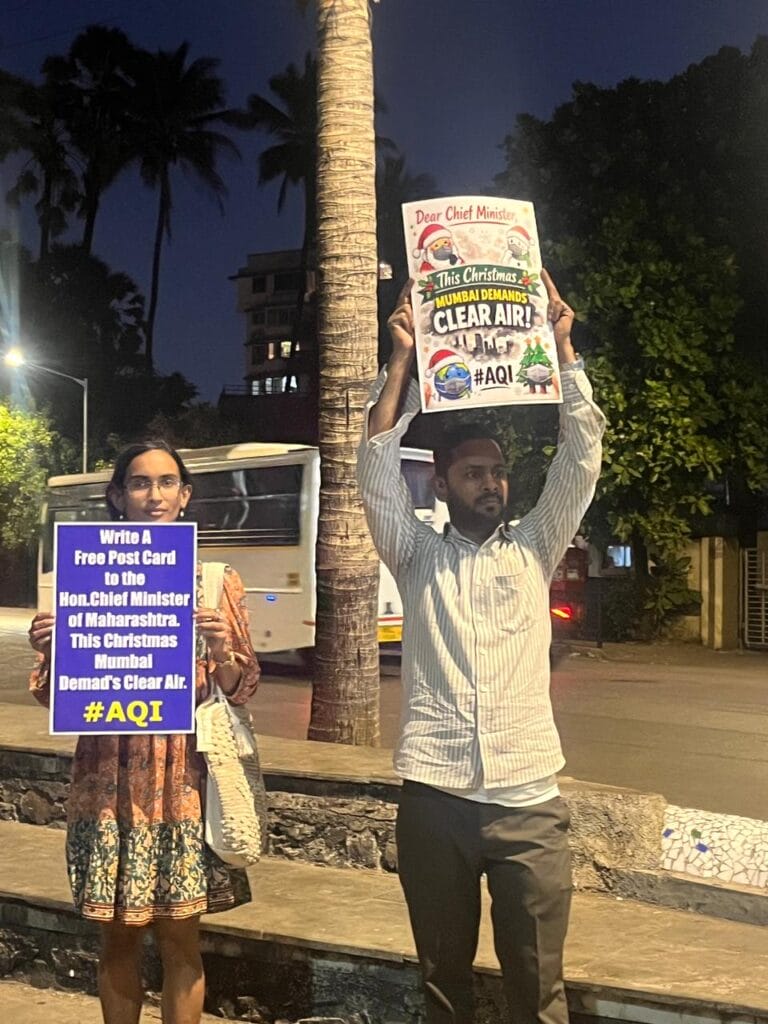
Following this, we organised a programme at Bandra Bandstand on December 23rd, where people wrote postcards to the Chief Minister, urging action to control the AQI.
We have also contacted the Environment Minister, Pankaja Munde, and the Minister’s Officer on Special Duty (OSD), Pradeep Kulkarni. We are awaiting a response from them.
Read more: Explainer: Where can you access data on air quality in Mumbai?
Future plans and demands
We will continue to protest the deteriorating air quality in Mumbai. Our approach will remain peaceful, but persistent. We are planning to undertake air quality awareness drives, documenting construction dust violations, engaging schools, housing societies and local groups, online petitions and public consultations.
The community is the backbone of this movement. We plan to involve citizens in activities like citizen-led dust monitoring, neighbourhood-level awareness campaigns, and crowdsourced reporting of pollution hotspots. We will also do workshops in schools on the health effects of air pollution and collaborate with medical professionals. Every activity is designed to empower ordinary citizens to participate without fear or inconvenience.
Mumbai is reaching a tipping point. Citizens have taken the first step with the Human Chain. Now we need the government to treat air pollution as the health emergency it is, and take immediate, measurable action. Clean air is not a luxury. It is a basic right — and we will continue this movement until every Mumbaikar can breathe safely again.
| Our demands to the government are simple and urgent: 1. A time-bound action plan to reduce Mumbai’s AQI 2. Strict enforcement of dust control at all construction sites and roadworks 3. Penalties for and blacklisting of contractors violating environmental norms 4. Real-time AQI displays at major junctions, stations and schools 5. Public transparency — weekly updates on AQI improvement measures 6. Recognition of air pollution as a public health emergency. |
[Writing assistance for this article was provided by Shruti Gokarn, Reporter at Citizen Matters.]
Also read:
- Air pollution havoc: The many ways in which poor air is threatening our children’s lives
- Why the national programme for clean air failed a gasping Mumbai
- Women construction workers face serious health and safety hazards at work and beyond