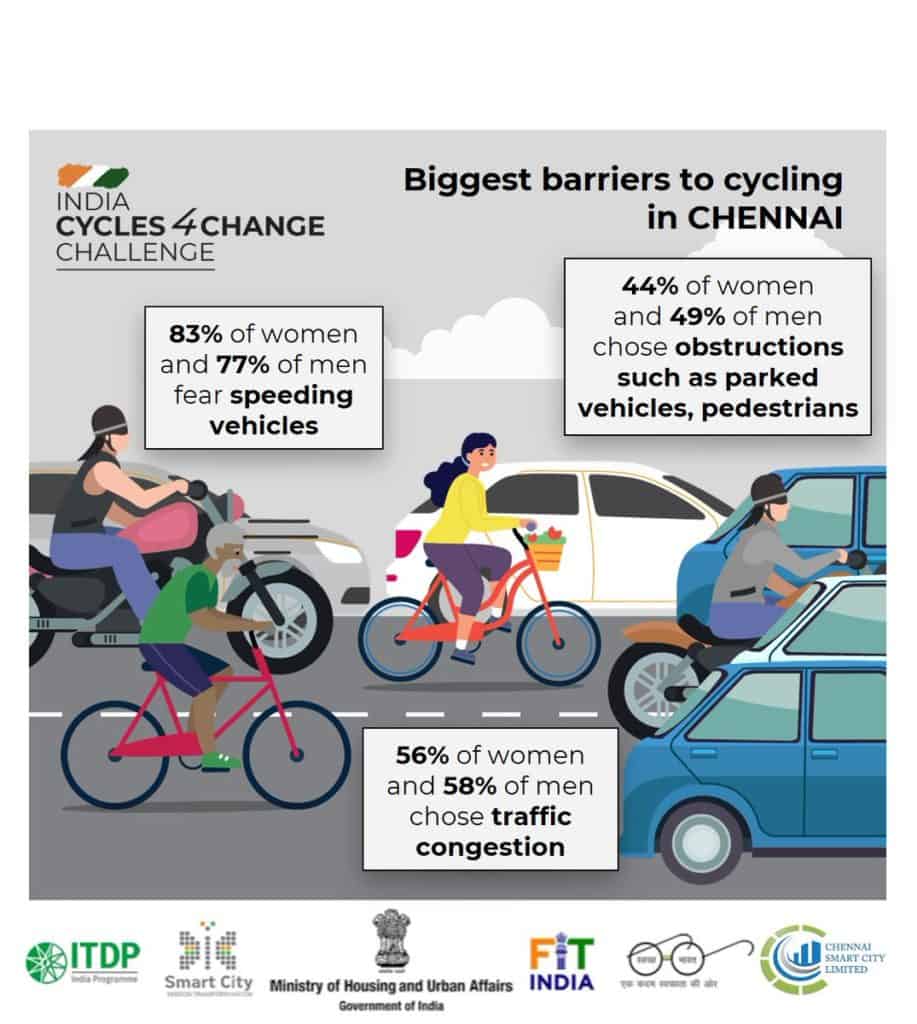
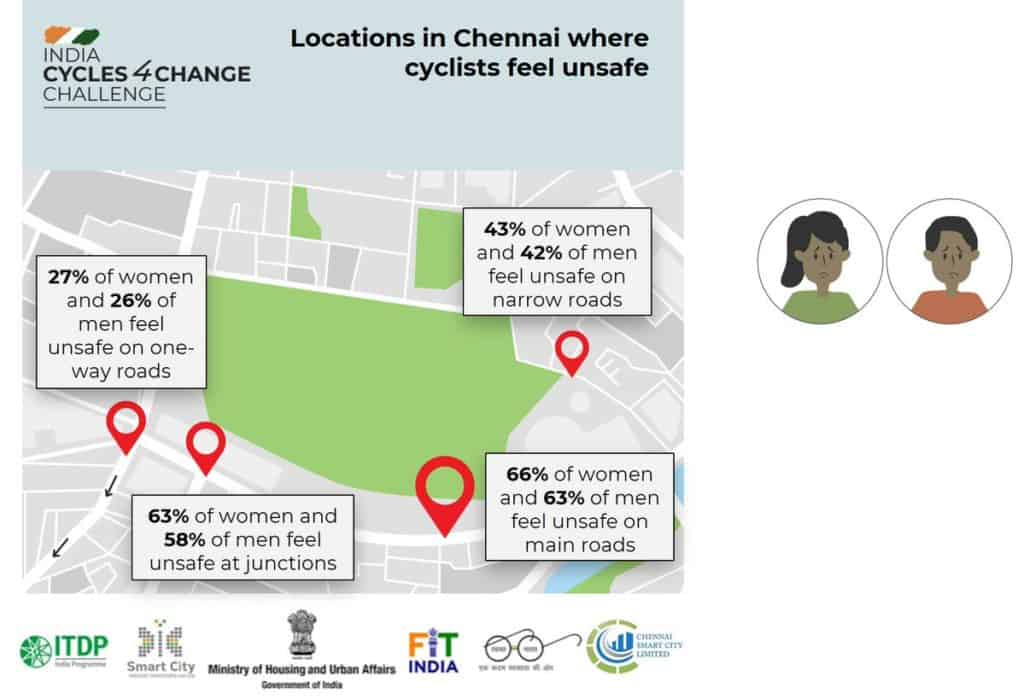
Speeding vehicles, traffic biggest barriers: Chennai cyclists

The civic body and Chennai Smart City Limited recently conducted a survey to understand what could be done to make the city cycle-friendly. Here are the results.

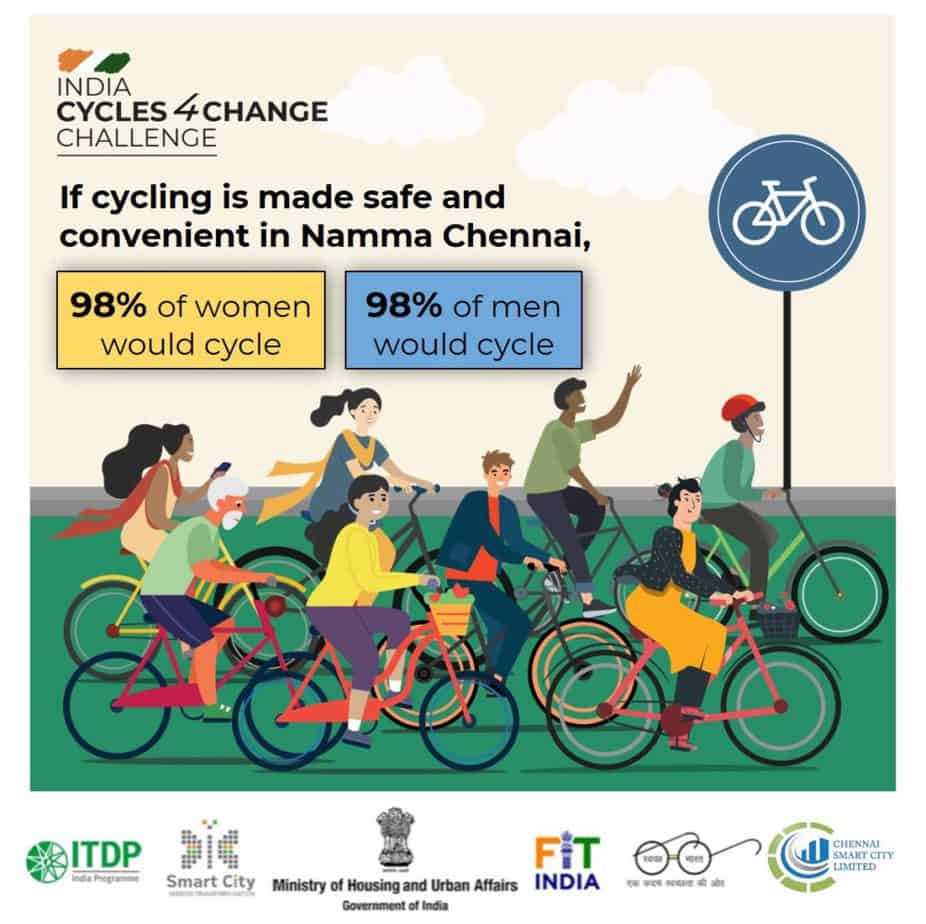
The Greater Chennai Corporation (GCC) and Chennai Smart City Limited (CSCL) conducted a ‘cycling preferences survey’ with an aim to understand the challenges faced by cyclists, improve the roads and make them cycle-friendly and promote cycling. It was done as part of the Cycles4Change Challenge, an initiative of the Ministry of Housing and Urban Affairs, to inspire and support Indian cities to quickly implement cycling-friendly initiatives in response to COVID-19.

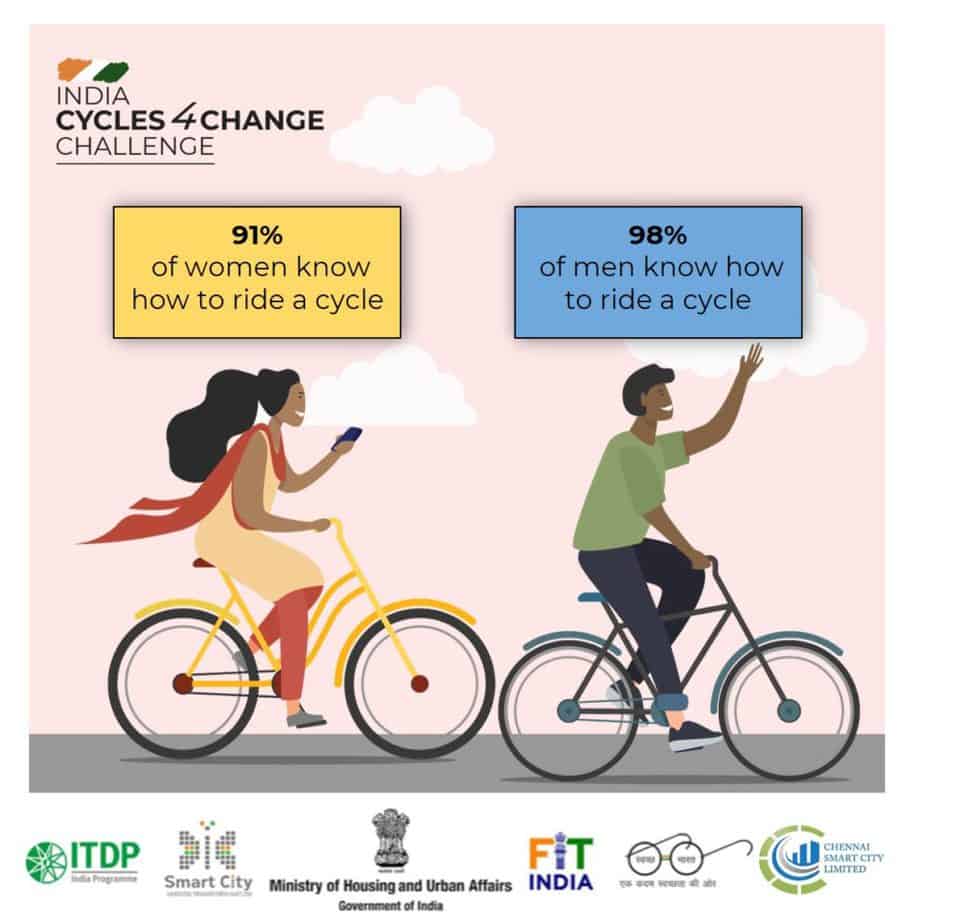
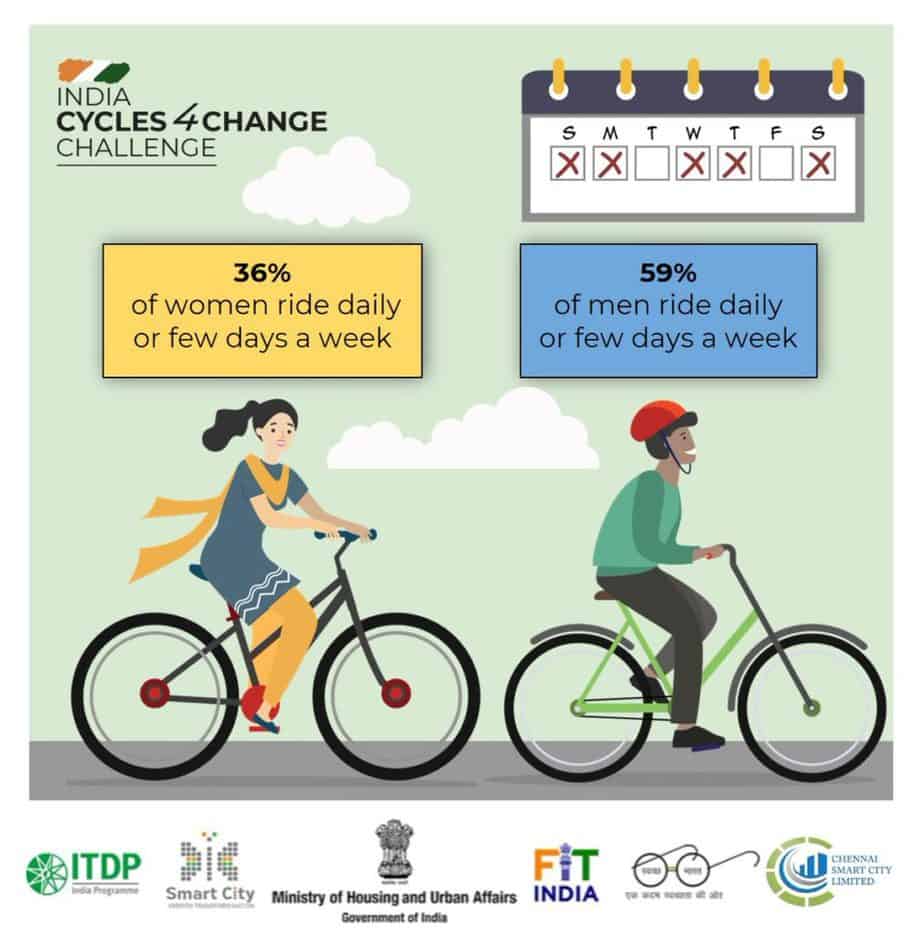
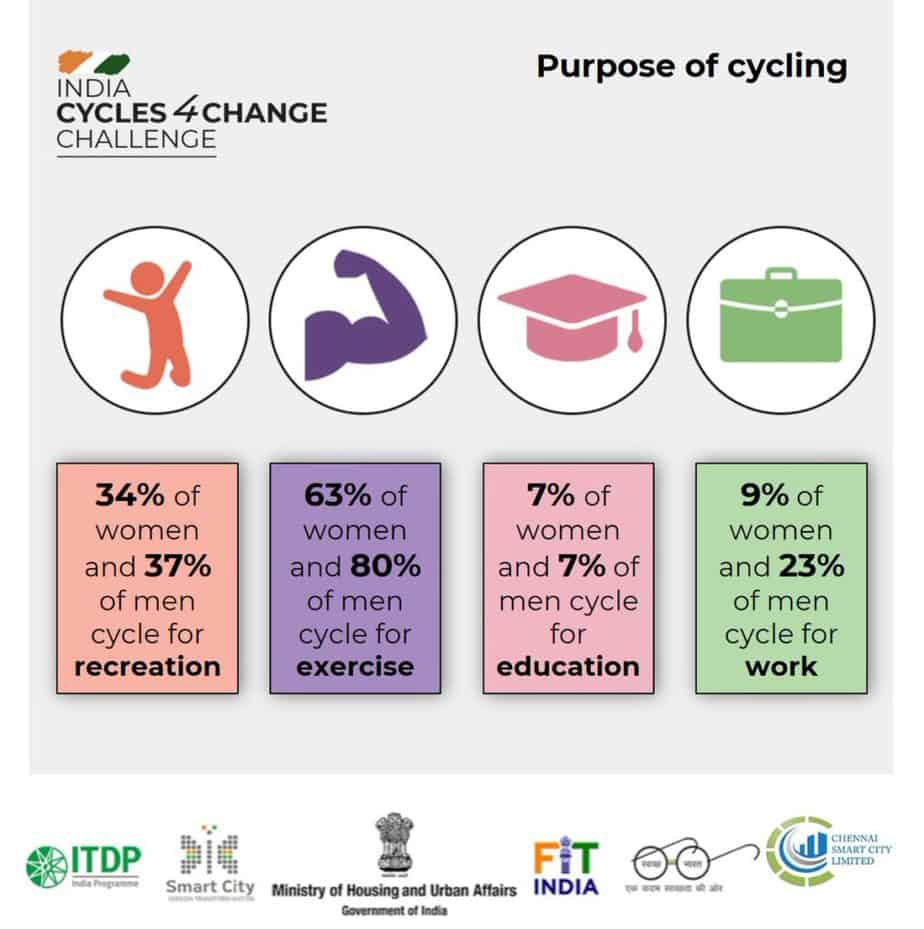
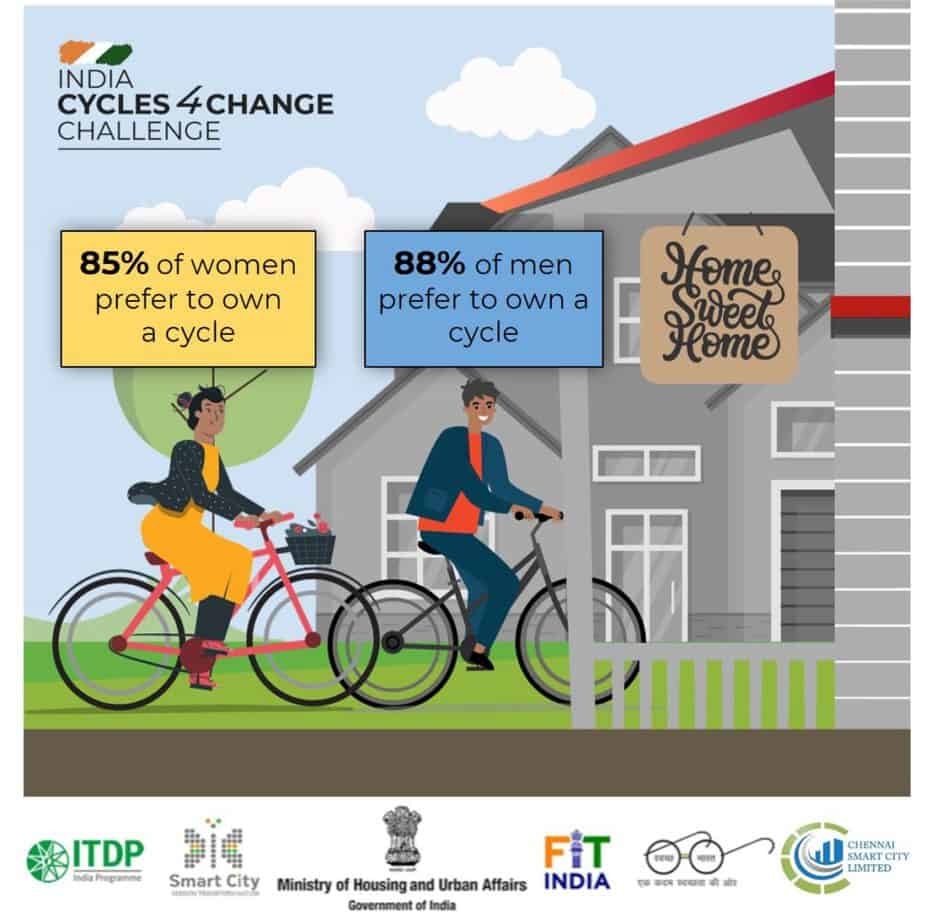
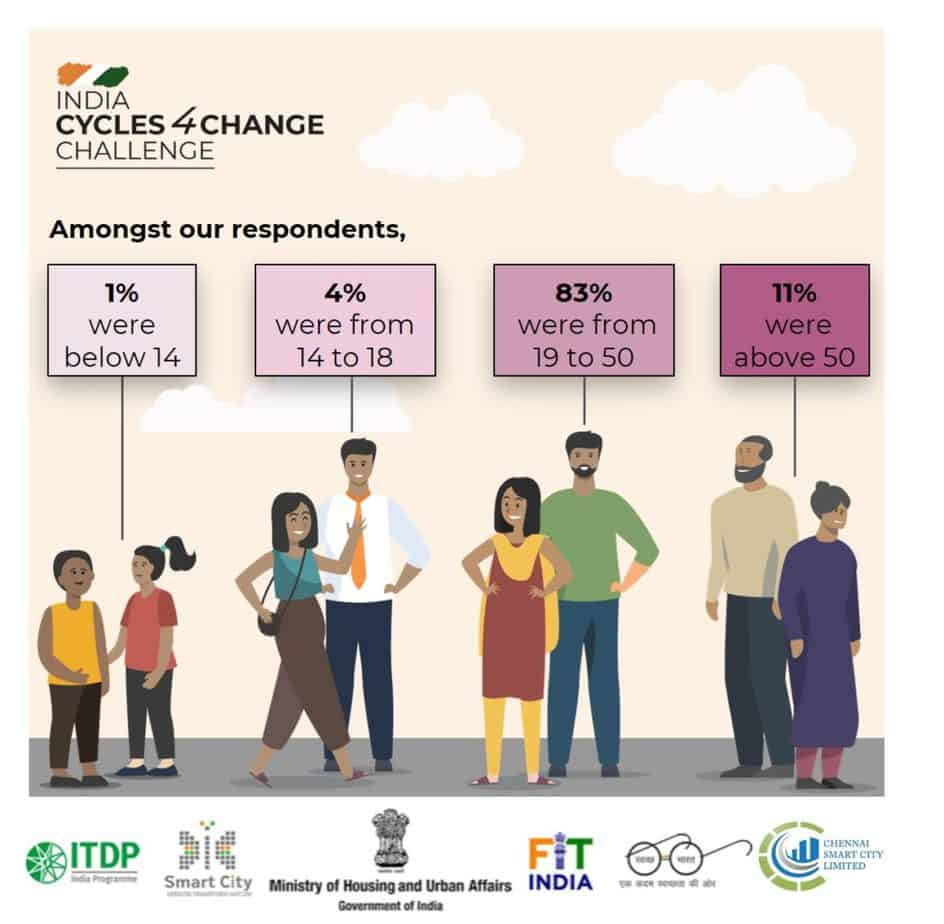
A total of 1968 participants took part in the survey. Here are the results:
Interestingly, the Greater Chennai Traffic Police Police (GCTP) experimented with a Dedicated Bicycle Lane (DBL) on Kamarajar Salai on October 28th with help of cones and barriers. Kannan Nagarajan, Additional Commissioner of Police, Traffic, Greater Chennai Police, tweeted that the lane would be formalised in the early morning hours (non-peak hours) if there are more users.

(Inputs and graphics sourced from CSCL.)

Leave a Reply

Your email address will not be published. Required fields are marked *

Similar Story

Are Chennai’s bus stops and terminals truly accessible? A reality check

On World Disability Day, we examine how MoRTH guidelines expose gaps; Chennai bus stops still fail persons with disabilities in basic accessibility.

Fifty-five-year-old Gnana Bharathi, a scientist at the Central Leather Research Institute and a wheelchair user for over two decades, rarely takes the bus anymore. Chennai’s bus stops and termini, he says, are designed in a way that makes independent travel “nearly impossible”— from reaching the stop safely, to getting onto the platform and finally boarding the bus — without physical risk. So, when the Greater Chennai Corporation declared the Vivekananda House Bus Stop on Kamarajar Salai as an accessible, ‘model bus stop’, he decided to try it.“When I arrived at the location in my wheelchair, I couldn’t even access the…

Similar Story

Mumbai’s transport overhaul: Real solutions or a hidden agenda?

The proposed Metro 11 project seems to focus on real estate gains while causing environmental damage and ignoring the needs of commuters.

Maximum City, Glamour City, City of Dreams, City of Struggles — Mumbai wears many names and identities. One of the world's most populous cities, it houses a staggering 2.17 crore people in just 603 square kilometres. Its carrying capacity in terms of accommodating a workforce was exceeded a decade ago, yet the daily inflow continues. Sky-high, artificially inflated real estate prices have pushed many to the distant suburbs, making the daily commute for work or study an arduous struggle. And yet the mobility solutions that the city administration and other powers that be come up with are not only inadequate,…