In Dehradun’s narrow lanes, mayoral election banners flutter briefly, promising progress, before fading into obscurity. The sound of crackers and victory speeches fills the air, echoing through neighborhoods already too familiar with broken promises. Across Uttarakhand’s urban towns and cities, local body elections were recently held, leaving behind a growing unease—a sense of democracy as a ritual, devoid of impact.
Amid this fleeting spectacle, a sentiment stirs quietly but persistently: Why vote when nothing changes? This question reflects more than frustration; it reveals a deeper disconnection between governance and the people it serves. Much like Gregor Samsa in Kafka’s Metamorphosis, urban voters have become passive observers of governance, watching from behind locked doors as decisions are made far removed from their struggles.
Dehradun: Mirroring urban maladies
At the heart of this disenchantment lies decades of unfulfilled promises, bureaucratic opacity, and the widening gap between political rhetoric and lived realities.
While glossy manifestos and ambitious promises dominate election season, the realities of contemporary urban issues persist long after the votes are cast. Dehradun’s transformation from a serene hill town to a bustling, poorly planned urban centre mirrors the story of countless Indian cities. This disconnect between stakeholders—political representatives, market forces and citizens—has created two distinct worlds.
One world thrives on promises of progress, driven by construction projects and private profits. The other world, inhabited by ordinary citizens, struggles with rising temperatures, flooding streets, and decaying public spaces.
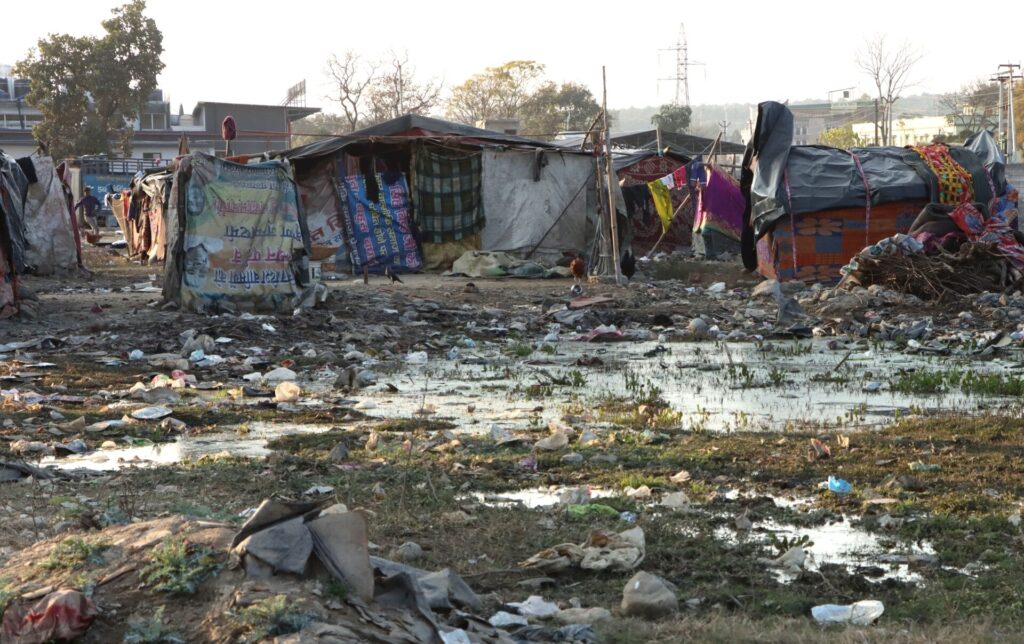
In cities like Dehradun, this gap is stark. Initiatives like the Dehradun Smart City Mission and the Mussoorie Dehradun Development Authority’s (MDDA) Dehradun Draft Master Plan 2041, publicised as transformative, have failed to meaningfully engage citizens. Civil society participation has been limited to token consultations, often held to fulfill bureaucratic requirements rather than genuinely incorporate public voices. Key stakeholders, particularly those living in new urban peripheries, are left out of conversations about the very policies that shape their lives.
This exclusion is compounded by a fragmented urban governance structure, where responsibilities are divided among multiple agencies—municipal bodies, development authorities, and state governments. The lack of coordination between these entities creates inefficiencies and erodes public trust. Citizens, already grappling with urban chaos, are left to navigate a maze of unresponsive systems.
Read more: Dehradun ranks poorly in every urban parameter survey
Disengagement with public issues
As voter turnout in urban cities continues to dwindle, this disconnect grows deeper. Underlying this governance failure is a troubling cultural shift: the retreat of citizens from shared responsibilities into private lives. This retreat mirrors a troubling duality in urban India: the rise of individualism at the expense of collective civic engagement.
As Tocqueville once warned, when private interests take precedence over shared responsibilities, public spaces suffer, and so does democracy. Dismissed as someone else’s problem, gated communities replace community engagement, streets are left to flood, garbage piles up, and rivers turn into sewage channels (areas of the Rispana and Bindal rivers in Dehradun).
The result of neglected urban governance and abandoned civic responsibilities is not just apathy but isolation—a fractured ecosystem. This raises a critical question: Can this disconnect be bridged, or will it push citizens into further disillusionment?
Amid the disillusionment, there lies some hope when citizens reclaim their agency and reshape their cities.
Dehradun Citizens Forum: Hope for a better future?
Set up barely 12 months ago as an informal network, the Dehradun Citizens Forum (DCF) exemplifies the role of civil society as a critical driver of urban transformation and governance. What sets DCF apart is its non-hierarchical structure and ability to bring together citizens from diverse backgrounds—professionals, youth, social workers, the retired and several members of the media to set the agenda for their city and demand accountability.
Citizen agency: One of Dehradun Citizens Forum’s key achievements is the Green Agenda, a comprehensive 18-point plan focused on sustainable urban development that was launched during the recently concluded Urban Local Body elections in Uttarakhand. This agenda, developed through consultative discussions with members of the Forum, addresses urban challenges – Solid Waste Management, Plastic-Free Markets, Green-space distribution, traffic, public transport, and environmental preservation. What makes it unique is its collaborative spirit—each point reflects the shared concerns and aspirations of Dehradun’s citizens.
Critical dialogue: The Mayor Dialogue, organized by Dehradun Citizens Forum just five days prior to the mayoral election, further demonstrates the potential of civic engagement. For the first time in the city’s history, mayoral candidates participated in an open forum, presenting their vision plans and answering questions from citizens. This initiative shifted the dynamic, creating a space where governance became less about rhetoric and more about accountability.
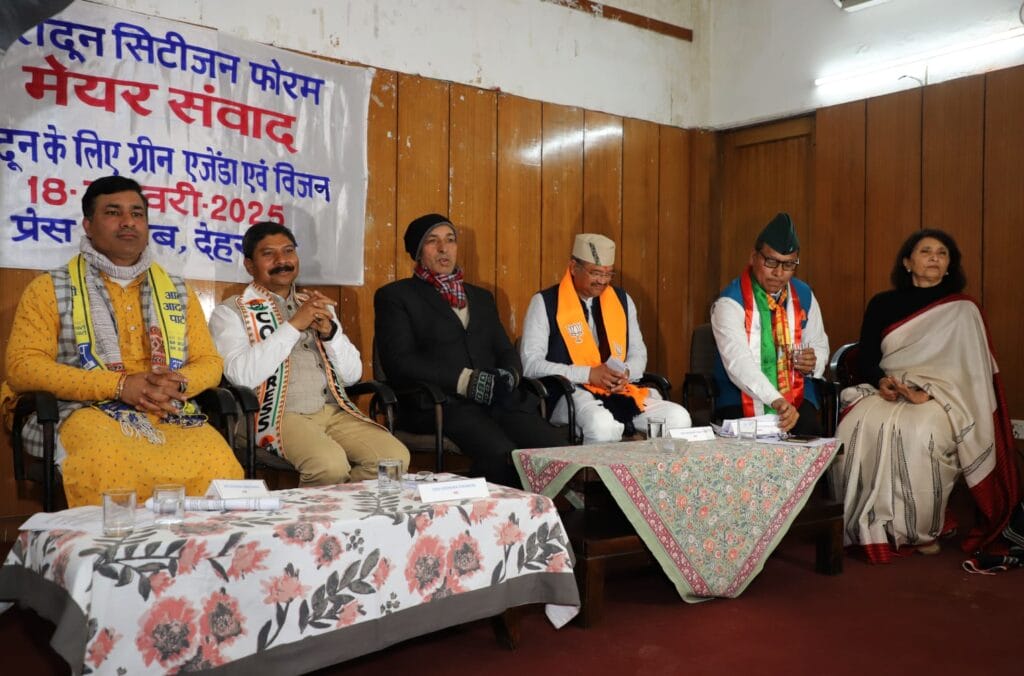
Policy advocacy: The Green Agenda highlights how civil society can advocate for deeper legislative and structural reforms, ensuring governance frameworks prioritise sustainability and citizen-centric policies.
What a few good citizens can achieve
Efforts like these are not isolated. Cities like Bangalore (MyCityMyBudget), Surat (Climate Change Trust) and Indore (Swachh Bharat) provide inspiring examples of how citizen forums, civic engagement and participatory governance can drive meaningful change. These examples of collaboration, grassroots mobilisation and citizen-led initiatives continue to highlight that inclusive urban governance is practically achievable and does not have to be confined to formal structures.
Citizen-led forums show how public spaces, once abandoned, can be reclaimed as arenas of dialogue and collective action. Small, persistent initiatives, like organising a protest, or drafting a citizens’ charter have the potential to transform the way we think about governance.
Dehradun Citizens Forum in coming years may demonstrate how citizen forums can evolve and critically engage with governance. Initiatives like the Mayor Dialogue and Green Agenda undertaken may serve as models for addressing complex urban challenges through actionable steps, continuous reflection and adaptation.
Reflecting and acting on the hurdles ahead
However, these efforts are not without challenges. Dehradun’s urbanisation reflects broader patterns of unsustainable consumption and exploitation of rural and peri-urban resources. Addressing these issues requires a shift toward localised, citizen-led governance. However, existing gaps in governance structures, lack of political will and limited funding often hinder the scaling of citizen-led initiatives.
To overcome these obstacles, stakeholders must align their interests and work collaboratively. Policymakers need to institutionalise citizen engagement through participatory committees and regular public consultations. Markets must adopt socially responsible practices, aligning profit motives with sustainability goals. Civil society must continue to act as a bridge (setu), bringing together diverse voices to shape inclusive urban policies.
The role of researchers and intelligentsia is equally critical. By providing evidence-based advocacy, they can bridge the gap between policy promises and implementation. Data-driven approaches can help track the progress of urban initiatives, ensuring accountability and transparency. For instance, using data to monitor waste segregation rates or green space allocation can inform better decision-making and empower citizens to hold authorities accountable.
As Dehradun stands at the crossroads of unchecked urbanisation and sustainable development, its citizens must wake up to their collective potential. Forums like Dehradun Citizens Forum in urban cities show that change is not only possible but within reach. Now is the time for citizens to engage beyond the ballot box – to organise, advocate and act. Only through collective civic responsibility can we build a future that reflects our shared aspirations.