A collective of various voluntary groups, civil society organisations, activists, educators and students has demanded urgent state-led action to uphold the right to shelter and dignity for persons living on the streets in Tamil Nadu. This campaign has been initiated by the Information and Resource Centre of the Deprived Urban Communities (IRCDUC) and other NGOs in Chennai and across the State, to support homeless people, whose lives are jeopardised by the absence of a dedicated state programme.
Here are the recommendations put forward as part of the campaign:
State-wide recommendations
Tamil Nadu must urgently evolve a state-specific scheme for persons in homeless situations as a dedicated programme. The Shelter for Urban Homeless (SUH) is currently not supported under the National Urban Livelihood Mission (NULM), leaving a critical gap in funding and continuity. Across the country, since 1992, the SUH scheme has faced repeated disruptions, with schemes being launched and then discontinued, severely undermining the sustainability of interventions and the rights of homeless persons to shelter and dignity. Furthermore, we recommend that the following measures be implemented across Tamil Nadu.
1. Revive the state-level monitoring committee: The Committee responsible for monitoring the functioning of shelters for the urban homeless has not met since August 2019. It must be reactivated to ensure oversight, coordination, and accountability.
2. Establish recovery shelters: Create specialised recovery shelters for persons in homeless situations who are terminally ill and have no caregivers, ensuring dignified end-of-life care.
3. Introduce climate-responsive measures: Persons in homeless situations are disproportionately affected by climate extremes. A Heat Action Plan and a Winter Action Plan must be developed and implemented to safeguard their health and survival.
4. Care and Protection of Children in Street Situations: Ensure implementation of the Tamil Nadu Rehabilitation Policy for Children in Street Situations, 2022, to safeguard the rights of children in street situations.
5. Institutionalise third-party audits: Independent and periodic audits of shelters should be mandated to ensure transparency and quality of services, as current assessments indicate that many essential services are not reaching residents.
6. Accessibility: All shelters must be designed and retrofitted to ensure universal access for persons with disabilities and the elderly. This includes barrier-free entry and exit points, ramps with appropriate gradients, handrails, non-slippery flooring, accessible toilets, adequate lighting, and clear signage in multiple formats (visual, tactile, and auditory).
Read more: Homeless in Chennai: Families that lack shelter need urgent support
Chennai-specific recommendations
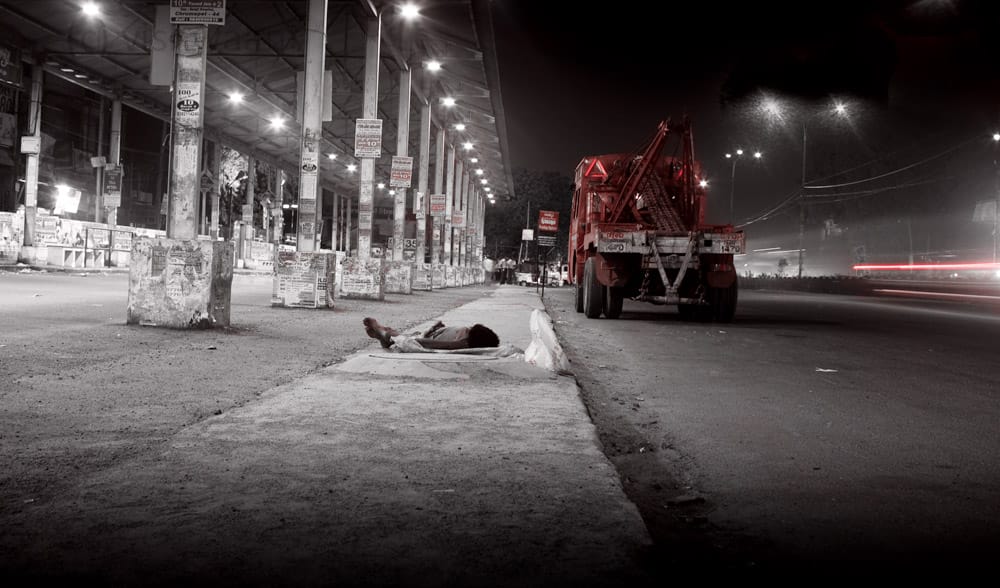
1. A third-party survey in Chennai identified 13,529 persons in homeless situations. There are approximately 50 operational shelters in the city. Of these, 13 function exclusively as special shelters for attendants of government hospitals. This leaves only 37 shelters, with a maximum capacity of 50 persons each, available for the city’s homeless population.
2. Greater Chennai Corporation has been repurposing shelter buildings constructed under DAY-NULM funds for other purposes. To date, at least 4 such buildings have been diverted, undermining the intended use of these facilities. With women and the elderly depending significantly on these shelters, buildings constructed for shelters must be protected and not repurposed.
3. Discussions with NGOs operationalising shelters reveal that the existing Standard Operating Procedure (SOP) and the Reporting Dashboard need to be revised in consultation with all stakeholders — including NGOs and residents — to ensure that a dignified, inclusive approach is adopted.
A call from civil society
These demands are already endorsed by 74 individuals representing diverse sections of society — including academicians from the Madras School of Social Work, independent researchers, writers, consultants, NGOs such as The Banyan, Don Bosco for Migrants, Pasumai Trust, civil society organisations like Citymakers Mission International, Disability Rights Alliance, Poovulagin Nanbargal, PUCL, Vettiver Collective, Voice of People, social activists, representatives of political parties, as well as students from various city colleges.
Their collective support underscores the urgency and legitimacy of this call.
This is based on a Press Release from the collective of groups putting forth their recommendations and has been published with minimal edits.