For B Kanchana, who frequents Chennai Beach Station on the Rapid Transit System (MRTS), train travel in the morning is comfortable and safe. But the platform itself is in dire need of renovation, lacks signboards or announcements and makes her feel vulnerable, says the administrative professional.
Like Kanchana, residents and daily commuters point out the severe neglect across MRTS stations. Safety concerns peaked after the recent death of 55-year-old V Vijaya, whose body was found in a disused room at Thirumayilai MRTS station in October, a stark reminder of the hazards lurking in these public spaces.
In Part 1 of this series, we audited six stations on the MRTS line and spoke to commuters on safety, infrastructure, and other issues. But how can these spaces be reimagined to become safe and inclusive?
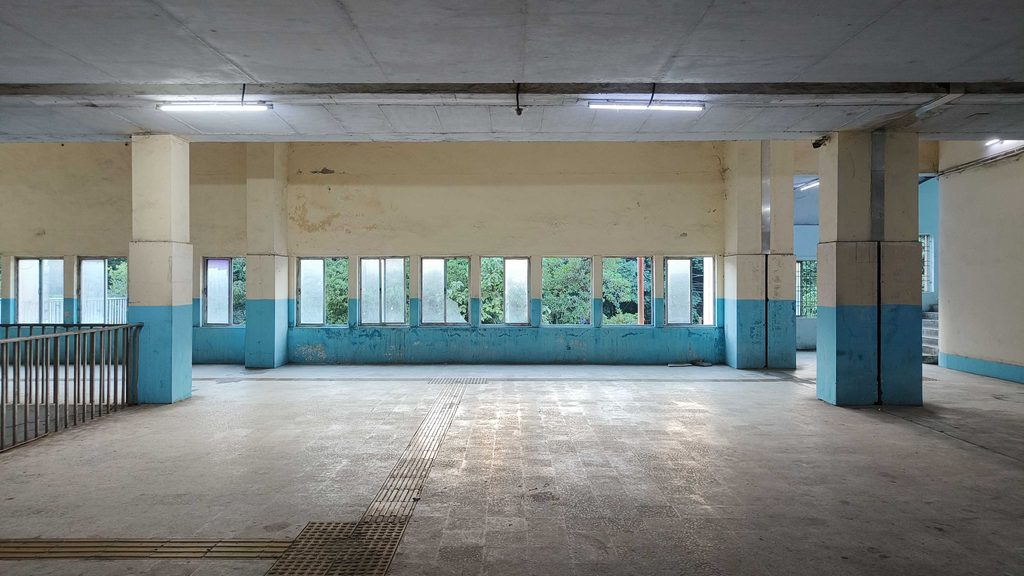
“These stations were designed in such a way that vast spaces were left unused. If authorities can modify the design with minor alterations, these can be a turned into commercial plazas,” says active citizen TD Babu. His ideas are not far from the initial blueprint for MRTS stations.
No plan for vibrant spaces
Established in the 1970s, the stations’ ground floors were designed for commercial spaces to make it financially sustainable for Southern Railway. In the early 2000s, the state government also permitted the Chennai Metropolitan Development Authority (CMDA) to develop and monetise the airspace over all the stations along MRTS Phase II. But this has remained largely on paper over the last two decades.
Currently, the system reels from neglect, and this could be attributed to it being built on the Buckingham Canal, which was the only land that could be procured at the time, says Pavithra Sriram, urban planner and co-founder of Design Co Lab. She adds that the initial MRTS lacked a proper feasibility study, and the stations remain ghost buildings.
“We see it as grey infrastructure, not as something that could add to the liveability of the city. For those reasons, the areas around the MRTS line also had their backs turned to it, and there were no main roads along the MRTS, no activity, no economic generation, no big shops.”
CMRL merger set to improve facilities
Earlier this year, the Union government approved the merging of the Mass Rapid Transit System (MRTS) with the Chennai Metro Rail Limited (CMRL). This project had been pending since 2011. The Memorandum of Understanding (MOU) is expected to be signed shortly, and plans are under way to float bids for security services and housekeeping, say news reports.
In October, Chennai Unified Metropolitan Transport Authority (CUMTA) prepared a detailed plan for upgrading the city’s MRTS network ahead of CMRL takeover. Its key proposals include repair of non-functional lifts and escalators, and 60% of station space to be refurbished for passengers, and the remaining space to be explored for commercial use, among others.
Officials have also mentioned that within three years of the MOU, commuters can expect the MRTS stations to have facilities much like the metro line. The Southern Railway is set to operate the system for the next two years, but improving lighting and other amenities will be addressed on priority.
Read more: Chennai Metro: Future of public transport or white elephant?
More activity means increased safety
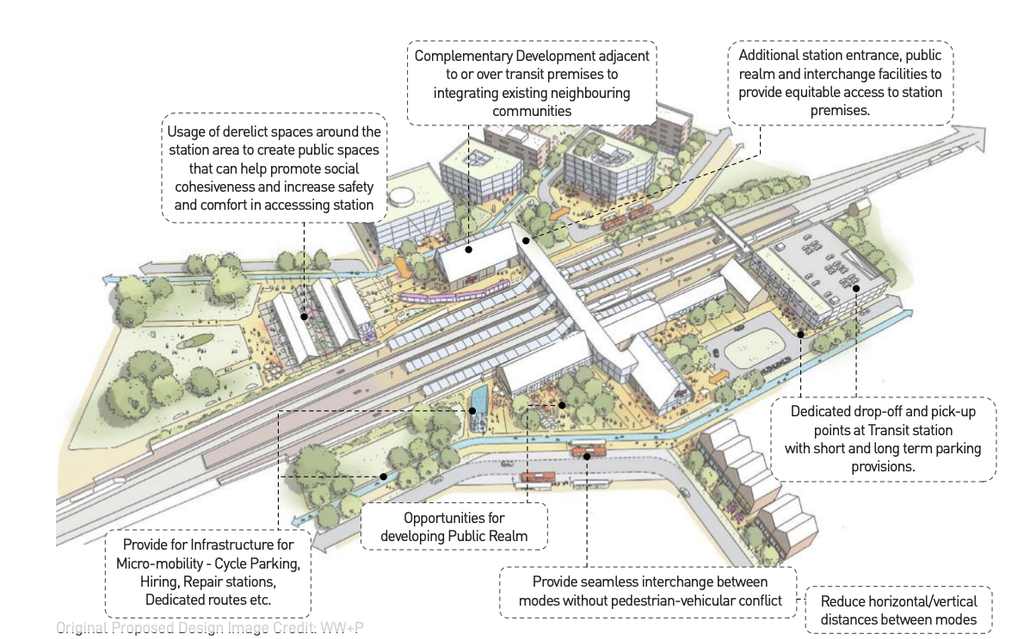
Ahead of the takeover, Pavithra points out that CMRL must also examine issues of last-mile connectivity, lighting, and accessibility within the station and for a 250-500 metre radius of these stations. “CMRL should take up placemaking and activation of the spaces around the metro station so the area remains active in some form until the last service of the train,” she adds.
Pavithra notes that shops can enhance safety through natural surveillance, with shopkeepers present on-site, rather than relying only on cameras for passive surveillance. Welcoming the initiative, activist Archanaa Sekar adds that integrated infrastructure encourages commuters to swap private vehicles for the train. Ultimately, both agree that bringing more people to the MRTS, whether as commuters, visitors, or local shoppers, deters crime and fosters a stronger sense of safety.
Experts ask: How do we improve safety at MRTS stations and build a culture where bystanders step in when they witness a crime? How do we bring life back to large, underlit, underused infrastructure through placemaking and programming?
“Chennai is a city where families are out until 4 a.m. How do we bring some of that energy to MRTS stations?” asks Archanaa. She emphasises that beyond generating revenue, MRTS stations could be used to enrich our experiences of public spaces or open conversations.
Reimagining stations as public spaces
For instance, during the nights, Chintadripet station transforms into a shelter for Mary, a sweeper. “When it rains, I seek shelter here temporarily during the nights, as our homes were razed down in an eviction drive,” she says. Her children have moved to a nearby rented home. As privacy is crucial for young married couples, she seeks independence in the station space. However, several inebriated men frequent the station, so Mary and other women group together at night for safety.
The intermediate empty floors, currently deemed unsafe by commuters, could be transformed into shelters for women, suggests Archanaa. To illustrate this, she recalls ‘Under the Stars,’ a 2013 event on World Mental Health and Homelessness Day that invited 60 people to spend the night at Lighthouse station. She believes similar initiatives could easily be replicated to activate these unused spaces.
Moreover, the MRTS passes through some neighbourhoods such as Mylapore and Triplicane, which are landlocked. “Apart from the temple tanks in Mylapore or Triplicane, or the beach, there are barely any recreation spaces in that part of the city. Since MRTS stations have such large infrastructure, with a lot of land just going to waste, we could create public spaces here people can actually use,” says Srishti Nadathur Prabhakar, urban planner.
Another example of crowds at the MRTS includes the first edition of the Chennai Photo Biennale, held at a few stations. “The Biennale brought a daytime crowd, including people who would otherwise never have set foot in the station,” adds Archanaa.
Experts’ recommendations to redesign MRTS stations
- Transform intermediate floors into human libraries.
- Hold tactile/analogue activity spaces on Madras’ history on these floors
- Utilise the ground floors for art exhibitions.
- Use the space for reading circles or listening circles, in the spirit of third spaces, instead of defaulting to cafe or retail spaces.
- As most stations have immense space and infrastructure, half the station space can be used for jamming rooms, rentable practice spaces, and co-working spaces.
- Provide space for homeless people in these stations, ensuring some rooms are shelters. This could foster a space for conversations, pave the way for homeless communities to have friendships, communicate their needs, and ensure safety.
- Utilise the space for mall vendors, women’s self-help groups, cafes, eateries, and handicrafts.
Citizen Matters has reached out to CUMTA multiple times and will update the story when we get a response.