From a car plunging into a sinkhole on Old Mahabalipuram Road to a woman who recently died of electrocution in an open pit in Anna Nagar — Chennai faces perennial infrastructure issues that endanger public safety. Between 2017 and 2021, Tamil Nadu has witnessed 2,499 pothole-related accidents, leading to the death of 532 people.
The state ranks third in the country for the number of registered vehicles, according to 2026 data. As more vehicles hit the road, shoddy roads can become death traps for motorists. Every year, the Greater Chennai Corporation works towards monsoon preparedness, but potholes invariably reappear. Residents have the same questions: Which agency is responsible for the road? How is a pothole complaint verified? Who decides how it should be repaired, and how quickly? Who carries out the work?
At a recent webinar organised by Oorvani Foundation, experts on the panel — founders of citizen’s group Road Rash India, R Shivaa and Sachin George; activist and Arappor Iyakkam member Radhakrishnan, and urban planner and Design Co-Lab co-founder Pavithra Sriram — shed light on this topic.
While riding a bike in Chennai, Sachin says his eyes are inevitably on the road surface, trying to avoid potholes, rather than looking ahead. “A smart car driver makes sure the pothole falls between his tires, because it has four wheels. But, a biker following behind gets taken by surprise, and there is nothing to do except fall into it or swerve, with another vehicle right next to you,” he says.”
Poor accountability and negligible compensation
India has the world’s second-largest road network, but potholes and shoddy roads dominate in rural and urban areas, says Radhakrishnan. And accidents inevitably follow, he says, citing cases, including a techie who died after hitting a pothole near Saidapet, in 2021, to the a grieving father who fills potholes in Mumbai after his son was killed in a pothole accident.
“Potholes create many problems in our day-to-day life, it eats into the time it takes to reach the office, and causes accidents. Every road is built with our money. Whichever government is in power, it is our money in their hands, so we need to follow up and ask [what is being done on ground],” he adds.
Shivaa highlights that when potholes or poor infrastructure cause accidents or deaths, victims and their families face long court battles to claim compensation and have to deal with unclear liability rules. “In the US and Europe, compensation amounts are quite high, whereas in Chennai, disability compensation barely reaches two to three lakh rupees,” he notes. He adds that there is also a lack of awareness about provisions like Section 198A of the Motor Vehicles Act, which enforces accountability by imposing fines of up to one lakh rupees on authorities or contractors for failing to comply with road design standards.
The government must prioritise safety of people on the road, while citizens must develop awareness about laws, say the experts.
Read More: Killer Potholes on the Roads of Chennai
Box: Whose road is it anyway?
Depending on jurisdiction, the agencies in charge change. The agencies include:
- National Highways
- Tamil Nadu State Highways
- Greater Chennai Corporation (GCC) Bus Route Roads
- GCC Zonal Offices
Guide to reporting a shoddy road or pothole
To complain about potholes, residents may access the official GCC website or download the Namma Chennai mobile application to directly fill out the form. Alternatively, they may call the 1913 helpline number or send WhatsApp messages to 9445061913.
Before filing the complaint, ensure you have:
- Photos or videos that clearly show the pothole and road condition. Take photos from a safe place.
- Exact location, such as street name, ward or zone, nearby landmark, and map location.
- Risk details such as heavy traffic, past injuries to motorists, or if it is rain-filled.
- Keep records: Date of complaint, complaint number, replies, and photos after repair.
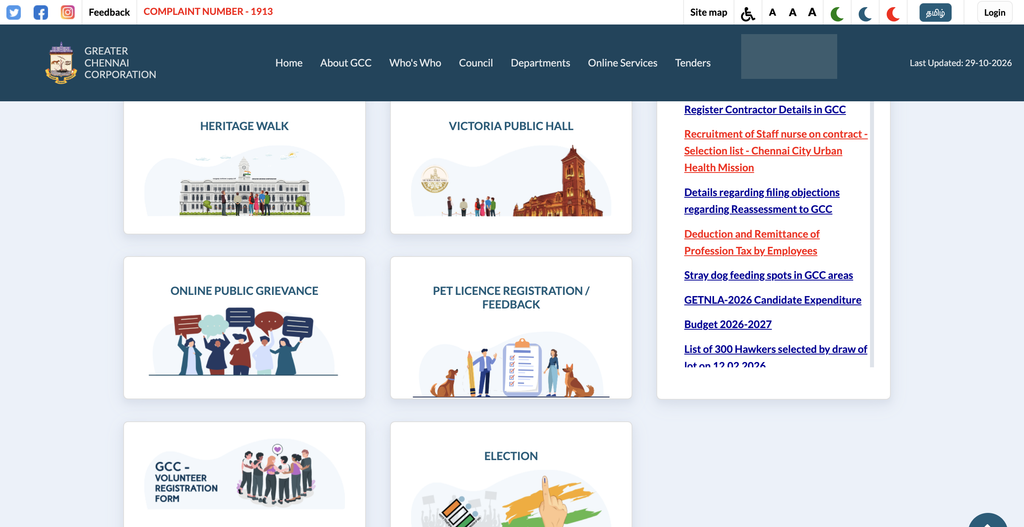
On the GCC website, residents can scroll and click on the ‘Online Public Grievance’ option to file a complaint about a shoddy road.
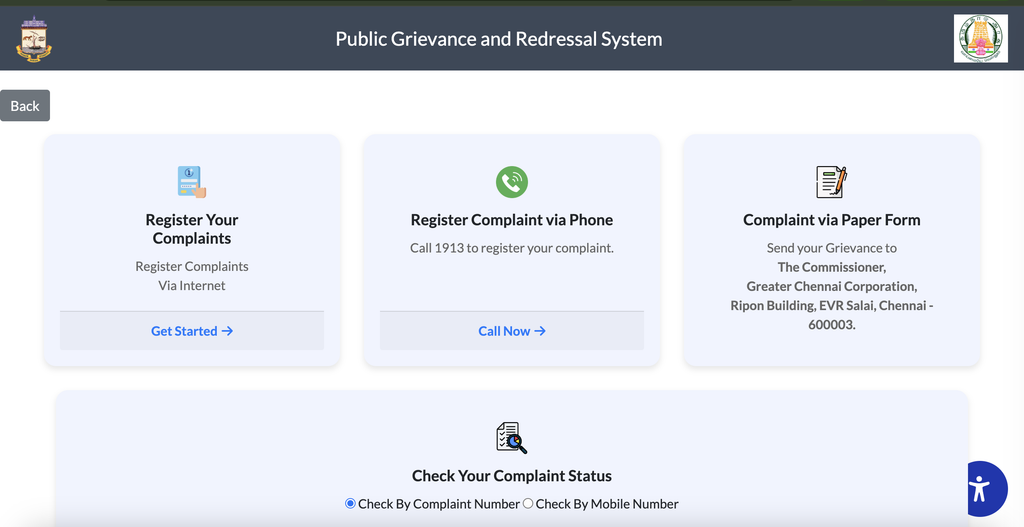
Citizens can pick the first option to register their complaints online. They may also check their complaint status online with their complaint number or mobile number.
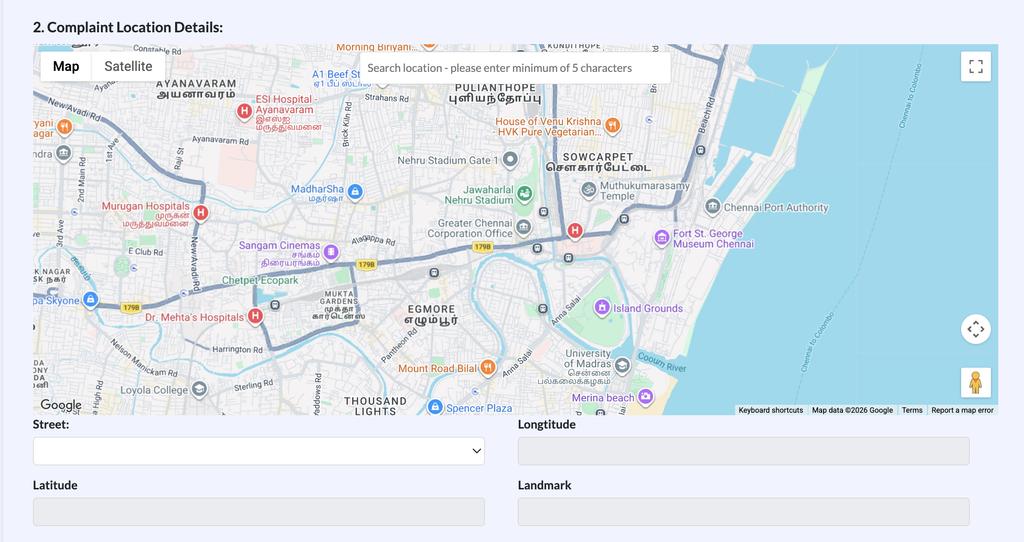
For the application, petitioners must fill in:
- Name, mobile number (both optional), gender
- Latitude, longitude, a photograph of the pothole
- Choose road complaint details.
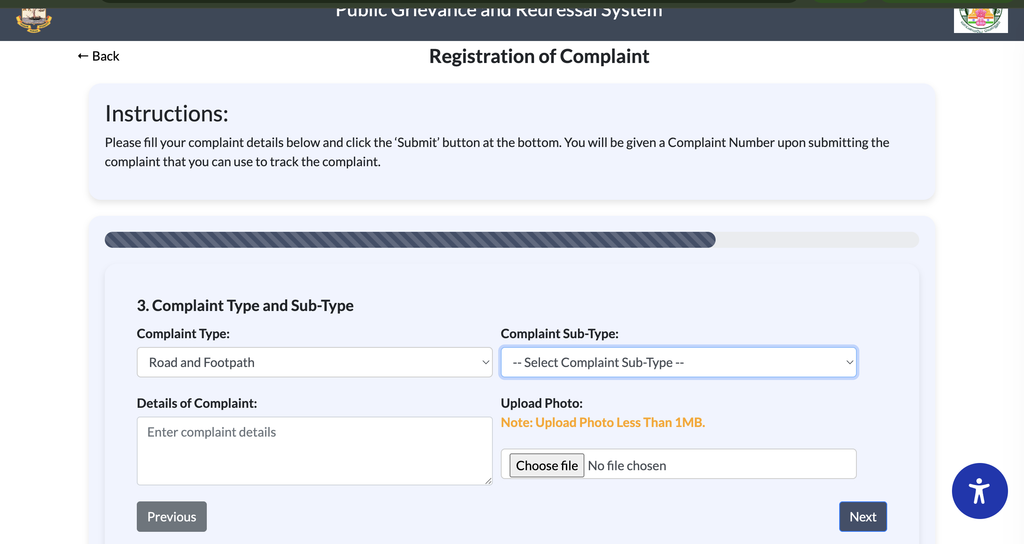
Complaining on the Namma Chennai app
Alternatively, residents may download and use the Namma Chennai app to complain about potholes or other related infrastructure issues. Before registering a complaint, they will need to register on the app with an email ID and phone number.
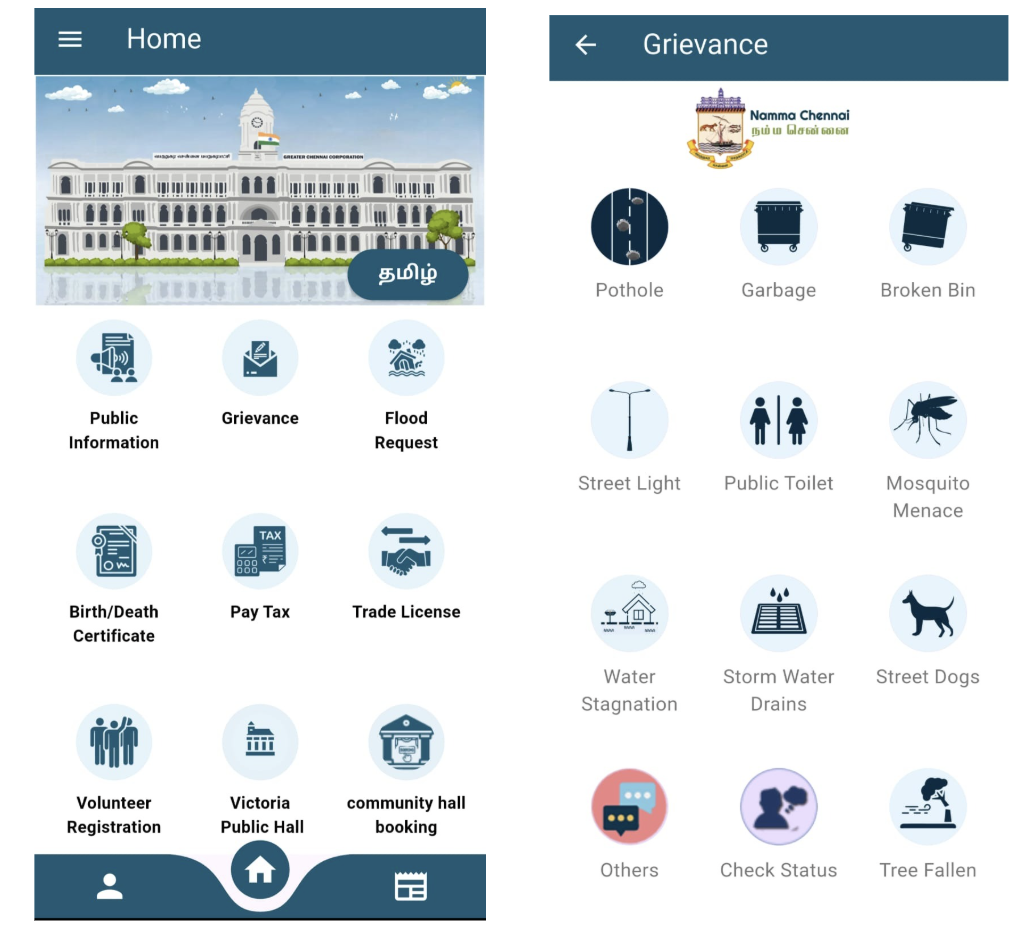
On the Namma Chennai app, pick the grievance option, and then the pothole option. On a map, citizens can mark the location of a potholed area they want to complain about. Following this, they will receive a message on WhatsApp with details of their issue and the complaint number.
Citizens can post their complaints on the X app (formerly Twitter) about potholes, damaged roads, or any other damaged infrastructure. Here’s how:
- Take a photo or video of the pothole or shoddy road section with a geotag.
- Mention the street name or location.
- Tag the GCC on @chennaicorp and GCC Commissioner GS Sameeran on @sameerangs
To complain about State Highways, the Namma Salai app can be utilised. Outside Chennai, residents can utilise the Namma Kovai app for Coimbatore, the Madurai Corporation website, or the Smart Madurai app. Citizens must ensure they keep the complaint number to follow up, say experts.
Read more: Potholes on Chennai highways now getting reported and repaired
On receipt of the complaint, the GCC website says it takes two days to fill potholes or cuts, a week for patch repairs.
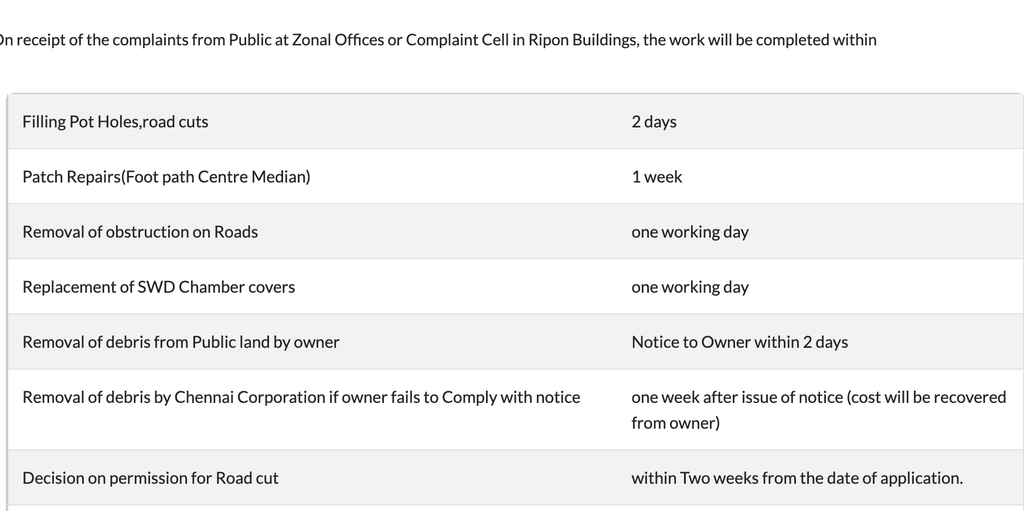
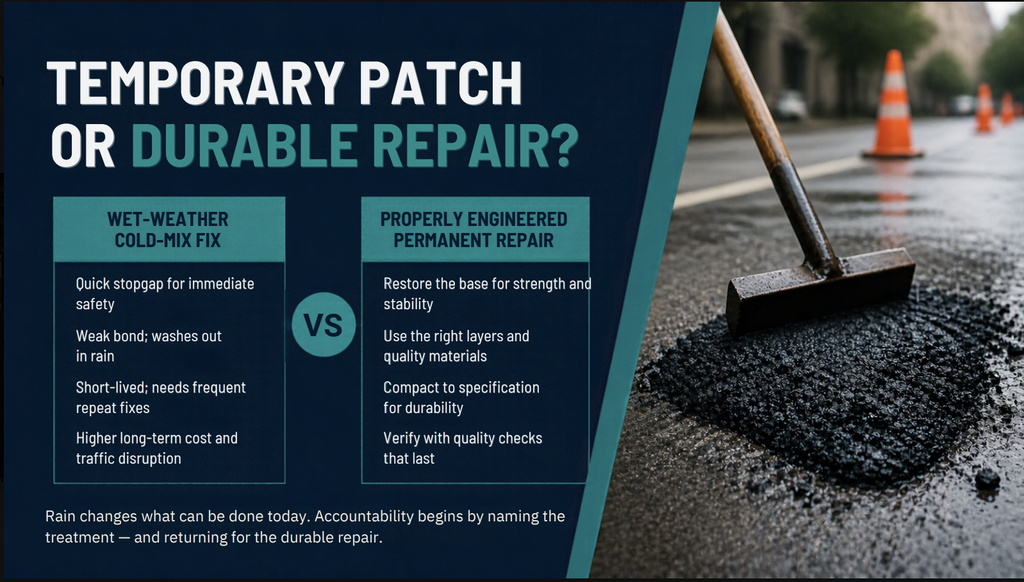
Most complaints receive faster redressal when posted on X, say Radhakrishnan and Shivaa. However, Shivaa found that on some of the roads Road Rash had complained about, immediate fixes were made using cement, which then broke easily.
How to ensure better redressal processes
Despite these complaint mechanisms, residents flag potholes and uneven road surfaces in areas neglected for over two months in Purasawalkam and damaged stretches left neglected, despite multiple complaints, in Velachery and Medavakkam. Usually, large sinkholes or long shoddy stretches are addressed faster, but smaller potholes are neglected, say experts.
Lack of redressal and delays can be chalked up to roads being often transferred between departments like GCC and State Highways, says Pavithra Sriram. A solution India could borrow from Gauteng in South Africa, which has a PotholeFixGP that assigns repairs to municipal, provincial or other bodies, based on jurisdiction.
However, one agency for urban roads like Chennai Unified Metropolitan Transport Authority (CUMTA) is recommended for the best possible standards, enforcement, and accountability. For an ideal complaint resolution process, Pavithra stresses the need for inspection, approval, and a work order, or else a maintenance crew attached to the project.
During routine monsoon repairs, officials must restore roads, fix layers, and ensure quality checks, Pavithra adds. Meanwhile, when a utility cut occurs, for instance by the Chennai Metropolitan Water Supply & Sewerage Board or the Chennai Metro Rail (CMRL), a tender says only that the road has to be returned to usable condition. But often, the usability is low, and road restoration needs to be carried out more carefully and efficiently, stresses Pavithra.
Apart from this, cost estimates for road components like bitumen must be transparent, and contractors must follow rules when laying or repairing roads, says Radhakrishnan. For instance, a roller has to pass nine times for the road to settle, and milling must be done properly. “If every layer is done properly, the road will stand solid for three to five years,” he adds.
Tips from other countries
São Paulo, Brazil: Local maintenance teams supported by technology operate a pothole repair programme through local subprefectures, which combine citizen complaints with pavement-condition mapping. Its SP156 platform introduced AI-assisted image recognition in June 2025, initially covering services including pothole repairs and bridge or tunnel repairs.
Bogotá, Colombia: This capital city has a dedicated neighbourhood road-maintenance agency, Unidad de Mantenimiento Vial (UMV), which is responsible for maintaining parts of the city’s road network, particularly local streets.
In the Netherlands and Sweden, road surfaces are replaced and sealed before structural cracks and potholes appear, avoiding expensive full-scale reconstructions later.
Experts recommend:
- Ensure transparency from the government on the detailed project report of roads and fund allocation.
- Mark every road taken up for tender for stormwater drainage on a GIS app, so context on previous repairs exists.
- Use software (such as the World Bank’s HDM-4 model) and regular sensor/visual inspections to track road degradation and schedule repairs.
- Hold road contractors accountable, penalise poor road craftsmanship, and incentivise durable materials.
- Reach out to local groups like Arappor Iyakkam for aid in following up on complaints.
- Redesign the Namma Chennai app/any app to provide information on which department is responsible for a set geotagged location.
- Increase compensation amounts for victims of pothole or shoddy road accidents.