In September, Rabiya HM found herself dialling the railway police helpline, 139, during her 60-kilometre daily commute on Chennai’s Mass Rapid Transit System (MRTS). “At Park Station, a stranger was keeping an eye on me, and when I boarded the ladies’ compartment, he followed me onto the next compartment, kept staring, and got off at every station,” says the 28-year-old IT employee. Her calls did not go through until Taramani and the mandated police personnel were absent for over an hour. Eventually, Rabiya’s co-passengers intervened and forced the man to deboard.
Rabiya’s experience is an everyday reality rather than the exception. Over the past few decades, women have repeatedly flagged harassment and safety issues inside Suburban Railway and MRTS stations. These incidents include the 2022 case of Sathya being pushed in front of a moving train at St Thomas Mount Station and the death of a 22-year-old woman, who fell on the Indira Nagar MRTS station platform trying to stop phone snatchers, in 2023.
Just this month, the body of Vijaya V, was found in an unused portion on the Thirumayilai MRTS station, four days after she reportedly fell from the second floor through a gap in the station structure while searching for a washroom, highlighting lapses in elevated public infrastructure design.
Convenient and affordable, yet a safety blind spot
At least 67% of Indian women who commute to work rely on walking or buses, or other public transport. The MRTS rail proves to be an affordable option for working-class women, with tickets ranging from ₹5 to ₹10. But in Chennai, around 52% of women prefer personal modes of travel, particularly two-wheelers, for safety and reliability, finds a 2025 gender-specific mobility survey in the The Comprehensive Mobility Plan (CMP).
While women like Rabiya prefer trains for comfort, speed, and long-distance travel, safety concerns, poorly lit stations, and inadequate infrastructure remain major drawbacks. For a city that prides itself on connectivity, the MRTS remains a blind spot for commuter safety, especially women.
History of MRTS
Conceptualised in the 1970s, the MRTS aimed to connect Beach Station with St Thomas Mount and, later expand to Villivakkam. Amid delays and funding crunches, the line, with 21 stations, has not expanded beyond St Thomas Mount to Chennai Beach. Now, the system caters to about six lakh passenger-trips per day.
Officials noted a rise in patronage, and highlighted that MRTS was a reliable and congestion-free mode of travel. This year, St Thomas Mount Railway Station witnessed a rise from 35,270 to 49,013 passengers in two days, and Velachery Railway Station recorded a jump from 37,993 to 69,247 passengers. Meanwhile, Adambakkam station has been non-operational for seven months this year, owing to design and safety issues.
Safety issues and crime
Anecdotes aside, the CMP 2023-24 also acknowledges that suburban railway stations lack clear signage, basic amenities, and accessibility for the elderly, women, and persons with disabilities. It highlights that the MRTS line fails to connect major residential and employment hubs or offer first- and last-mile connectivity, resulting in underutilised services.
At least 10 women told Citizen Matters that MRTS stations reeled under neglect, poor maintenance, and lack of response from officials to either safety or station-related complaints.
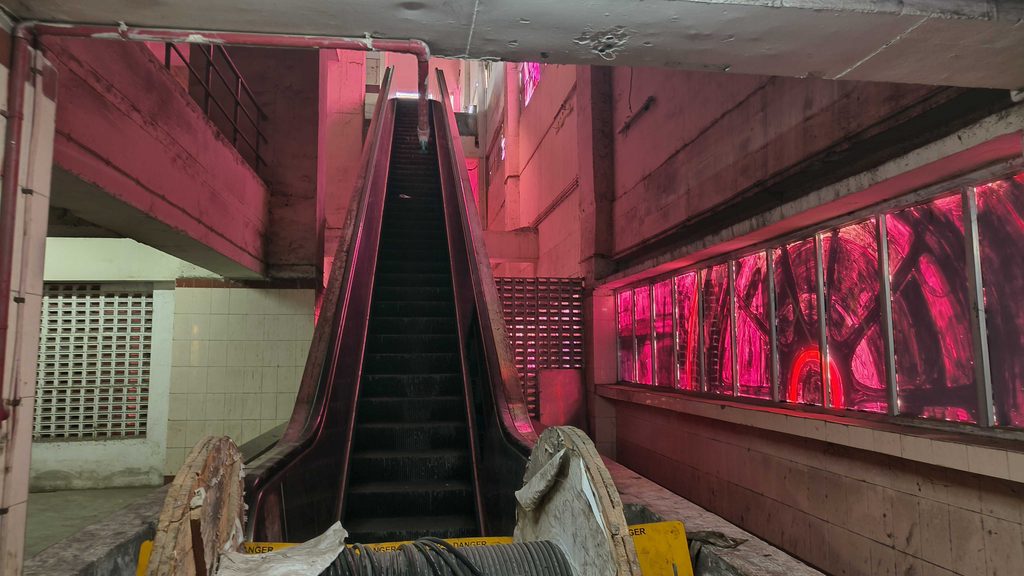
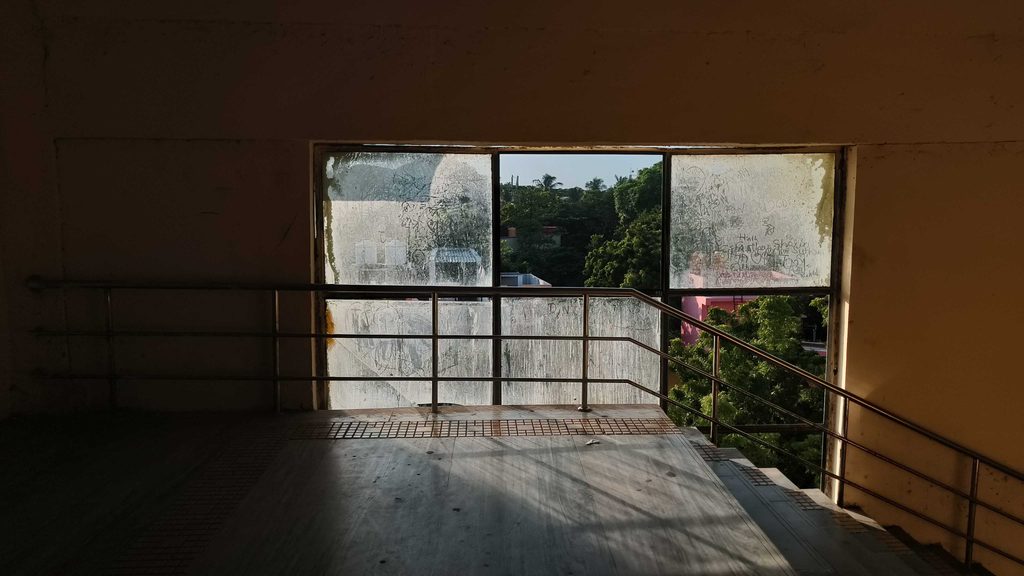
“The reality of every woman is there’s no safety on the streets, buses or trains or even at home,” says Yasmin Banu, a student and commuter at Indira Nagar station. Within MRTS stations, she points out faulty CCTV, regular fights, inebriated men sleeping on the platform, and looming dark spaces.
Commuters note that safety depends on station and time of day. At the recently reopened Puzhuthivakkam Station, footfall is low even during peak hours and on weekends. “But fewer crowds make boarding easier, and with these stations, the area is mostly residential and unknown people are rare, so I feel safer on this line,” says Dharshini Devi, a student.
Citizen Matters visited five stations — Park Station, Chintadripet, Indira Nagar, Puzhuthivakkam, St Thomas Mount and Greenways Road. While Park Station and St Thomas Mount are midpoints on the MRTS line and draw the crowds, other stations remain deserted during the day, with low footfall. Apart from Indira Nagar Station, none of the stations had police personnel deployed during our visits. Within stations, there were unlit and underutilised portions, deserted intermediate floors, and barred off areas. None of the stations were accessible due to non-functional escalators or lifts. Infrastructure was poorly maintained, with broken windows at Greenways Road and Chintadripet.
Read more: How safe is public transport in Chennai?
What our audit revealed
Several commuters told Citizen Matters that the presence of liquor shops around MRTS stations are a safety issue, as intermediate floors and entrances are often occupied by customers. During our visits, we found inebriated men at the entrance of Greenways Road station. Residents have also flagged a TASMAC shop located 50 metres from Kasturbai Nagar station. In our audit, we found:
| Sl No. | Station | Maintenance issues/facilities |
| 1. | Park Station | Lack of lighting post evenings Deserted during the day Ticket counter at least 50-100 m away from the train station Deserted footover bridge to the MRTS station |
| 2. | Chintadripet | Working lift and charging points Ground floor encroached by parked bikes and two-wheeler Functional toilets Opposite May Day park, adding to footfall |
| 3. | Indira Nagar | Broken escalators Abandoned intermediate floors Commuters flag frequent fights between college students and instances of crime such as theft, or harassment at night Locked toilets Garbage strewn on the intermediate floors |
| 4. | Puzhuthivakkam | Poorly maintained escalators Construction material in the intermediate floors Lack of direction and signboards Parking facilities inside the MRTS station premises |
| 5. | St Thomas Mount | Lack of sign boards/announcements of changed platforms Empty and deserted Lack of announcements More people in the Suburban Railway station than the MRTS station |
| 6. | Greenways Rd | Broken windows Commuters report inebriated men sleeping outside the station in the evenings Underutilised portions in the station |
Design to account for accessibility
For many women like Dharshini and Priya N, the train’s ladies compartment provides leisure and a moment to breathe. From vendors stringing flowers, commuters resting their legs up on seats, and women cutting vegetables, the compartment becomes a vibrant, safe space. Step outside onto the platform, however, and that sense of comfort vanishes. In our conversations with women, the station design and infrastructure often emerged as unsafe and intimidating.
Amid deserted, underutilised platforms, and a lack of commuters, we must understand why MRTS dissuades users, says Kalpana Karunakaran, professor at IIT Madras. “While CCTV cameras can be used to establish assault, it is not a deterrent, given the state of infrastructure,” she says, adding that the questions of safe last-and first-mile connectivity, and permanent solutions need to be addressed.
The question of safety must go beyond the idea of cameras, say experts. “What actually prevents crime, and builds a sense of safety? It comes down to questions like: where can I call for help, how do I call for help, how long will help take to arrive, how many bystanders are around, how many people would actually intervene, how many people are trained to intervene instead of asking what the woman was wearing, etc,” says Archanaa Sekar, activist. The key is to bring life back into the MRTS infrastructure, she adds.
Read More: Policy and social change necessary to make Chennai safer for women
Railway stations as friendly, usable spaces
More ridership means more people benefiting from public transit generally, and safety,” says Srishti Prabakar Nadathur urban planner. “When you’re designing for women or anyone who identifies as a woman, you must design for a scenario where they travel comfortably, participate in the public realm, and go from point to point in the city without incidents,” she says, adding that railway stations are more than points of transit, but everyday public spaces where people move, wait, meet, and experience the city.
Women need to be comfortable and entitled to occupy these spaces and for this, Srishti underscores the need for better toilets, better facilities for people with disabilities and women travelling with children, well-maintained seating and waiting areas, and clear information. “Most stations also aren’t designed with different times of day in mind — ridership isn’t uniform across the day, and waiting areas should account for that rather than assuming everyone will just wait on the platform,” she adds.
For immediate safety measures, commuters and experts highlight:
- Set up pink auto stands with women auto drivers bridging first- and last-mile connectivity.
- Shut down liquor shops near transport hubs.
- Deploy mandatory police personnel at each station, women security force, and active helpline numbers
- Ensure active QR codes for ticketing/reporting issues, panic buttons.
- Ensure adequate lighting, visibility, maintenance, access to assistance, and the presence of staff.
- Opt for brighter colour palettes for design.
In Part 2 of this two-part series on women’s safety in MRTS stations, we explore how the platforms and other unused spaces within the stations can be reimagined to make them accessible, inviting and safe.