The neighbourhood of JP Nagar 7th phase in the southern part of Bengaluru is home to three lakes — Sarakki, Puttenahalli, and Chunchaghatta, alongside a sprawl of well-planned high-rise apartments, upscale restaurants, reputed schools, and proximity to the city’s cultural hub. It’s everything a modern urban citizen could ask for. In reality, it’s an area teetering on the edge, willing to ruin itself in a bid to cash in on its opportunity.
Convenience at a cost
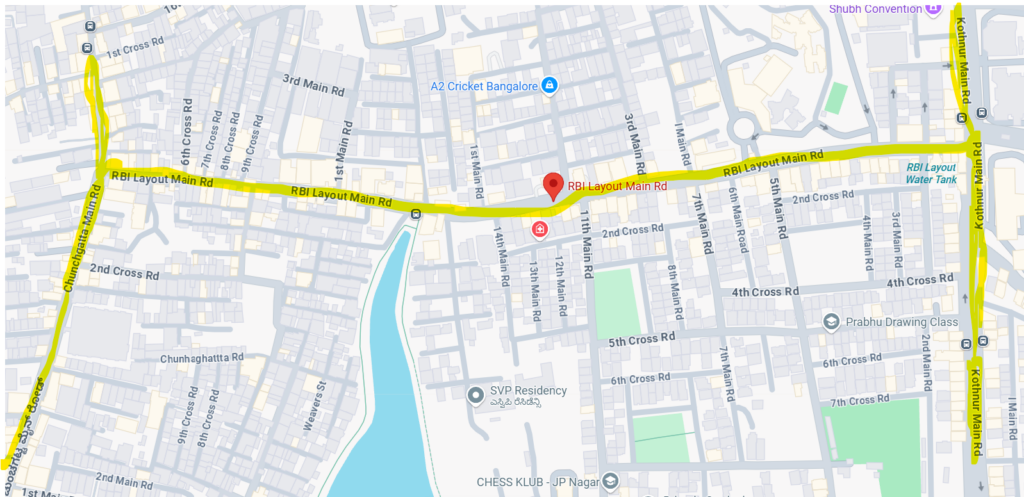
Before taking a peek into the area, let’s start with the RBI Layout Main Road, the artery that leads into the 7th Phase. This road connects Chunchaghatta Main Road to Kothnur Main Road and measures just 1.1 km. Despite its short length, it’s a high-density commercial corridor serving the surrounding high-rises and layouts. It’s the only road in the area that links directly to the Green Line of the metro from Bannerghatta Road.
Yet, the road itself is a bottleneck. At its narrowest, it’s just 21 feet wide and so cramped that the Bengaluru Metropolitan Transport Corporation had to discontinue bus services here, pushing even more private vehicles onto an already congested stretch. With the population density soaring, the neighbourhood has evolved into a self-contained one, where everything you need to live is within reach. But that convenience comes at a cost.
The large-scale urbanisation has precisely become the reason for its choking. And, it is not a problem that we can quickly blame on the past, with the excuse, “the city wasn’t planned to handle this much population.” The city’s administration exacerbates the problem and further reduces access to spaces.
Zoom in on the layout
At the heart of this chaos lies Guru Raghavendra Nagar, a layout of less than 300 square metres, now crumbling under pressure. Over time, it has been forced to bear the burden of commercial activity in RBI Layout Main Road and serve the urban frenzy surrounding it.
At the entry point, two petrol bunks jostle for space with three commercial water tanker filling stations within the layout. Several water tankers queue up here, blocking the roads; the commercial water tanker businesses, operating from residential buildings, are themselves illegal. Moreover, they lie within 50 metres of each other, violating civic spacing regulations. This not only causes road safety issues but also restricts the free flow of traffic.
Beyond the water tankers, the area is packed with godowns storing oil, tyres, automobile parts, and mineral water bottles and refills. To add to the commercial activity, there is a large ceramics warehouse and a machine tools factory. While these businesses attract heavy goods vehicles, a health club, sports arena and temple see a steady flow of people coming in their cars and two-wheelers. The temple stays open till 10 pm on religious festival days, causing noise disturbances in the neighbourhood.
Read more: Tale of a lost road: Urban expansion saga of Sarjapur neighbourhoods
The layout serves as a temporary base for carts and goods vehicles supporting the commercial activities along RBI Layout Main Road and nearby warehouses. Most footpaths are blocked by these vehicles, and homeowners without parking spaces use whatever little footpath remains. Amidst this chaos, the layout also has two schools, which should make it a silent zone, but that’s not the case. The ration shop opens once a week, and draws a flurry of two-wheelers, buzzing in like butterflies and bees.
Widespread violations
However, what really tops the charts is the repeated flouting of BBMP’s (now Greater Bengaluru Authority) building bye-laws. Within the layout, a few plots measure 2,400 square feet, and as we move further into the area, both the plot sizes and road widths shrink considerably. Some plots are small enough to house just a mobile tower, and some, a tiny shop.
But illegal constructions are so rampant that it’s become a norm to cram 11 houses in a 2,400 sq ft plot and erect three-storey buildings in plots measuring just 60 sq ft. The narrower roads lack stormwater drains. About 80% of constructions here violate regulations, lacking provisions for setbacks and parking facilities, similar to what we see in Vijayanagar.
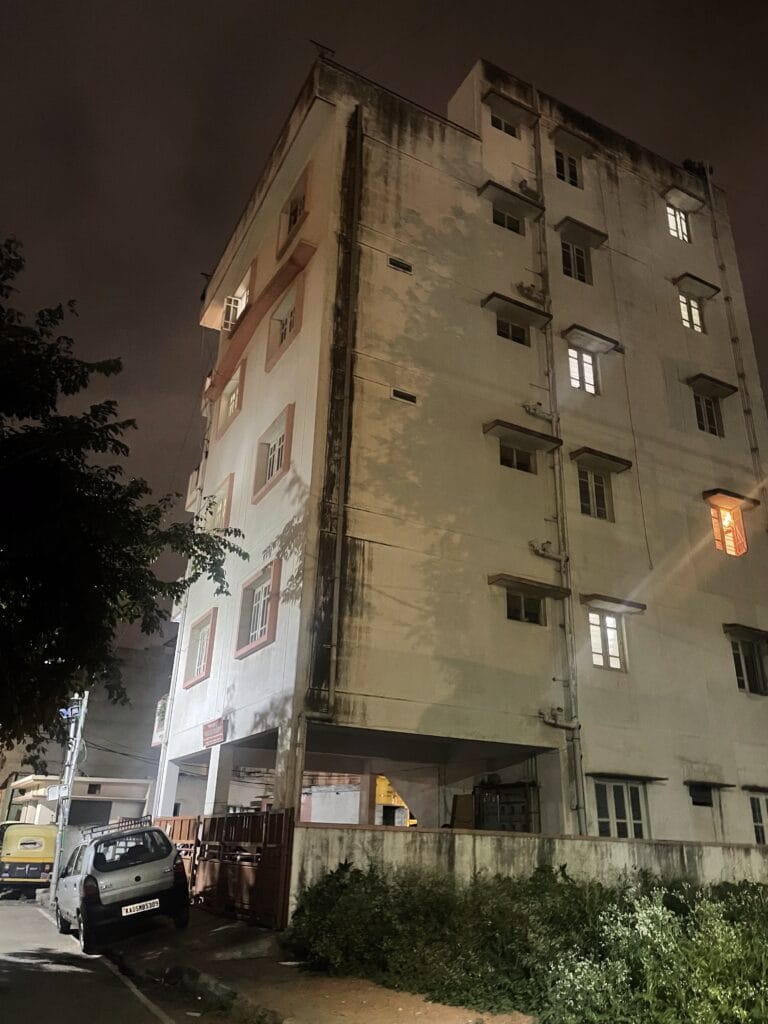
This might seem common for most areas in Bengaluru, but delve deeper and we realise the extent of the problem. How can a road that is only 87 metres long and less than five metres wide be permitted to accommodate 82 houses?
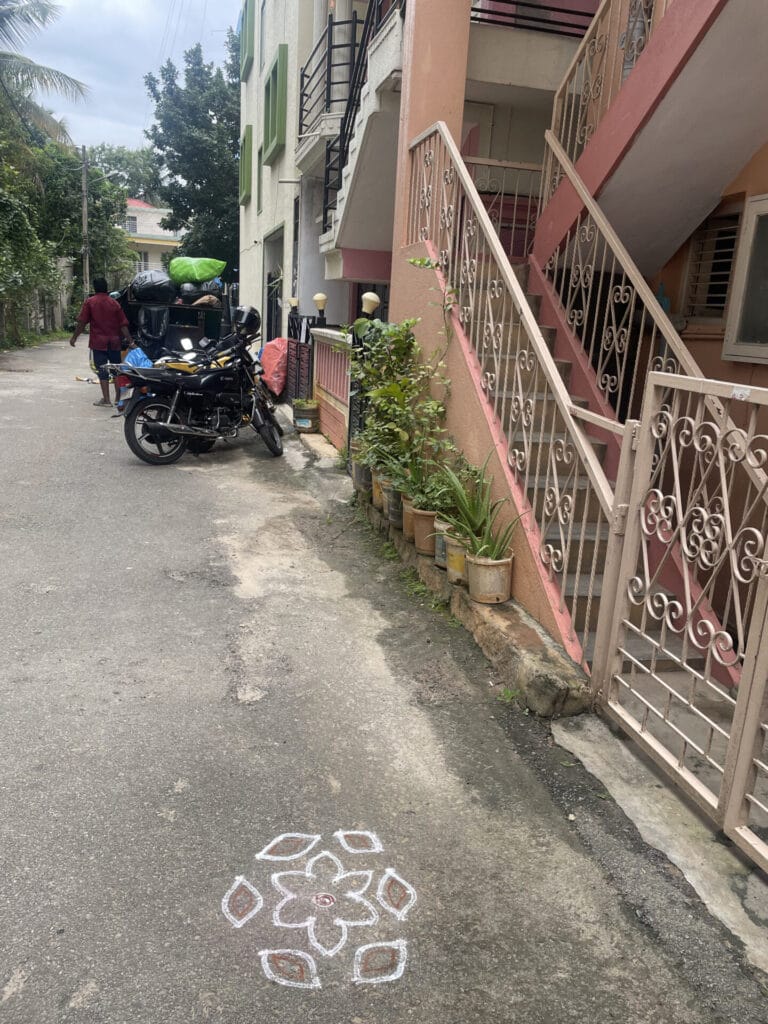
Each road is narrower than the previous one, as we go deeper into the layout; there is barely any space for a single vehicle to occupy the lanes, despite which buildings grow taller but do not have ample parking. The never-ending illegal constructions and commercial activity are taking their toll on the quality of life of the area’s residents.
The impact on residents
- Children are not safe on the roads, and there are no designated play spaces in the layout.
- Heavy vehicle traffic, especially the constant movement of water tankers, commercial goods vehicles, and ongoing construction, disrupts daily life.
- Continuous activity contributes to noise and air pollution, affecting residents’ well-being.
- Buildings are constructed so close together that one can touch a neighbour’s wall from inside their own home, violating fire safety norms and compromising privacy.
- Some empty plots have become safehouses for illegal activities, with people going in and out of broken-down settlements without any reason.
What can the authorities do about it
- We earnestly request the authorities to have buildings abide by the laws to reduce stress on common resources and public spaces.
- Most vehicles today are parked on the roads, restricting access to common spaces. These have to be regulated to have mandatory parking spaces within buildings proportional to the occupancy. For existing vehicles, reserve some designated parking spaces to avoid chaos.
- Install wide-angle convex mirrors at busy intersections for safety and to avoid accidents.
- Implement the Karnataka Ground Water Authority’s rules and install recharge pits.
- Make provisions for open spaces with tree cover.