Bengaluru has been without elected corporators for over six years. While the Greater Bengaluru Authority (GBA) replaced the Bruhat Bengaluru Mahanagara Palike (BBMP) formally last year on September 2nd, elections to the new GBA have been stalled. Citing logistical challenges from the ongoing Special Intensive Revision (SIR), authorities received a Supreme Court extension to hold elections by December 31st.
The restructured GBA, expanding from 198 wards to five corporations across 369 wards, faces continuing gaps in solving various ward-level issues — such as solid waste management and traffic problems, poor execution of civic works and funding issues. People believe the new governance model can deliver on its promise of bringing “governance closer to its citizens” when there is stronger accountability and transparency.
Elections to the GBA are crucial not just as a democratic process, but also to ensure participatory local governance in the city. Elected corporators allow citizens to hold ward-level representatives accountable. However, the SIR complicates this process because the revised electoral roll must be incorporated into newly formed wards, casting doubts on their size and shape.
Amid uncertainty surrounding the city’s restructured local governance, citizens are living in newly demarcated wards. This raises key questions: Who lives in these wards, and how are they organising their concerns, issues, and directives for their neighbourhoods?
Identifying local issues
Residents in the newly formed corporation and wards must unite to understand the everyday challenges, aspirations, and long-term development needs of their neighbourhoods. While community organisations, RWAs, and active citizens already tackle local problems, sustainable and equitable solutions require a responsive local government that can coordinate these efforts and ensure that all priorities are represented in local planning and governance.
To address this, the citizens of Bengaluru East City Corporation (BECC) set out to organise their ward-level demands in the form of a Citizens’ Manifesto.
The Citizens’ Manifesto jam: Finding a collective voice in BECC
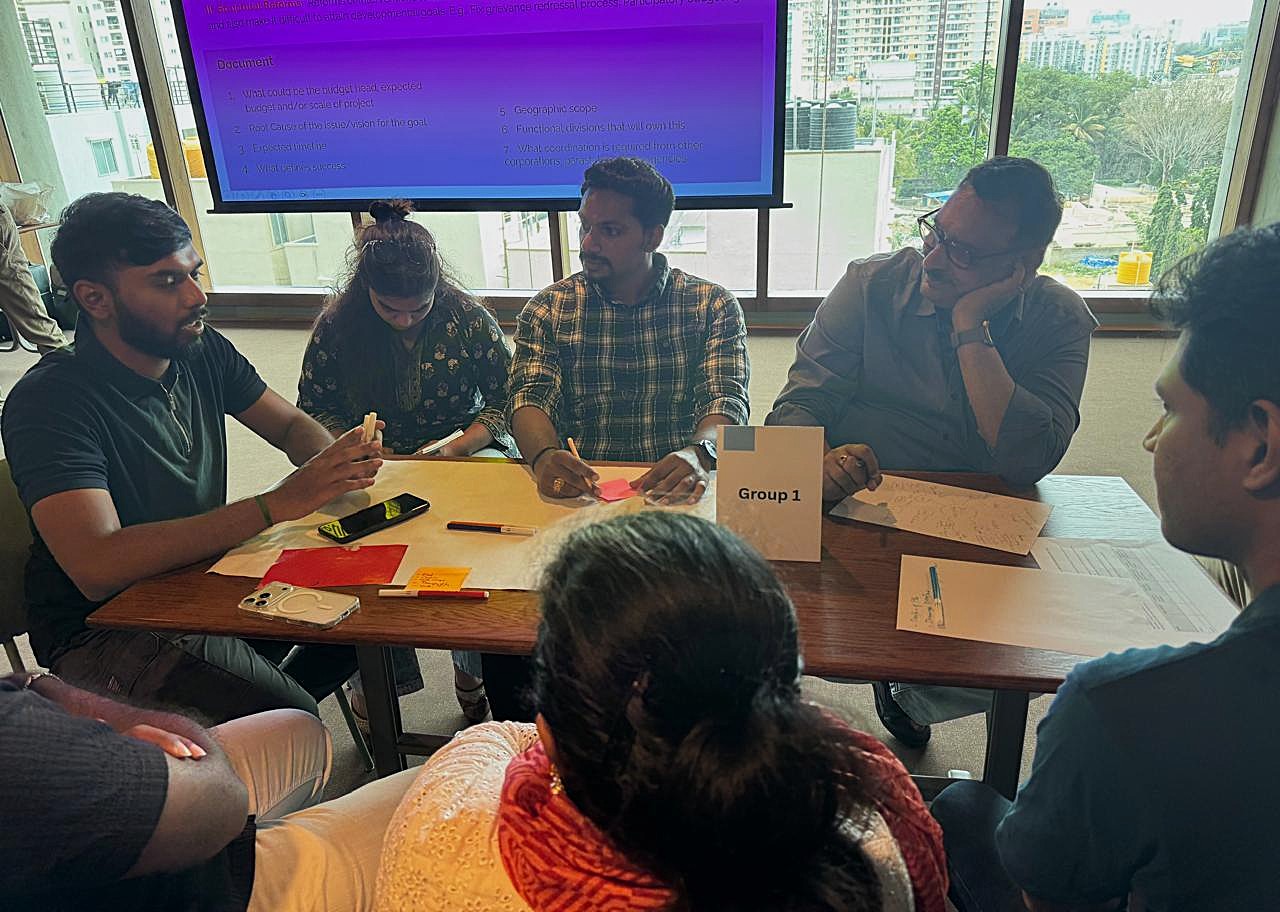
To support this effort, the Oorvani Foundation, in collaboration with Janaagraha, Greater Bengaluru Balaga, Bangalore Apartments’ Federation (BAF) and Million Voters Rising (MVR), organised a Citizens’ Manifesto Jam for the BECC on July 18th at the * spark | Pullur Centre, Whitefield.
During the jam, over 25 active citizens from of 16 different wards including — wards 18 (Dooravaninagar/FCI Colony), 20 (A. Narayanapura), 22 (Mahadevapura), 29 (Hoodi), 32 (Chanasandra East), 33 (SM Krishna East/Ramamurthy Nagar/Kaikundanahalli), 34 (Kaveri Nagara), 35 (Garudacharpalya), 36 (Bharath Aikya), 37 (Kundanalli), 38 (Whitefield), 39 (Hagaduru), 40 (Varthur), 42 (Priyadarshini), 50 (Gunjur), and 23 (Hennuragehalli), came together to discuss and identify local priorities. These were collated to form a ‘Citizens’ Manifesto’ — a comprehensive list of demands that reflects the key issues, structural and developmental goals for their respective wards.
Citizens were divided into four facilitated groups, each comprising residents from a cluster of wards within BECC. Rather than focusing on isolated neighbourhood issues, the discussions encouraged participants to identify common challenges, understand their underlying causes, and imagine the kind of governance needed to address them. Each group presented their list of issues and proposed solutions to each other and received feedback, which has been consolidated into a common charter, i.e., the Citizens’ Manifesto for Bengaluru East.
With the impending GBA elections, this Citizens’ Manifesto acts as a list of action items for potential candidates to address in Bengaluru East.
Read more: Pre-poll report card: Citizens raise concerns over urban planning and governance gaps
BECC’s Citizens’ Manifesto: What residents want for their wards
The key highlights from the manifesto for Bengaluru East focus on three major demands:
- Infrastructure governance: Upgrading and maintaining roads, footpaths, buildings, public spaces, and public health facilities.
- Stricter enforcement: Cracking down on building violations, encroachment of public spaces, traffic management, preventive health systems, footpaths, and safety.
- Inter-departmental coordination: Aligning parastatals and departments within the BECC to fix issues with solid waste management, road planning, drainage systems, and walkability.
Here are the detailed 11-priority items/issues identified in the citizen manifesto for BECC:
- Unplanned growth and building norm violations
Issues
- Weak enforcement of planning regulations
- Outdated Master Plan implementation
- Approvals without infrastructure assessment
Citizens’ ask
- Inspect new constructions, enforce setbacks, register and regulate PG accomodations.
- Implement ward-level Master Plan, link development approvals to infrastructure capacity, and conduct periodic compliance audits
- This item should be taken up by the GBA Town Planning, Bengaluru Development Authority (BDA) and Ward Office bodies
- Poor quality and loss of public spaces
Issues
- Weak enforcement of land-use regulations and encroachments
- Commercialisation of public land
- Inadequate maintenance
Citizens’ ask
- Prevent further encroachments, improve maintenance of parks and lakes, and prevent misuse of public spaces
- Protect public land, enforce land-use regulations, create more accessible public spaces, and prohibit inappropriate commercialisation
- This item should be prioritised by GBA, BDA, Parks Department, Revenue Department
- Traffic congestion and poor mobility
Issues
- Outdated traffic plans
- Increased density
- Poor junction design
- Inadequate last-mile connectivity
Citizens’ ask
- Improve junctions, redesign U-turns, and optimise one-way streets
- Prepare data-driven traffic management plans, improve last-mile connectivity, Integrated mobility planning, universally accessible footpaths, coordinated planning among all agencies, roads designed for all users
- This item should be prioritised by Traffic Police, GBA, Directorate of Urban Land Transport (DULT) and Bengaluru Metropolitan Transport Corporation (BMTC).
- Poor roads & repeated road digging
Issues
- Lack of coordination among utility agencies
- Poor restoration standards
Citizens’ ask
- Coordinate road-cutting schedules and restore roads immediately.
- Create a unified road excavation approval system and integrated utility planning, SOP for utility road cutting.
- This item should be taken up by the corporation’s Engineering Department, BESCOM, BWSSB, Telecom providers and Gas Authority of India Limited (GAIL).
- Poor solid waste management
Issues
- Weak segregation enforcement
- Inconsistent collection
- Inadequate bulk waste management
Citizens’ ask
- Ensure timely door-to-door collection, provide bins, designate bulk waste collection.
- Decentralised waste management, mandatory segregation, regulate bulk generators, certified contractors, performance-based contracts.
- This should be taken up by BECC, Bengaluru Solid Waste Management Limited (BSWML), contractors and bulk waste generators.
- Groundwater depletion and unreliable water supply
Issues
- Excessive extraction
- Poor recharge
- Increasing demand
Citizens’ ask
- Regulate borewell and tanker extraction.
- Groundwater recharge, rainwater harvesting, lake rejuvenation, sustainable water management.
- This should be taken up by BWSSB, Groundwater Authority.
- Drainage, sewage and water contamination
Issues
- Inadequate sewer capacity
- Poor infrastructure planning
Citizens’ ask
- Clean drains, stop sewage discharge into stormwater drains
- Upgrade sewer network, increase UGD capacity, enforce legal sewage connections
- This item must be taken up by BWSSB, Lakes department and the Corporation
- Poor public health and sanitation
Issues
- Poor maintenance of PHCs
- Weak preventive health systems
- Sanitation gaps
Citizens’ ask
- Maintain PHCs, regular fumigation, improve sanitation
- Strengthen ward-level preventive public health systems
- This should be taken up by the Corporation Health Department
- Poor street lighting and public safety
Issues
- Weak maintenance systems
- Corruption
- Lack of accountability
Citizens’ ask
- Repair lights promptly, maintain CCTV, eliminate informal payments
- Transparent maintenance system with service standards and complaint tracking
- This should be prioritised by BESCOM, BBMP, Ward Office
- Poor walkability and blocked emergency access
Issues
- Encroachments
- Poor parking management
- Weak enforcement
Citizens’ ask
- Remove encroachments, regulate parking, maintain emergency access
- Continuous accessible footpaths, designated vending zones, regular enforcement, Enforce road-width
- This should be taken up by BECC and Traffic Police
- Weak governance, enforcement and accountability
Issues
- Fragmented governance
- Poor communication
- Corruption
- Weak citizen participation
Citizens’ ask
- Publish civic work schedules, provide advance notice, simplify grievance handling, designate nodal officers, improve grievance response time, and publish service standards.
- Develop integrated citizen dashboard and transparent service standards
- Conduct regular Ward Committee reviews, strengthen ward level governance