At 8 am every day, M Subashini hops onto her two-wheeler and braces herself for the incessant Zomato order notifications on her phone, and the blistering May heat. Armed with a water bottle and gloves, the gig worker says “Veyil thaangamudila (can’t bear the sun). But we took this job to be independent, and earn — so we can’t stop, for rain or heat.”
Shuttling across Ambattur’s roads, the 38-year-old races between restaurants and residences, dropping off food packages under the scorching sun. An order within five kilometres usually earns her ₹20–50. “Men can do longer distances, but I can’t. I only take 20 to 30 orders within a 5 km radius,” says Subashini. The summer heat makes her 14-hour day feel longer and exhausting.
Her long shifts are worsened by the absence of proper washrooms, forcing her to reduce water intake and endure cramps during menstrual cycles, which sometimes causes dizziness. On period days, she changes sanitary napkins only when she gets home for lunch or late at night, and uses the washroom in restaurants only if there’s female staff present to ask. Rashes, stomach pain, and burning urine are common.
Subashini’s experience mirrors what women informal workers go through every day. As cities get hotter, washroom access, menstrual hygiene, and workplace health are still neglected, with devastating consequences. Women toil outdoors in the day, only to return home to household chores in the indoor heat.
Chennai recorded one of its hottest days of the year on May 20, with temperatures soaring close to 42 degrees Celsius. About 90% of working women have jobs in the informal sector and have no choice but to labour in the sweltering sun.
Impact on reproductive and menstrual health
Tamil Nadu’s 2019 heatwave action plan recognises heatwaves as a disaster and maps vulnerable populations, including children, pregnant women, senior citizens, and outdoor workers. The State Planning Commission’s study on gig workers found that 78.8% of 255 workers across Chennai, Madurai and Coimbatore reported having no access to clean and hygienic toilet facilities, despite spending 10–15 hours per day on the road.
However, these conversations largely miss out on guidelines on access to washrooms, clean water, and sanitary napkins for those who menstruate. A study by the MS Swaminathan Research Foundation (MSSRF) noted that heat impacted menstrual and reproductive health. “We largely surveyed the lower strata, slum areas and resettlement sites. Women reported alterations in their menstrual cycle, extended periods, discomfort, and severe pain compared to non-summer times,” says MSSRF researcher Priyadarshini Rajamani.
Reproductive health and menstruation are overlooked areas in public health, notes Professor Vidhya Venugopal, professor of climate change, occupational and environmental health at Sri Ramachandra Institute of Higher Education and Research. “When we talk about extreme heat, we usually focus on heat stroke or productivity losses, but the impact on reproductive health is just as severe,” she says, adding that the heat index crossed 45 degrees on several days this month, making it physiologically dangerous for people working outdoors or in poorly ventilated spaces for long hours.
Period pain and neglect
Many gig workers told Citizen Matters that they can’t afford to take breaks and change pads after they return home; some stack pads on top of soiled ones, while others suffer rashes, skin peeling, sweating, and discomfort because of leakage. While Zomato has 10 days of period leave a year, and Swiggy offers two per month, many do not avail of this and continue to soldier on.
For sanitation workers and fish vendors, this option is often out of the question, as a single day’s leave means a loss of income. “Sanitation workers often can’t ask to change pads or use the washroom. Most of the time, the supervisor and in-charge are male, and women face abuse or bad comments,” says AR Shanthi, gynaecologist, secretary, Doctors’ Association for Social Equality.
Street vendors in T Nagar, for instance, point to two public washrooms but many are unable to squeeze time to utilise these facilities.
Read More: Under the blistering sun: Rising heat and the struggles of Chennai’s coastal communities
No time to lose, only loss in wages
In between delays at restaurants and customers refusing to pick up orders unless at their doorstep, rest evades most gig workers. “Often, I can’t breathe in the heat as we scale nearly four flights of stairs to give orders. Before I move my leg again, the next order arrives. The heat kills us,” says Subhashini. Fatigue, exhaustion, and sunburn are daily symptoms that Subashini attempts to overcome with water, lime juice, and curd rice.
Nearly all women in heat-prone districts across India reported wage losses exceeding ₹1,500 from April to June, according to MSSRF’s study, Impact of Heat on the Health of Women in India. The study done across 15 districts — including Chennai, which was identified as a high–heat district — found that heat is experienced unequally. Informal workers and those from marginalised sections were the most affected.
For instance, at Pondy Bazaar, 65-year-old flower and fruit seller M Amudha lost two days of wages in May due to diarrhoea and fever. “It felt like my body was beaten and I could not set up shop,” she says. Like most informal workers, she chose to self-medicate as it was the inexpensive option, and return to her table as soon as possible.
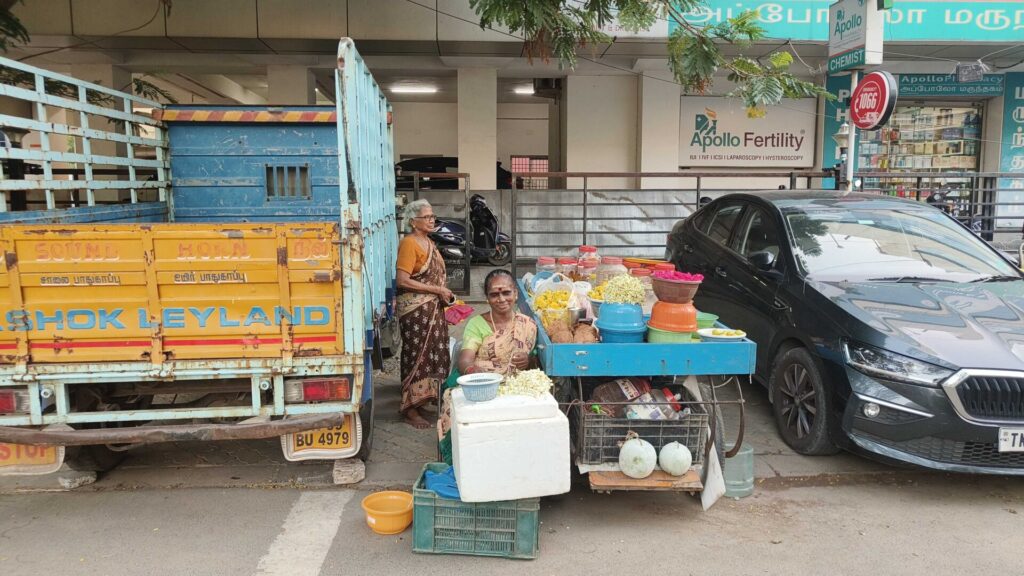
Informal workers like Subashini and Amudha listed out headaches, eye pain, diarrhoea, dizziness, during summers. Symptoms of UTI, and menstrual cycle changes such as more or less bleeds are harder to track and relay to health professionals.
Gaps in infrastructure
Experts recommend adequate rest and breaks under shaded areas for health and menstrual-health related concerns. In the case of sanitation workers or women employed in factories, hierarchy proves to be an issue.
While some find parks and trees, those who work at nighttime avoid taking breaks due to safety issues. “There’s covers for our phones, and vehicles which heat up. But there’s no protection for us,” says another gig worker, requesting anonymity.
Last year, Chennai was the first in India to open an AC lounge operating 24/7, with eating, mobile charging points, drinking water, and toilet facilities in Anna Nagar. However, most women gig workers I spoke to did not use them. “I went there and felt very uncomfortable; they should give us separate lounges and restrooms,” adds Shantha (name changed), a gig worker with a disability.
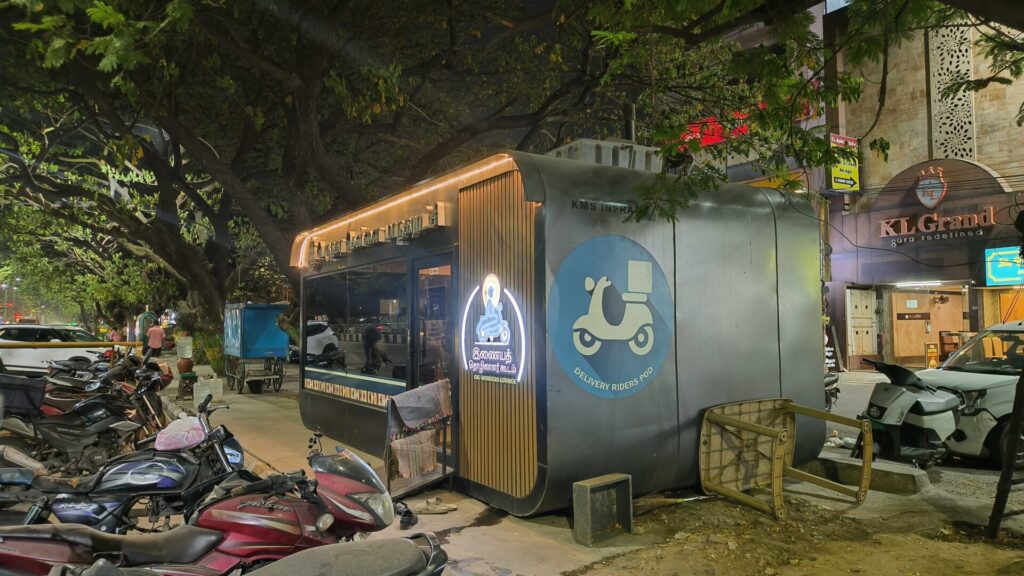
Moreover, restaurant washroom facilities and waiting spaces are not tailored for persons with disabilities. It adds another layer of difficulty for women workers like Shantha.
Heat and hormones
Extreme heat doesn’t just make you uncomfortable; it puts your entire body into a state of chronic stress, says Vidhya. “This constant strain spikes your cortisol levels, which can completely throw off your hormonal balance. For women working long hours in the heat, this leads to missed or irregular periods, intense fatigue, and severe exhaustion during the summer months,” she notes.
Often, with Polyendocrine Metabolic Ovarian Syndrome (PMOS and formerly Polycystic Ovary Syndrome), it’s more complicated, Vidhya notes. This is tied to insulin resistance and hormonal imbalances, and with severe dehydration, heat stress, and poor sleep, it gets worse.
As for UTIs, these are extremely common and start by the end of March, especially in Chennai, explains Dr Jaishree Gajaraj, city-based senior obstetrician and gynaecologist. “By December to February, we get used to a little colder or a little less warm temperature, so our water intake automatically reduces. But when the heat starts off in March and early April, we see a lot of women coming with urinary symptoms and urinary infections because of the reduced intake of water,” she says.
During summers, menstrual hygiene becomes difficult owing to rising temperatures and sweat. She recommends that women:
- Wear only cotton underclothes.
- Avoid use of antiseptic solutions or proprietary washes.
- Use pads made of breathable material instead of synthetic dry kinds.
Need for policy changes
To solve the larger issue, policy changes are needed, with gender-segregated data and ward-level plans, say experts.
Read More: Climate laws must enforce heat mitigation measures: Professor Vidhya Venugopal
“For the past few decades, climate issues have been coming to the surface, and it is difficult to predict the weather; we need to take care of informal workers,” explains Dr Shanthi. Privacy and dignity must be prioritised, she says, adding that the work environment must provide freedom to change clothes, pads, and use washrooms.
On an individual front, Dr Jaishree suggests women shift to menstrual cups, if possible. “Unless someone has heavy bleeding, a cup can collect 60 or 70 millilitres. In a day, it might not be so much; they can wear it for their workday and the entire period itself,” she says.
Recommendations from experts:
- Build the capacity of community health workers to identify and respond to heat-related illnesses in women.
- Ensure adequate toilet facilities with latches, clean water, and facilities to change clothes and pads.
- Provide one litre of water/lime juice at workplaces.
- Provide tailored umbrella-model hats to prevent direct exposure to the sun to informal workers.
- Offer periodic health checkups for informal workers.