“Affordable homes with Smart Spaces and Community living” — so goes oft seen copy in real estate advertisements and marketing brochures.
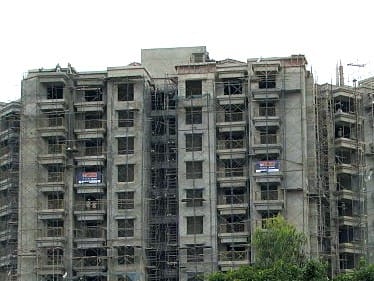
Pic courtesy: Wikimedia Commons, Amol Gaitonde.
First, let us clear the misconception that affordable homes are related to the lower income group. The word affordability has been misused by many in residential real estate market today.
Affordability in its true sense means what is affordable for people living in that locality and it is very contextual. A two crore 2 BHK in Lavelle road is affordable for people who are living in Lavelle road and the same two crore 2 BHK is unaffordable for people living in Sarjapur road. Likewise a 50 lakh 2 BHK is affordable for people living in Marathahalli but a 50 lakh 2BHK may not be affordable for people living at Anjanapura.
Most importantly, the question that one has to raise is whether “affordability” gives the flexibility to tweak the very basic design parameters of a living environment – light and ventilation.
Today when we evaluate certain upcoming “affordable” projects in Bangalore, we see that the wings of the buildings are so closely packed that the window of bedrooms opens in the main entrance corridor of the building and some in which only one room has natural ventilation and the other windows are opening into a duct. You cannot avoid looking into your neighbour’s house while enjoying the Bengaluru weather in your balconies. It indeed brings sense of “community living”!
Statistics show that these projects have surprisingly sold their stock as hot cakes. These compartment apartments are selling at a lower price than the other projects in the vicinity and are actually affordable to the pocket. eg: Rs. 37 lacs 2BHK in HSR layout. Certainly, one sees that the real estate mantra of “location location and location” is catching up gradually and the importance of product is reducing.
However, it is undeniably inhuman to push the people to buy such houses in lieu of their affordability. These “smart spaces” are probably the resultants of consuming the entire FSI (Floor Space Index) and additional TDRs (Transferable Development Rights) within the same plot while maintaining the height restrictions. There seems to be some disconnect with the building byelaws and the quality of space one is finally aiming at.
Hopefully, the city fathers would look closely into the zoning regulations and upgrade the space standards before the city of Bengaluru starts overflowing with these architectural disasters.
⊕
our educated fools community cant understand whats affordable what is not simple to day for example person with 10000Rs per month income with even one kid can afford three mobile phones ironicaly they have and spend their hard earned money on mobile bills.the same apply to affordable houses if one can afford three mobiles with 10000rs in come per month