“Celebrating four years of changemaking”- this is what my good friends at Namma Ooru Foundation (NOF) Called the event. So naturally I expected to hear stories of the journey, milestones, troubles encountered along, successes hard earned, etc. And of course I knew that I would be meeting many of Chennai’s environment warriors. I was looking forward to it.
It was all that, and more. I met several of the remarkable individuals that we keep reaching out to, both for our writings at Citizen Matters, and in our personal capacity, for guidance in our efforts to refuse, reduce, reuse and recycle. beginning with Natarajan, the founder of Namma Ooru Foundation, who gave up a promising career in the US to spearhead this effort. NOF has, in these four years, helped divert over 1000 kgs of waste per day from the landfill, helped several communities, schools, temples and corporates in their journey towards sustainable SWM practices.
A few ‘AHA’ moments stand out for me:
- A volunteer ended her introductory remarks with an old African proverb – “If you want to go fast, you go alone. If you want to go far, go together.” Profound. And very very apt for the occasion, and the larger situation of SWM challenges in Chennai that NOF has decided to focus its efforts on.
- It is said “where there is a will, there is a way.” Punning on the meaning of will in Tamil (villu meaning bow) a bunch of enthusiastic school children sang a song about the harmful effects of plastic, in the Villu Pattu folk style, using a bow as the primary musical instrument. Most imaginatively written, the song explained how plastic, discarded thoughtlessly after a single use, deeply affects our soil, our oceans, our air.. The children sang with such passion, it touched a chord in everyone present. The chorus of “Aamam”(yes) to every opening line of the song, is still ringing in my ears!
- Dr Sultan Ismail, the well known ecologist and expert on composting and vermiculture, was part of the panel that discussed the plastic ban and its aftermath in Tamil Nadu. At one point he said “Do not segregate waste any more. Please stop segregating!” And there was a stunned silence in the room! What was he saying? Why? Anxious eyes on him, he broke into a wide smile and said “Do not mix the waste in the first place!” Phew! Yes, that is such an important point – if we did not mix the waste, there would be no need to segregate it, and all the revulsion associated with dealing with mixed waste. I am determined to use this line in my local area SWM campaign.
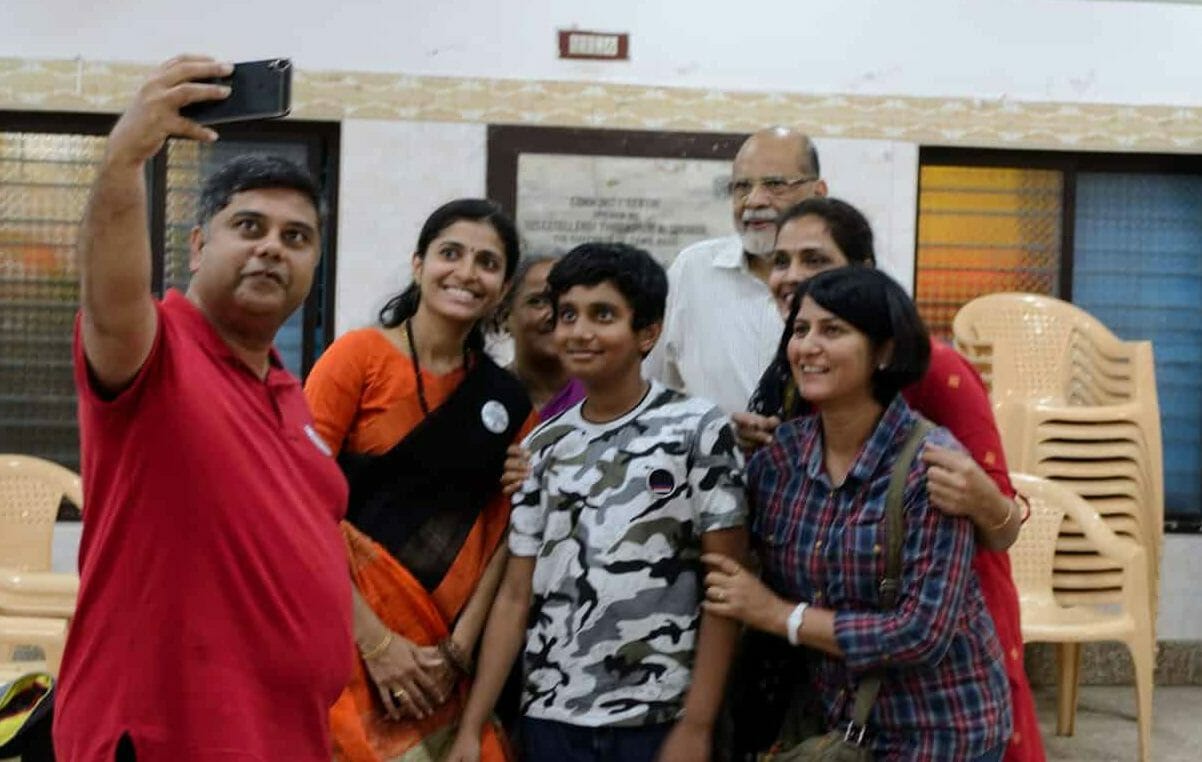
Volunteers take a selfie with Dr Sultan Ismail. Pic credit: Namma Ooru Foundation
4. A surprise visitor to the evening was Dr Meenakshi Bharat, the champion of sustainable menstruation practices. With aplomb, she got on stage, a menstrual cup and a cardboard depiction of the female reproductive system in hand, and with utmost nonchalance, depicted how it must be used. You could see awe on the faces of some of the women in the audience, and some of the men too (there were of course others who squirmed)!
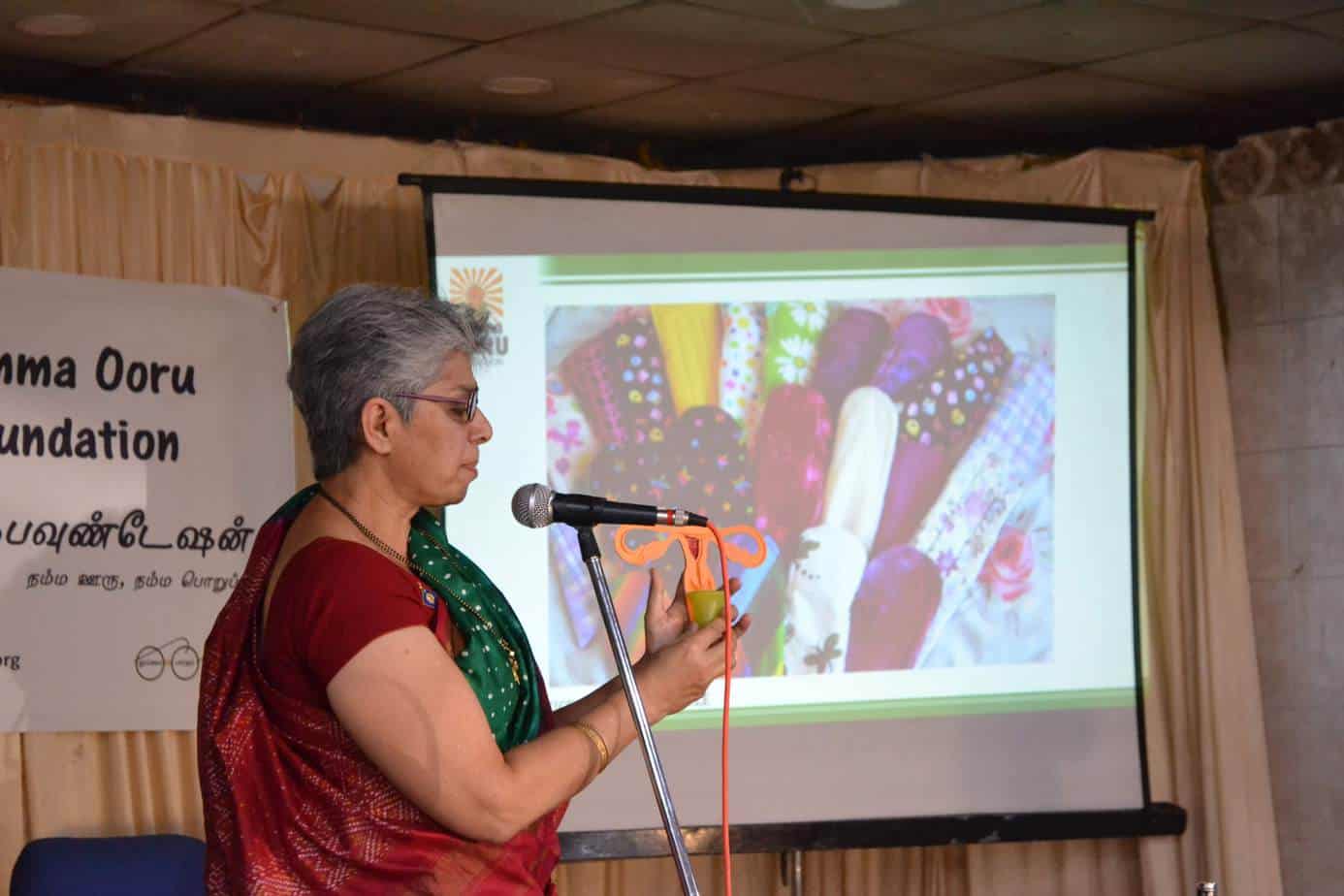
Dr Meenakshi Bharat explains the use of a menstrual cup. Pic credit: Namma Ooru Foundation
5. A gated community in Adambakkam undertook the challenge that their residents – 92 families in all – would start segregating their waste and composting their organic waste, a few months ago. One of the volunteers shared the story of how this was achieved, and the team of workers who made this possible, was called on stage and applauded. It brought home so effectively the point that cooperation and awareness is the only way to find a solution to our enormous garbage challenges.
6. There was not a single piece of disposable material used throughout the evening. Apart from hiring equipment for the stage, the NOF volunteers (Task Force, they called themselves) had arranged to procure 200 steel plates and tumblers. These now form the starting inventory of a cutlery bank – a great first step in reducing the use of disposable plates cups and glasses at parties and other events. The contact email for the cutlery bank is nammaoorufoundation@gmail.com
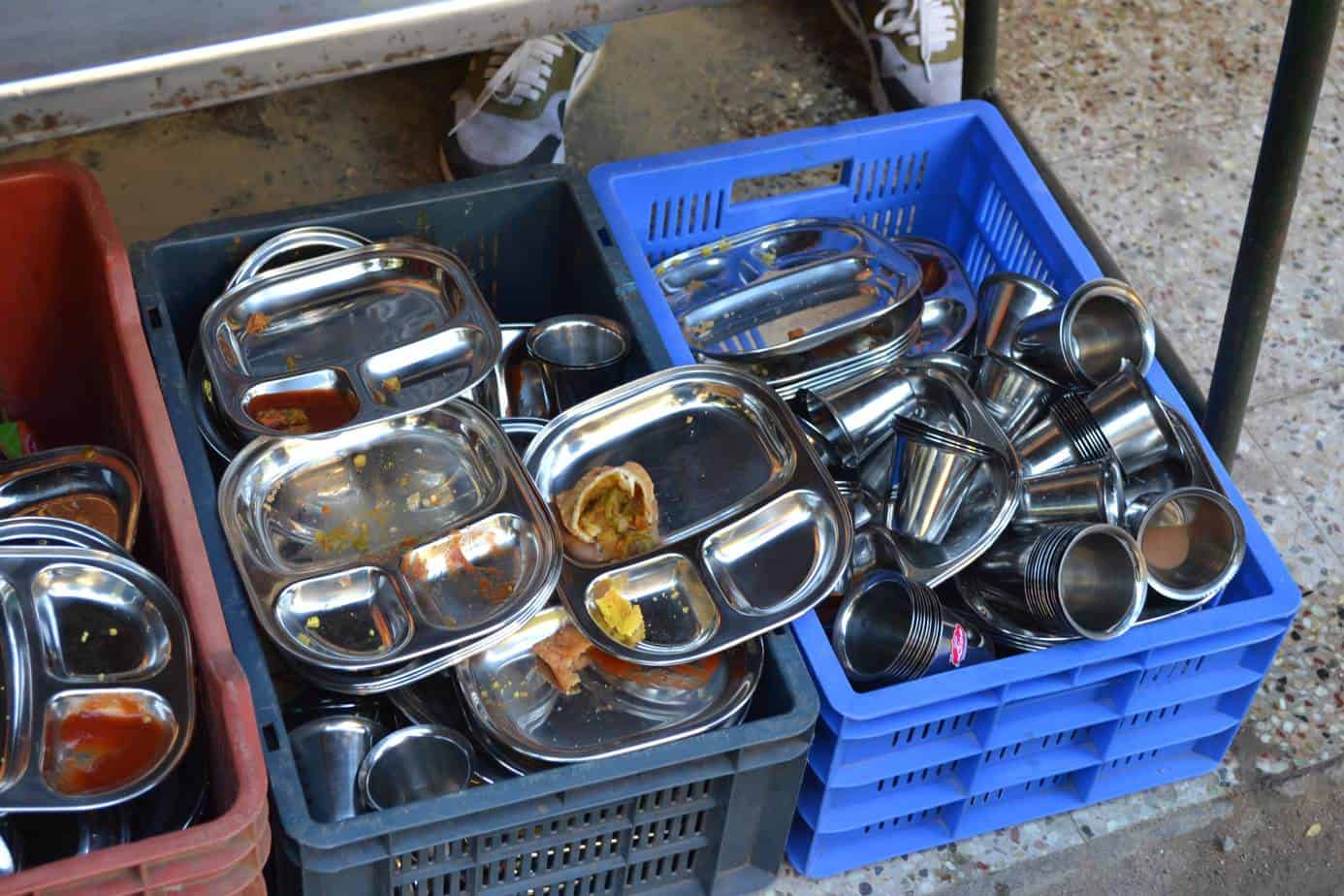
The birth of a Cutlery bank Pic Credit : Namma Ooru Foundation
The Regional Deputy Commissioner (South) for GCC, Dr Alby John, in response to a query from the audience, promised to help get a number where members of the public could complain if they see a violation of the plastic ban. It is commonly felt in Chennai that the ban started off well, but single use plastic bags are back in many places due to lack of enforcement. So a helpline would be useful – especially if it is a WhatsApp number where the complainant can upload photographs.
I came away feeling happy – it is always a nice feeling to know that the Kuppai brigade is growing – and hopeful – when so many good people put their ideas and efforts together, we are surely making progress.
We want to go far, so we must go together.