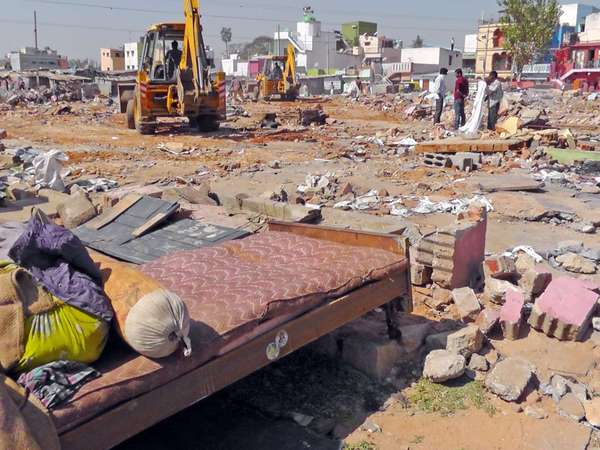
Tinsheds at the EWS quarters in Ejipura were razed to the ground in January 2013. Pic: Karthik Ranganathan
The Karnataka Slum Janara Sanghatanegala Okkoota has organised a public hearing on the 28th of January. 12 slums from six districts across the state have been identified to highlight the socio-economic and cultural antecedents of slum evictions, and the untold human cost of evictions especially on children, women and the aged.
Date: January 28th 2016
Time: 10 am to 5.30 pm
Venue: Gandhi Bhavan, Shivananda Circle
Overall, there will be cases of 12 slums, each with a slum profile, the life experience of an affected person and a three minute video documentary to help contexualise the cases better. These cases will also address questions on the larger issues of citizenship, social justice, anti-poor policies, and access to and ownership over resources.
List of slums to be presented
From Bengaluru:
Gulbarga slum, Kalasipalya, Vinobha Nagar, EWS Quarters, Pillagenhalli, Veerabhadranagara, Pai Layout, Gottigere Weavers Colony
From other disctricts:
Siddharthanagar – Kalburgi, Amanikere – Tumkuru, Tamil Colony- Mandya, Alvi Masjid – Vijaypura, Gandhivala – Hubbali
Jury members
- Justice CJ Hungund (Member, Karnataka State Human Rights Commission)
- Dr CS Dwarakanath (Former Chairpersion, Karnataka State Commission for BAckward Classes)
- Prof. Babu MAthew (NLSIU)
- Leo Saldanha (Environmental and Social Activist)
- Madhu Bhushan (Women’s Rights Activist)
- Dr Supriya Roy Chowwdhury (ISEC)
- Sudipto Mandal (Senior journalist)
- Shivani Chaudhry (HRLN)
Schedule
| 10 am to 10.45 am | Welcome, Context Setting |
| 10.45 am to 11 am | Introduction of Jury |
| 11 am to 1.30 pm | Presentation of case studies of impacted slums and slum residents |
| 1.30 pm to 2.30 pm | Lunch |
| 2.30 pm to 3.30 pm | Experts views on the issue: Shakun Mohini (Women), Issac Arul Selva (Slums and caste), Dr Ksithij Urs (Governance), Sunil dutt Yadav (Peoples’ advocate) |
| 3.30 pm to 4 pm | Responses from officials |
| 4 pm to 4.30 pm | Tea |
| 4.30 pm to 5.20 pm | Verdict by jury |
| 5.20 pm to 5.30 pm | Vote of thanks |
Related Articles
Bulldozers and pipes – life takes a different meaning
Hundreds of Ejipura slum residents thrown out of homes
In this Bengaluru slum, 6500 people use 10 toilets at dawn