Legal action by concerned citizens has frequently played a crucial role in safeguarding India’s natural ecosystems. One such initiative finally stopped Pallavaram Municipality from dumping waste illegally inside the Pallavaram Periya Eri, a once-thriving lake in Chennai’s southern suburbs.
Advocate Surendranath Karthik took up a pro bono case in 2012 to restore Pallavaram Periya Eri. The case was initially filed with the NGT’s Principal Bench and later moved to the Southern Bench. After over a decade, the case resulted in court orders for the lake’s restoration.
“Though I am not a resident of Pallavaram, I have seen my father advocating for environmental causes since childhood. When we started our law firm, we took up pro bono cases to restore lakes. The 2012 NGT case to restore Pallavaram Periya Eri was one of the initial cases we took up,” says Surendranath.
However, over a decade later, the Pallavaram Periya Eri continues to suffer from government inaction, encroachments, and unchecked pollution.
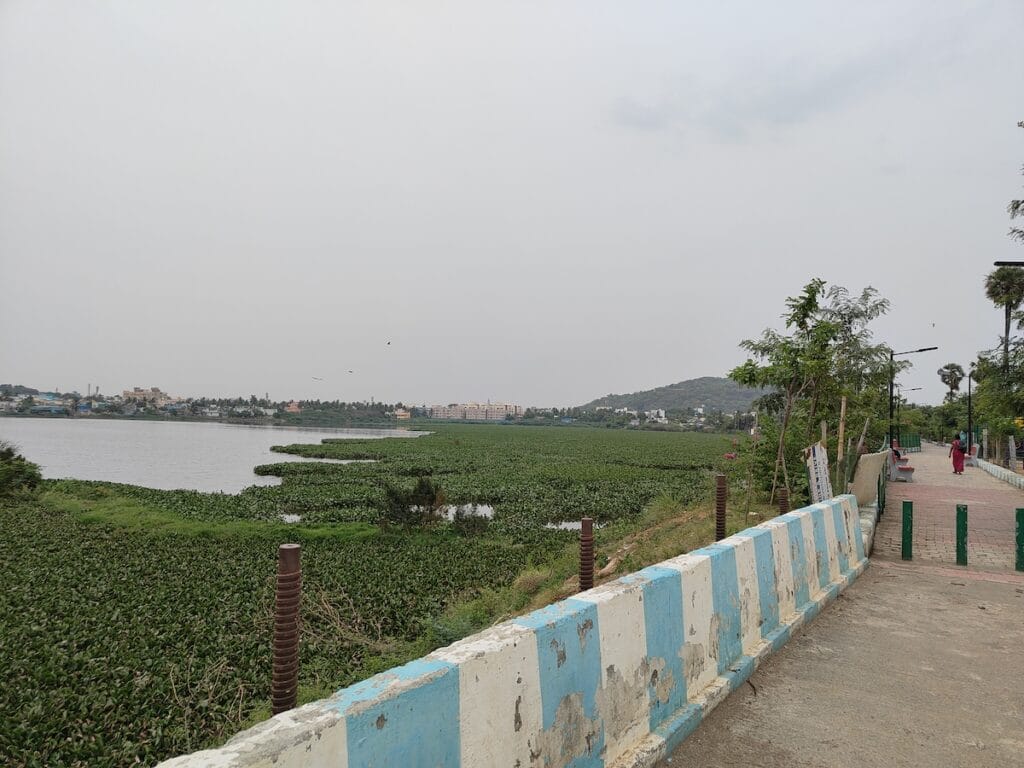
This report, part of a larger series on the waterbodies in the Pallikaranai watershed, highlights the decline of Pallavaram Periya Eri. Earlier articles covered the degradation of the Sembakkam, Madambakkam, Nanmangalam, Keezhkattalai and Narayanapuram lakes. Pallavaram Periya now stands as a reminder that legal victories alone cannot ensure environmental justice without civic action and political will.
Read more: How to go about lake restoration: Learnings from efforts in Chennai
A decade-long legal battle to save Pallavaram Periya Eri
Pallavaram Periya Eri began deteriorating around 1997 when municipal authorities started dumping waste at its southern end. Over time, this led to the buildup of about 1,08,000 cubic metres of waste above ground and 61,000 cubic metres below.
After years of deliberation, the NGT ordered the complete biomining and remediation of the legacy waste. In 2021, the Pallavaram Municipality informed the tribunal that they had bio-mined 1,08,000 cubic metres of waste, which was processed into Refuse Derived Fuel and removed from the site. They also stated that the Centre for Environmental Studies at Anna University had been tasked with assessing additional legacy waste beyond the original estimate.
“The Pallavaram Municipality floated a tender for the project in 2018-19 at an estimated cost of ₹7.2 crore. However, implementation delays, worsened by the COVID-19 pandemic, meant that the contractor abandoned the project midway without clearing the waste,” says David Manohar from Arappor Iyakkam. Notably, Arappor Iyakkam has been instrumental in gathering public support and staging several protests to restore the lake.
“To process the excavated waste, the government had also commissioned a Waste-to-Energy plant in Vengadamangalam at a cost of ₹80 crore. This too faced resistance, with residents complaining about the foul odour because of a malfunctioning drying pan. Consequently, the project came to a halt,” notes Surendranath.
Surendranath points out that while the NGT monitored the case for nearly eight years, frequent transfers of officials and shifting political priorities hindered progress. In 2023, the NGT closed the case. The court’s directions remained largely unimplemented.
Lasting change is possible only through sustained local engagement, beyond courtrooms and legal petitions, observes Surendranath.
Sewage, the main enemy
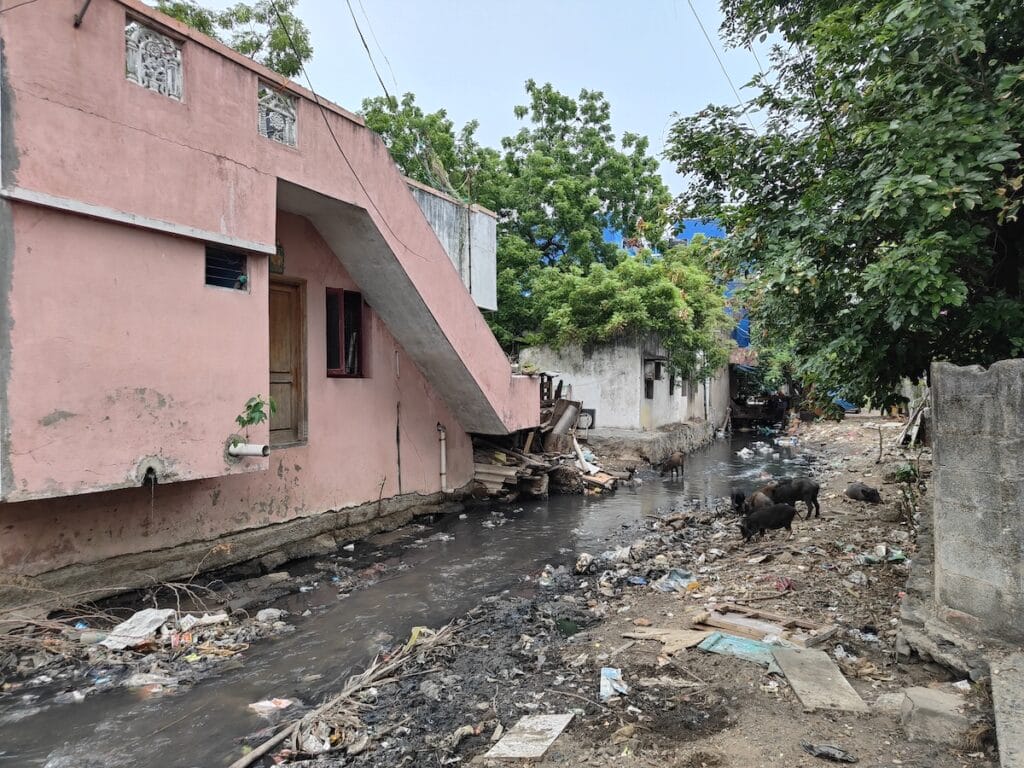
Even as waste dumping ceased, sewage discharge has emerged as a far greater threat to Pallavaram Periya Eri. The lake is fed by three major inlet channels — one from the Tirisulam hills, another from Thiruneermalai via Moongil Eri, and a third from Veeraraghavan Lake via Chrompet. These once-wide canals have narrowed drastically due to encroachments, shrinking from around 80 feet to barely five to ten feet. The reduced capacity prevents effective water inflow during rains, contributing to regular flooding in nearby locations that house the Chrompet Government Hospital, Vetri Theatre, and Ponds Company.
Environmental researcher K Raju highlights that canals across the Radial Road (which is constructed over Pallavaram Periya Eri) are heavily clogged. Further exacerbating the issue is the absence of an underground drainage (UGD) network. Sewage flows openly into stormwater drains and inlet canals, eventually contaminating the lake itself. This pollution has caused a proliferation of water hyacinths and has rendered the Pallavaram Periya Eri ineffective in groundwater recharge.
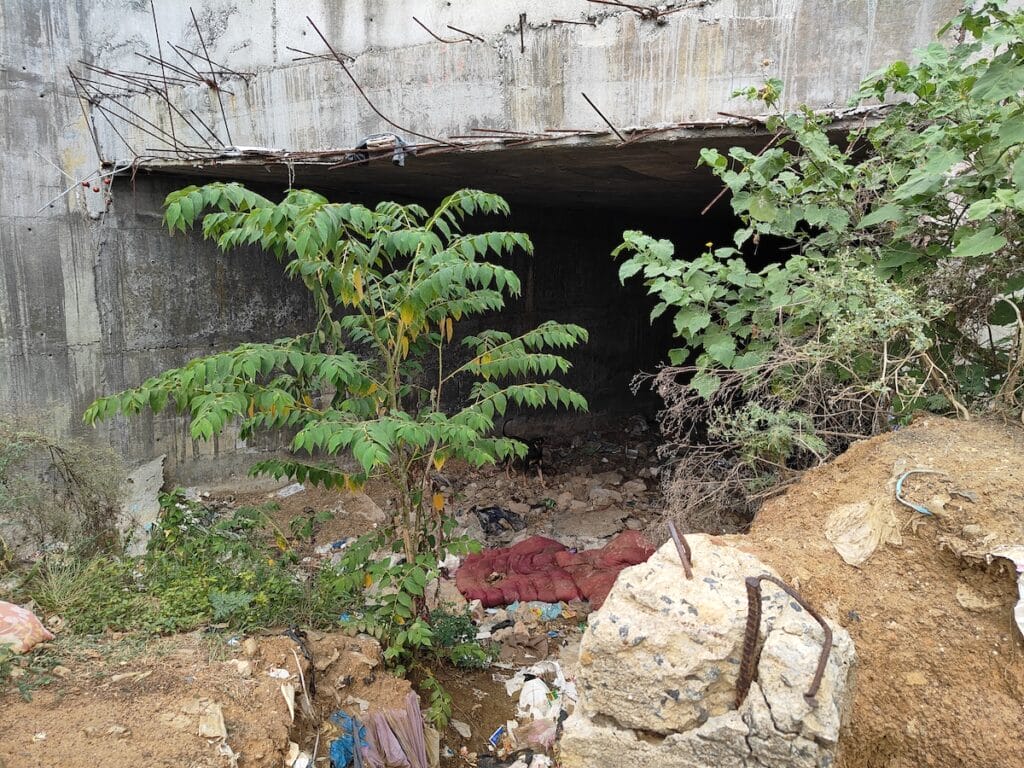
In addition, the sluice gates that regulate water outflow from the lake have been left open year-round, allowing water to bypass Pallavaram Periya Eri entirely. Instead of being retained, water quickly flows downstream into Putheri, Keezhkattalai Lake, Narayanapuram Lake, and finally into the Pallikaranai Marshland, carrying contaminants along with it.
“Though the tanneries in Chrompet were closed in the 1990s, the impact of the chromium and other sediments in the waterbodies has not been studied yet. The sewage mixing in the lake has only worsened the situation,” adds David.
Read more: Saving lakes in Chennai: Why maps and physical markers are critical
Encroachments and government complicity
In 2021, David filed a Right to Information (RTI) request that revealed over 1,300 encroachments within the boundaries of Pallavaram Periya Eri. “Despite this, the government has continued to provide public utilities, including roads, electricity, water connections, and streetlights, to these settlements. A significant portion of Ward No. 24 in Tambaram Corporation now lies on what was once the lakebed,” says David.
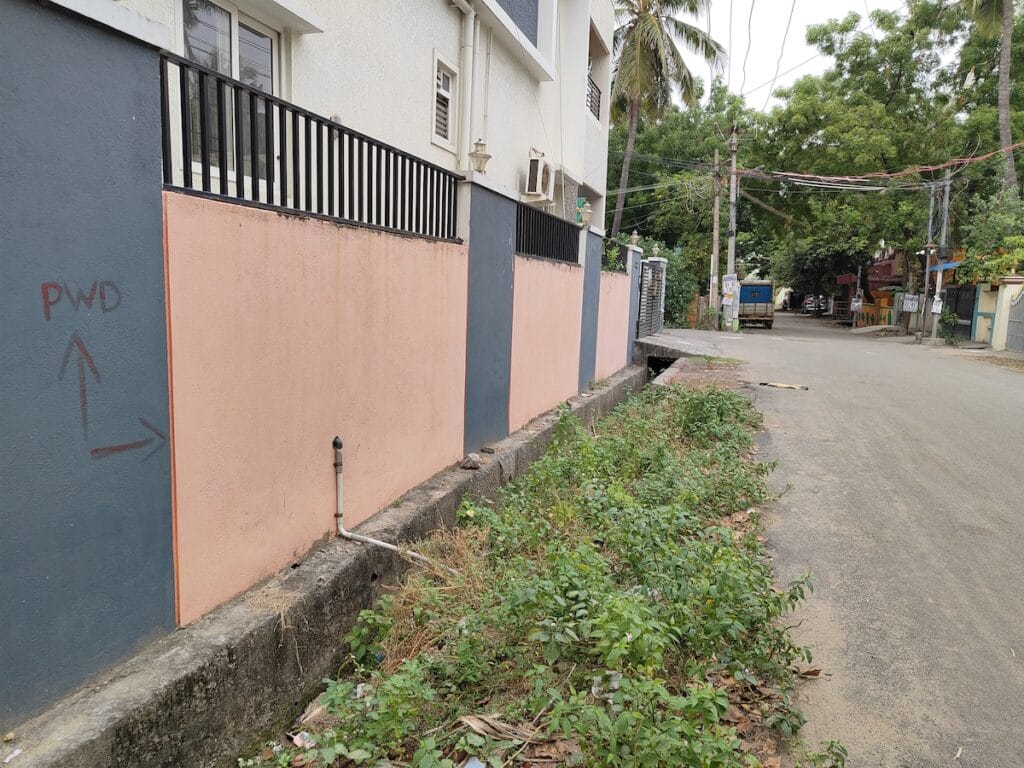
This tacit endorsement not only undermines court rulings but also encourages further encroachment. David points out that by collecting property taxes from these illegal settlers, the government is effectively legitimising the encroachments. “This contradiction, between recognising these areas as illegal in legal forums while institutionalising them in governance, poses a serious obstacle to lake restoration,” he adds.
We reached out to the officials from the Water Resource Department, Pallavaram Municipality and Tambaram Corporation, but they did not respond to our queries. We will update the copy as and when we receive their response.
High-rise developments and their impact
Another looming threat to Pallavaram Periya Eri is the proliferation of high-rise buildings near the lake. According to Raju, these developments pose a dual risk: the over-extraction of groundwater and deep foundation excavation could significantly lower the water table.
Local resident Elumalai, who lives near one such structure, notes that the water from the borewells in his area has turned saline. The issue is not isolated. As buffer zones are either poorly maintained or ignored altogether, constructions are encroaching upon what remains of the lake’s recharge zone.
The degradation of this once 300-acre lake into a 75-acre sewage reservoir is a result of apathy, encroachment, and administrative failure.
To restore the lake and ensure its ecological survival, the following actions are essential:
- Strict enforcement of NGT directives, including the completion of biomining and remediation of legacy waste.
- Immediate stoppage of sewage discharge into inlet canals through the establishment of a proper underground drainage network.
- Revival and maintenance of inlet and outlet canals to ensure healthy water flow and reduce flood risk.
- Clear demarcation and protection of buffer zones, especially from high-rise developments.
- Permanent relocation of encroachments, with alternative housing provided in a humane and legally sound manner.
- Strong community involvement to monitor compliance and hold authorities accountable.
Without immediate action, Pallavaram Periya Eri may soon become a lost cause, yet another casualty in the ongoing struggle between rapid urbanisation and ecological preservation.