Mumbai registers zero COVID-19 deaths for the first time since the beginning of the pandemic
After 18 months and 3 weeks, Mumbai recorded no COVID-19 deaths on a single day on October 17th. “Mumbai recorded zero Covid deaths after March 26, 2020. This is great news for all of us in Mumbai. I salute Team MCGM (Municipal Corporation of Greater Mumbai) for their spectacular performance,” I S Chahal, Brihanmumbai Municipal Corporation (BMC) commissioner told news agency ANI.
Even before the second wave of the pandemic hit the country, Mumbai had already reported more than 25% of the country’s total number of deaths. The city crossed 1000 deaths by May 2020 and 10,000 by October-end. Currently, 97 percent of the city’s population has been administered with the first dose of the vaccine, and 55 per cent are fully vaccinated.
Source: News18, Times Of India
Mumbai students can now commute using local trains
The state government on October 8th issued a statement declaring students under the age of 18, and those not eligible for the vaccination yet, free to travel using the city’s local trains from October 20th. The decisions come as a relief for students who can now attend classes physically. In absence of the vaccination certificate, students will have to produce their Aadhaar and school IDs to railway officials for verification.
After four months, Mumbai local train services were resumed for fully vaccinated passengers in August.
Source: Hindustan Times
Koli fishing port under threat of permanent closure
Cleveland Bunder, one of four artisanal fish landing centres in Worli Koliwada, could close permanently, fisherfolk claim. The Brihanmumbai Municipal Corporation’s (BMC) coastal road project (CRP) construction is limiting access to fishing grounds, according to the Kolis who live in the koliwada. Currently, a fourth of around 500 families – who are sustained entirely by artisanal fishing – is supported by the Cleveland Bunder.
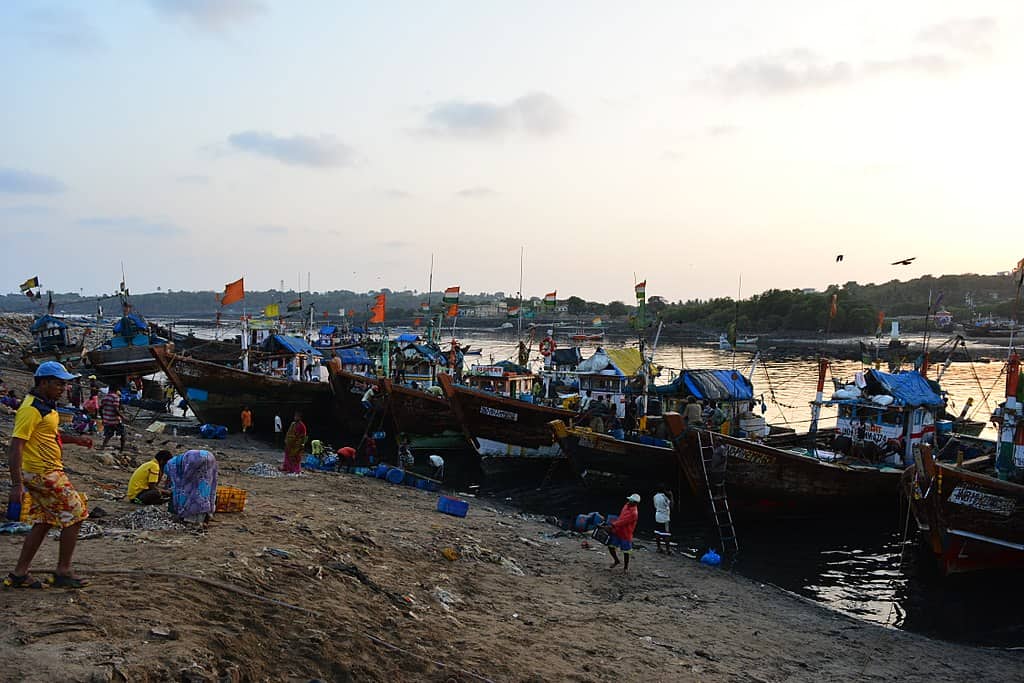
The barrier currently in their way is an interchange bridge between the CRP and the Bandra-Worli Sea Link (BWSL). “One strong gust of wind can send our boats crashing against the pillars. It happened to many boats when BWSL was being constructed. Also, more than one boat cannot pass through the span at a given time. The pillars have slowed us down and made it an everyday risk just to reach our fishing grounds,” explains Deepak Vasudev, a fourth-generation artisanal fisherman from Worli Koliwada. The phase 2 of CRP will erect four more pillars along the Baroda Palace-Haji Ali-BWSL route, with a 60 metres gap between them. Fishermen claim this is too little.
Source: Hindustan Times
Read more: The case against Mumbai’s Coastal Road project
Navi Mumbai becomes first city in the Mumbai Metropolitan Region (MMR) to vaccinate 100% of its citizens
Navi Mumbai is now the first city to vaccinate all of its citizens – over the age of 18 – with the first dose of the COVID-19 vaccination. More than half the population has taken the second dose. “We identified the super-spreader categories and vaccinated them and also facilitated the vaccination of seriously ill patients in their homes. There was constant review of the situation amongst all officials and departments” municipal commissioner Abhijit Bangar said.
The Navi Mumbai Municipal Corporation (NMMC) received acclaim from the state government for its ‘My Family – My Responsibility’ campaign. More vaccination centres were opened, all in close proximity to the residents, and those above the age of 45 were given priority.
Source: Hindustan Times, The Free Press Journal
Read more: As vaccines are being approved, time to remember stories of those who helped us through 2020
Bombay Parsi Punchayat trustees end hunger strike
On Wednesday evening, two of the trustees of the 300-year-old Bombay Parsi Punchayat (BPP) ended their hunger strike, when issues over elections were resolved.
On Monday, October 18, trustee Noshir Dadrawala, of the five-person board, went on a hunger strike to push for early elections to the BPP board. Two vacant seats and delayed action triggered Dadrawala’s decision. Along with him, chairperson Viraf Mehta, too, fasted. By Wednesday evening, after a series of meetings, it was decided unanimously that all five sitting trustees would end their term and allow fresh elections on March 27, 2022. Infamous for battles amongst themselves, rivalry between BPP’s trustees has, over the years, led to legal battles and rowdy behaviour in meetings.
Source: Mid-day, Times Of India
Also read:
- How to prevent viral fevers other than COVID-19
- Mumbai’s Kolis fight to (re)claim their home
- Mumbai is not fully open until the trains start running
[Compiled by Saachi D’Souza]