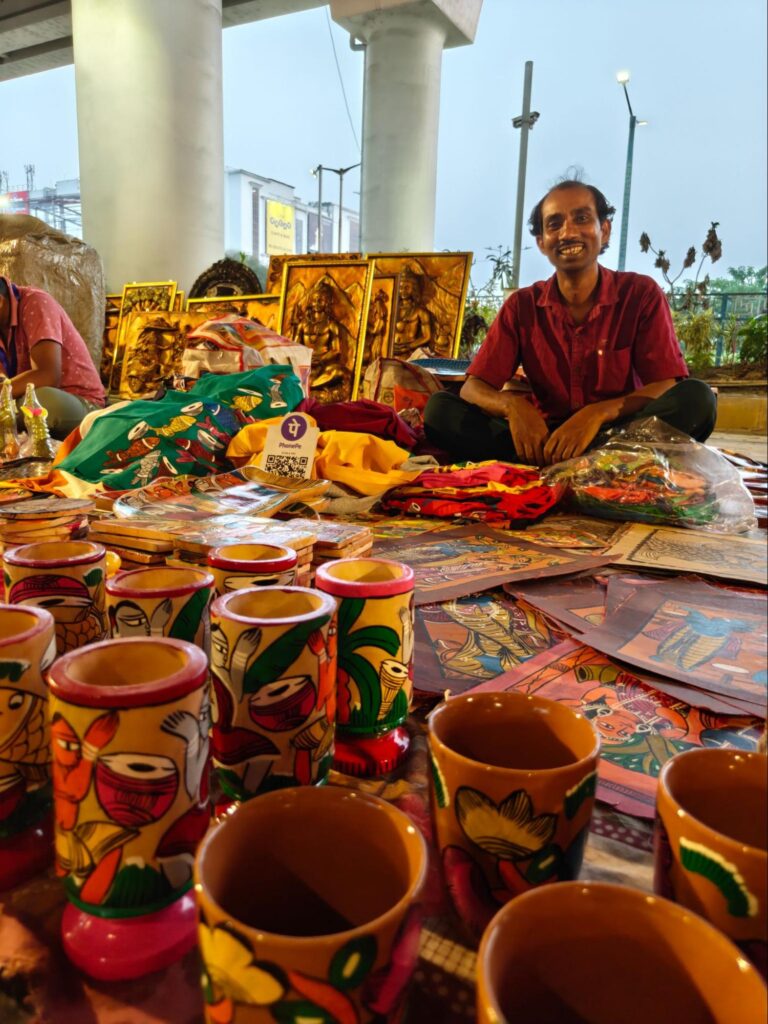
Every Friday morning, Aladdin Chitrakar travels from his village in Purba Medinipur, a coastal district in West Bengal, to Kolkata to showcase patachitra artwork created by him and his wife, Angoora Ji. They set up their stall at the weekend fair along the Biswa Bangla Sarani in the city that is widely known as a shopper’s paradise and a haven for art.
Their vibrant fish motifs and tribal figurines painted on wooden trays and white T-shirts are the source of livelihood through which the couple supports their two sons. Aladdin rents a small place to live for three days in the city, and then returns to his hometown on Monday morning while his wife prepares the next batch of items.
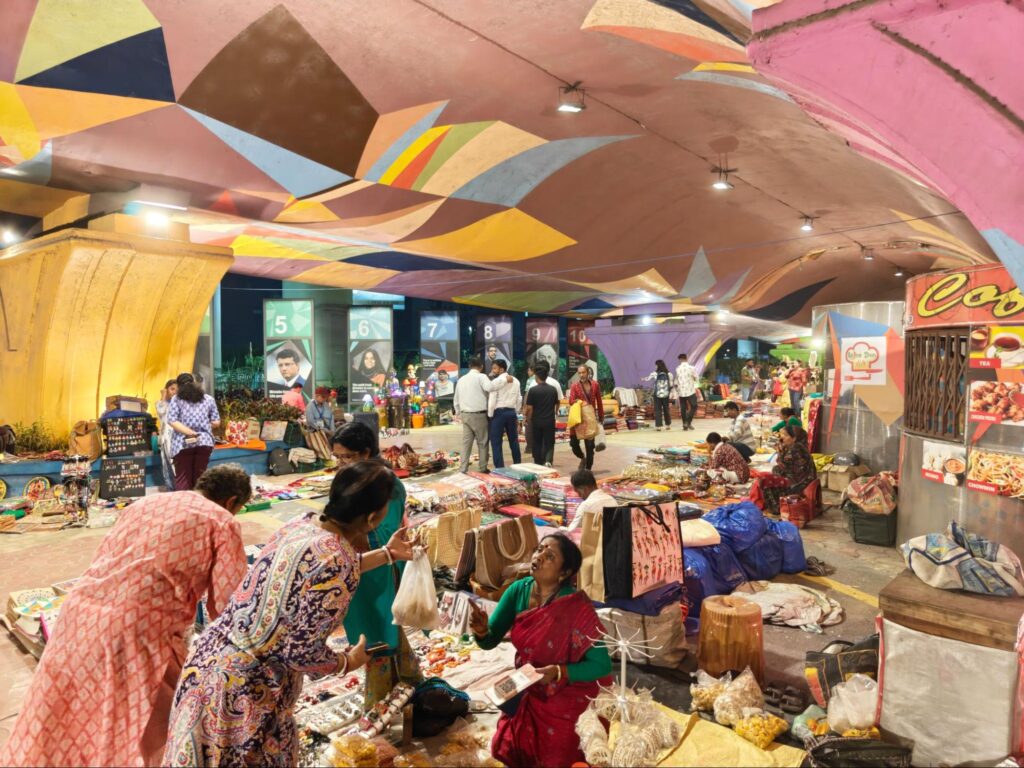
This weekend bazaar/haat/mela called Sonajhuri Haat is the latest addition to the city’s carefully-planned New Town area, with dedicated lanes for cyclists, a locality surrounded by big offices, high-rise buildings, hotels and recreational zones. Inspired by the famous Shantiniketan weekly fair of the same name, this fair hosts around thirty to forty collectives displaying their work.
From famous patachitra to kantha stitch and dokra art, you name it, and you can find it here. This temporary migration from villages to the colourful bridge in the city allows artisans to showcase their work on a larger platform to a wider audience, making it easier to market and more accessible to buyers. At the same time, it is a movement to make art more relatable in the age of “trendy” machine-made items.
Read more: From shadows to spotlight: Youth in Mumbai’s Govandi rewrite their story through art
Painting stories through the generations
The art of storytelling through paintbrushes is a skill passed down through generations in Aladdin’s family. His father was renowned throughout the district and the state, receiving multiple awards and accolades at national and international levels. Aladdin learned the art at a young age, starting at 15. After getting married, he continued the legacy and taught his wife the intricate skill of brush manoeuvring.
Today, Angoora creates complex characters from various Bengali fables. “My wife does such great work creating these beautiful figures. This requires extra attention and skill. I introduced her to the world of Patachitra, but her passion and skills have surpassed those of many others,” he proudly said, showing off a piece of art over a beautiful yellow kurta.
He also reflects on the future of their artwork: “When I get to showcase our artwork to visitors, I automatically begin with a smiling face; it has become instinctive for me. It has never occurred to me to work in any other role. But my son, who is in class 11, does not want to continue this artwork; he wants to work with computers.” The next generation is looking toward a more secure and organised sector.
Empowering artisans through the haat
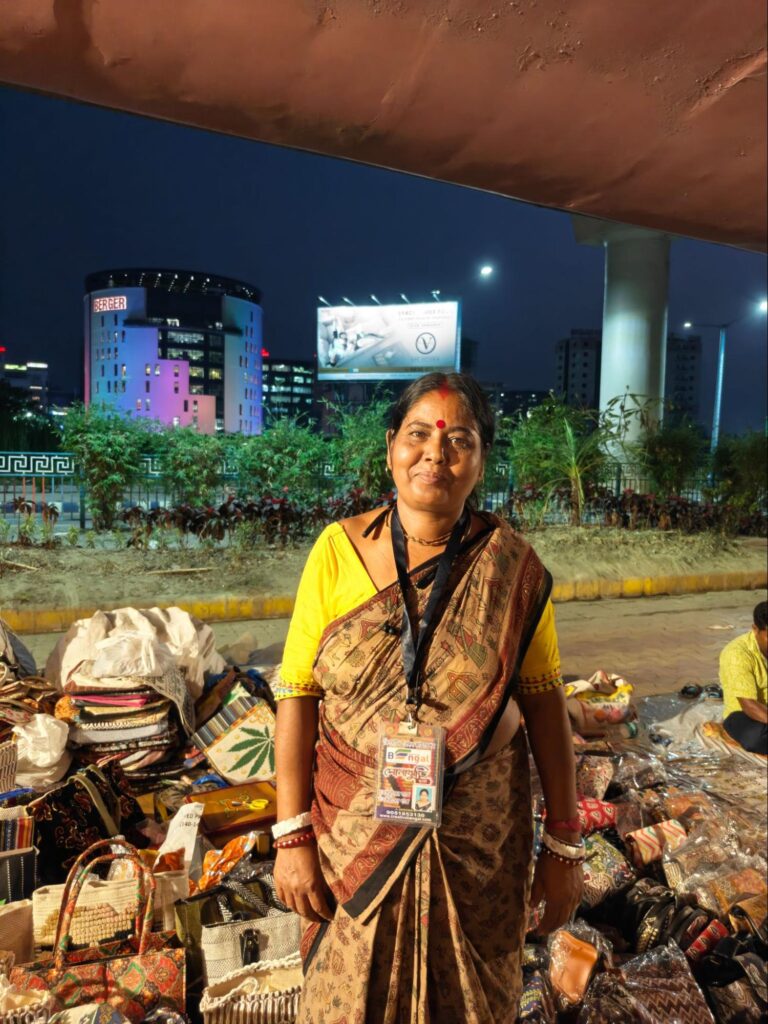
“We are all a community here. We are like a family and strive to make this a place of interaction and learning from each other. This platform also introduces us to a more modern set of visitors, making our products more innovative and trendy,” explained Ujjala Sarkar from Bardhaman district. Her stall is full of different kinds of bags — from patchwork, upcycled totes for daily use to jute slings for beach vacations. She stays in the city for three days, making her own arrangements for the visit and travels back to her hometown every week.
Ujjala is an artist and a trainer who travels across various districts in West Bengal. Once trained by the National Jute Board herself, she now trains women from Asansol, Durgapur, Bankura, and as far as Sikkim. She is grateful for the opportunity she has received at this weekend’s haat, which is the perfect stage for her to experiment with her art and receive feedback.
Also read: Community, culture and knowledge unite at Chennai’s Madras Literary Society
She emphasises the importance of this particular haat: “This has enabled women like me, who have always been housewives, to step outside our hometowns and come to the city to display our artwork and interact with visitors and other fellow artisans, like artisans are coming all the way from Malda just to showcase their work with sitalpati here. It gives me a sense of empowerment, pushing me to train more women in my locality for free so they can experience this freedom too.” An initiative like this can provide a path to self-reliance for women artisans, giving them a reason to temporarily migrate.
Art for the community
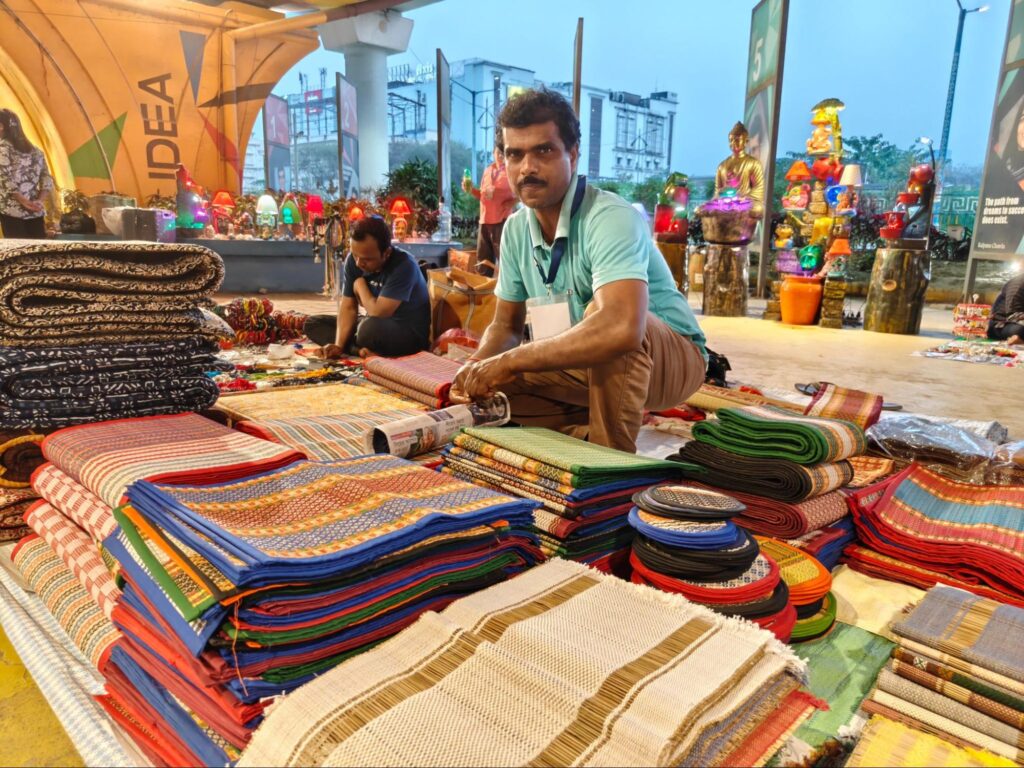
Artisans from across 18 districts find a temporary home under the bridge near the Central Mall every weekend (from Friday to Sunday), showcasing their work. Lakshmi Sahu, from the Sabang district of Paschim Medinipur, brings his woven Madurkathi work to the fair. Prices range from Rs. 60 to 600 for products such as table mats, wall hangings, and seating mats. “Five artisans work together to weave this seating mat, and it takes hours to complete.” He also welcomes visitors to his hometown to witness the entire process. The weekly haat has given him a platform to expand his experience as both an artisan and a seller.
The weekend fair is a perfect example of how placemaking projects can generate income for rural and peri-urban populations, create interactive spaces for creators and consumers, and provide a fun shopping experience where you can handpick your favourites. It also gives artisans the comfort of not having to leave their hometown entirely, only travelling on weekends, and a sense of self-reliance through their work.
In the era of AI, these artisans are given a platform free of charge, creating a sense of community by bringing people from different places together. The fair is also a paradise for shoppers and visitors from other parts of the world who want to experience the art of Bengal in one spot.
Such a nice article, very insightful!
Excellent social work. This work is a good step against the global warming and climate change I wish every success of this work.