In early July, I came across the news of a COVID-positive woman who was in urgent need of hospitalisation. She was turned down by 16 hospitals because no beds were available. However the government, on its website, claimed they had sufficient beds.
To understand the reality, I did some research, and then started calling hospitals listed on the website – around 140 of them. Shekar hospital, Bull Temple road, had allotted two beds for COVID patients, but the BBMP site claimed they had reserved 30 beds. Chris Superspeciality Hospital was under construction. When I called Rajarajeshwari Medical College, they asked me Rs 50,000 in advance.
I was shocked to find that many hospitals were not equipped to treat COVID patients – some were maternity hospitals, dental hospitals or eye hospitals, and some did not have enough staff to treat patients. Meanwhile, the government continued to claim an exaggerated bed count. So I collated the survey results and prepared a report of hospital beds on July 5.
I was trying to find a way to get this information to reach both the government and the public. When I saw Public TV reporting in Malleshwaram, I went up to them and told them about my survey. They asked for recordings of the calls I had made to the hospitals, as proof. I shared some of that along with a selfie video explaining what I found.
I had hoped the news report aired by Public TV would prompt the government to take action, but nothing changed. So I decided to regularly check with the hospitals and publish the information to give a clear picture to people in need of beds, so they didn’t have to waste time calling up or going from hospital to hospital.
I called my school friend Mohammed Sulaiman and asked for his help to build a website so that we could regularly update bed status and give correct contact numbers to patients. He built the website within two days.
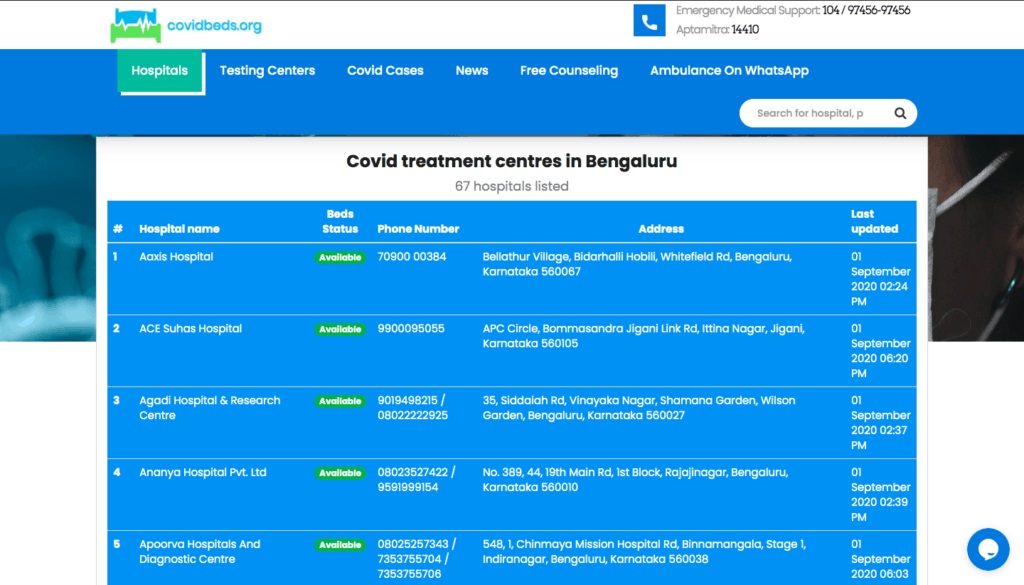
In the meantime, I had registered the domain covidbeds.org. We went live on July 9 (much before BBMP introduced Covid Hospital Bed Status (CBHS) on their portal and started updating their list). Later, another school friend Ankit Dubey started helping with the site.
We also used to check availability of ICU and ventilator beds, and publicise the information on our Facebook page and Twitter handle.
I used to make calls to hospitals, and Sulaiman would handle the website. I started tagging Medical Education Minister K Sudhakar, Deputy Chief Minister C N Ashwath Narayan, and MP Tejasvi Surya on my Facebook and Twitter posts, hoping they would correct the false data. But there was no response.
It was important to correct the wrong data since COVID helplines were referring to the same data when responding to calls from patients.
In mid-July, BBMP introduced CBHS. As soon as the former BBMP Commissioner B H Anil Kumar shared it on social media, the site crashed and was up again only after 3-4 days. Meanwhile, we kept collating data. When the site was up again, I was shocked to see the list of private hospitals and the bed count. They were claiming to have more than 300 private hospitals, which was not accurate.
I found that just updating our website with bed data was not enough. I used to get calls from people panicking about mild symptoms. So we made an explanatory video which gives information on what one should do if they are unwell or test positive for COVID, and whom they should contact. Avnidhar Havaldar of Namm Radio provided the voiceover for my video, and we uploaded the video on our website as well as YouTube.
We then started receiving a lot more queries, and hence reached out to volunteers for help. That’s when I came in contact with Mohammed Mateen and Gopi Badipuram. Now all of us are working together as a team.
Siddhant Kalra from Citizen Matters got in touch and I shared my story with him. After the article Does Bengaluru really have 13,000 hospital beds for COVID? was published, it looked like our voices might have been heard by BBMP.
A few days later, the list of private hospitals in the BBMP website came down to 85, which is closer to the actual number of private hospitals that offer COVID treatment. BBMP’s hospital data has kept changing since then. Presently, 124 hospitals and 15 medical colleges are listed in the website.
I thank Citizen Matters, especially Siddhant, for featuring us. It really made an impact. We got new traffic for our website and were able to reach and help more people.
We recently launched two new services called Ambulance on Whatsapp and Free counseling. Ambulance on Whatsapp allows users to book an ambulance by sending their details to the Whatsapp number 76-108-108-48.
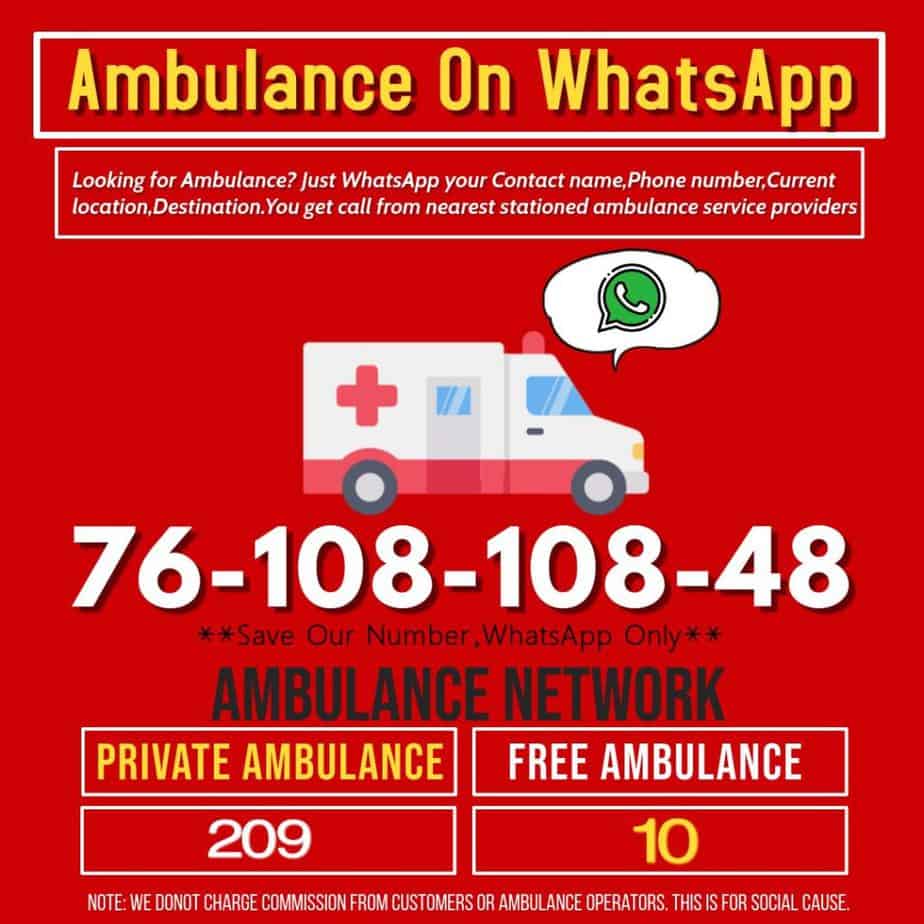
To know more about the availability of hospital beds for COVID treatment, visit www.covidbeds.org or follow us on Facebook and Twitter.
Also read:
► How to dispose of COVID waste from your household
► Why Bengaluru hospitals are refusing to admit COVID patients
► COVID response: “Bengaluru is overlooking every management lesson from history”