In Chennai’s Perumbakkam resettlement site, residents working as domestic workers leave home at 9 am and return only after 6 pm. For them, the Election Commission of India’s (ECI) Special Intensive Revision (SIR) seems almost impossible to navigate. A community worker from the area observes that in earlier voter roll verifications, households received a simple part-number booklet. Now, Booth Level Officers (BLOs) set up camps instead of going door-to-door, asking residents to collect the forms themselves. The new form asks for additional details such as parents’ voter IDs, which many residents do not know, she adds. With low literacy levels, even filling out the form becomes a challenge.
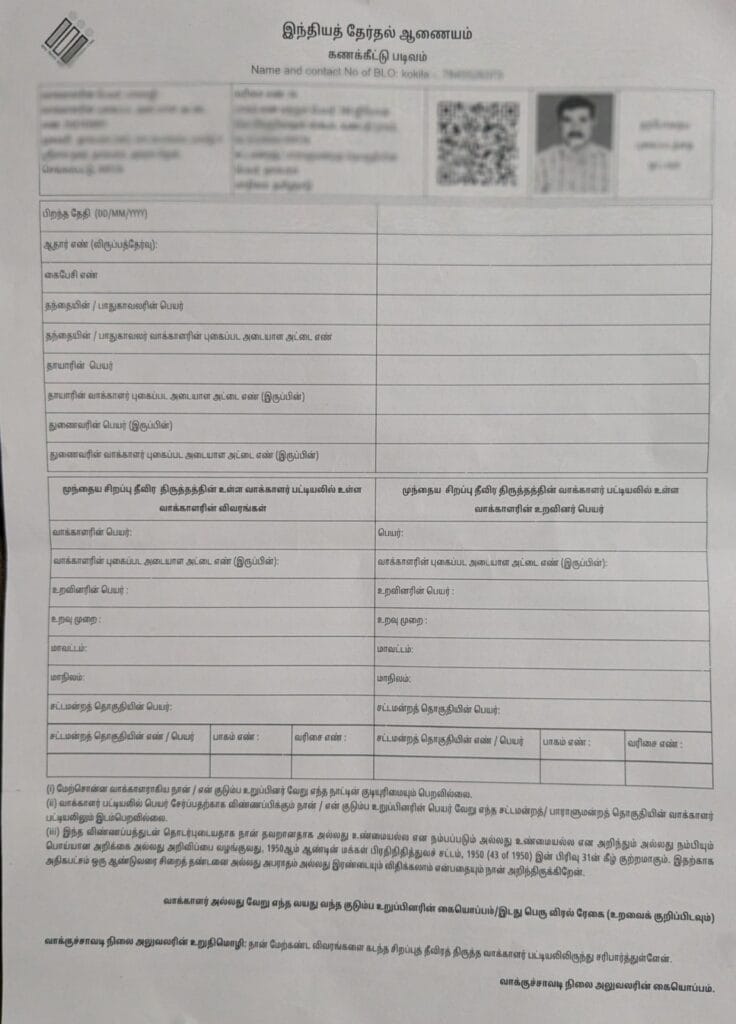
Confusion pervades other places, too. A resident of Madambakkam in the Tambaram constituency points out the section in the form that not only asks for “the relative who attended the last SIR,” but also that relative’s relative’s name and details. “It’s mentioned in such a vague manner that I honestly don’t know what exactly needs to be filled in,” says the resident.
After a 21-year gap, India launched the SIR of its electoral rolls, a sweeping exercise spanning 51 crore voters across 321 districts in nine states and three Union Territories. It started on November 4 and is set to conclude with the publication of final rolls on February 14, 2026. But while the scale is unprecedented, the problems faced by voters during enumeration, the procedural gaps and logistical burdens make the whole exercise seem futile.
For more on the process, check out our explainer here.
Urban poor and migrant workers: Forms they cannot understand, data they cannot access
The burden is heavier still for the urban poor and migrant workers. “The poor often lack the means to safely store documents. Informal workers and migrants, frequently mobile and living in precarious housing, struggle much more than other residents. If they have lost older voter IDs or supporting documents, it is unclear whether the tight timeline of the SIR gives them enough time to obtain duplicates. Migrants working in the informal sector rarely get weekly holidays, making it impossible for them to be home during BLO visits,” says Mahalaya Chatterjee, Professor of Urban Economics at Calcutta University.
Even though there is a provision for BLOs to visit a house up to three times, many migrant workers may still be missed. Online forms have offered little relief, given the digital divide, limited literacy, and dependence on BLOs for assistance.
Inside the SIR workflow
- On the ground, BLOs begin their work at 7 am. This SIR is unique in structure: the form has a basic section common to all voters, a second section for those born before 1987, and a third for those added after the 2005 SIR. As ECI extended the deadline by a week, citizens are supposed to submit filled-in forms by December 11th, and the data is synchronised online with the ECI portal. A draft roll will be released on December 16th. Voters who find errors can file appeals till January 15th, using Form 6.
- BLOs verify deaths through neighbour signatures and visit households with unavailable people three times. Voters often request corrections to errors on their voter IDs; BLOs clarify that revisions only confirm whether individuals reside in the listed address and are alive, not card errors.
- BLOs stress the process is necessary, as rolls contain outdated entries, including multiple records for deceased persons. Frequent relocations, unreported deaths, and women’s names remaining in parental homes after marriage further add to discrepancies.
Here’s how to verify whether the SIR form handed over to the BLO has been uploaded:
- Visit voters.eci.gov.in/login, click on the “Fill Enumeration Form” option, select your state, and enter your EPIC (voter ID) number.
- If the BLO has successfully uploaded your SIR form, the portal will display a message stating: “Your form has already been submitted.”
BLOs face overwhelming workloads
While citizens struggle with confusing forms, BLOs in Chennai themselves face growing challenges. Meena (name changed), a schoolteacher who takes up BLO duties after classes, describes the toll: “Many of us are older, and the physical strain is really hard,” she says. “Our phone numbers are made public, so I get around 60 to even 100 calls a day. By the time I finish responding, there is no time left to rest.” Even basic verification is difficult. “The ECI portal is sometimes not accessible to voters, and even for us officials, it’s not easy to check entries smoothly. Everything feels like it has to be rushed in whatever little time we get.”
Revenue Inspector Thangappan, a member of the Federation of Revenue Associations (FERA), who supervises the SIR process, says the first hurdle is simply managing the volume of forms that must be identified, distributed, and verified daily.
“BLOs are expected to computerise around 150 forms a day but manage only 40-50 because of server errors and the time-consuming nature of fieldwork. The workforce is already overstretched, with many older BLOs and very few volunteers to support them. Political party booth-level agents, who are supposed to collect 50 forms per day, are largely absent. In some areas, four BLOs are assigned to the same household because its members fall across four different electoral parts, multiplying the workload unnecessarily,” he says.
Continuous calls from residents affect fieldwork. Thangappan says the pressure from district collectors, who in turn are pressured by the ECI, has become unbearable. “Even simple tasks like checking a voter’s details on the website require waiting an hour due to server congestion.” FERA members across Tamil Nadu went on strike, demanding, among other things, an extension of the SIR deadline, but resumed work after two days. Yet, the matter is far from resolved.
Experts warn of structural gaps
Observers worry that the compressed timeline, which includes a little more than a month for enumeration and another for claims and objections, could lead to mistakes and mismatches in the final voter list.
Jayaram Venkatesan, convenor of Arappor Iyakkam, a Chennai-based NGO working for transparency in governance, says the SIR process is confusing and poorly planned. “BLOs haven’t been trained properly, and the time frame is far too short. Even the old 2004-05 data we’re asked to refer to is unreliable. Most people don’t know what to fill, the machine-readable search doesn’t work, and tracing old addresses is nearly impossible,” he says. “With so many complications, the purpose of the exercise won’t be met. Many voters may get removed from the rolls.”
Read more: Praja Report Card: How Mumbai voters can check their MLA’s performance
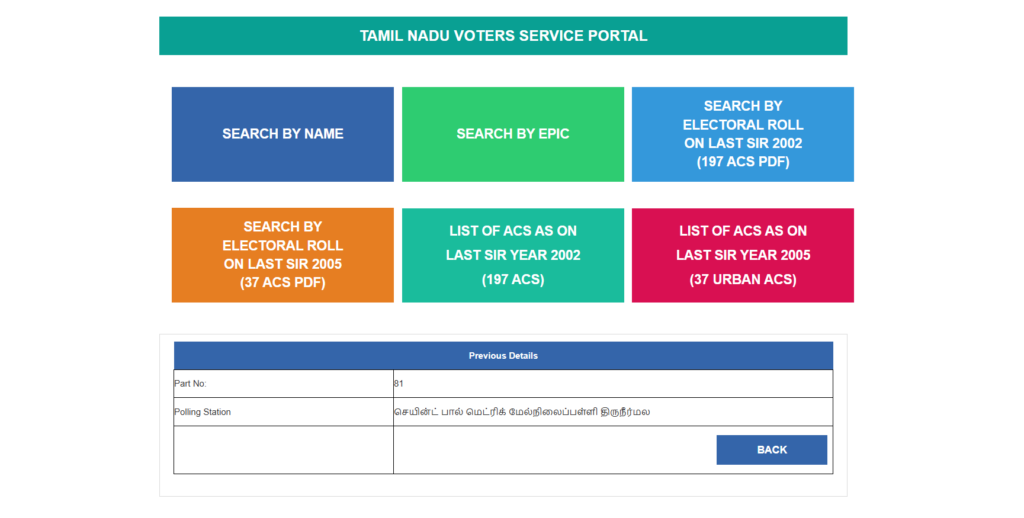
According to experts and community workers on the ground, there is a clear structural gap between the previous SIR and the current one. In Tamil Nadu, the 2002 revision covered 197 constituencies, while the 2005 revision covered 37. The earlier SIR was conducted in accordance with detailed Supreme Court-approved guidelines that laid out every step of the process. This time, there are no such rules in place.
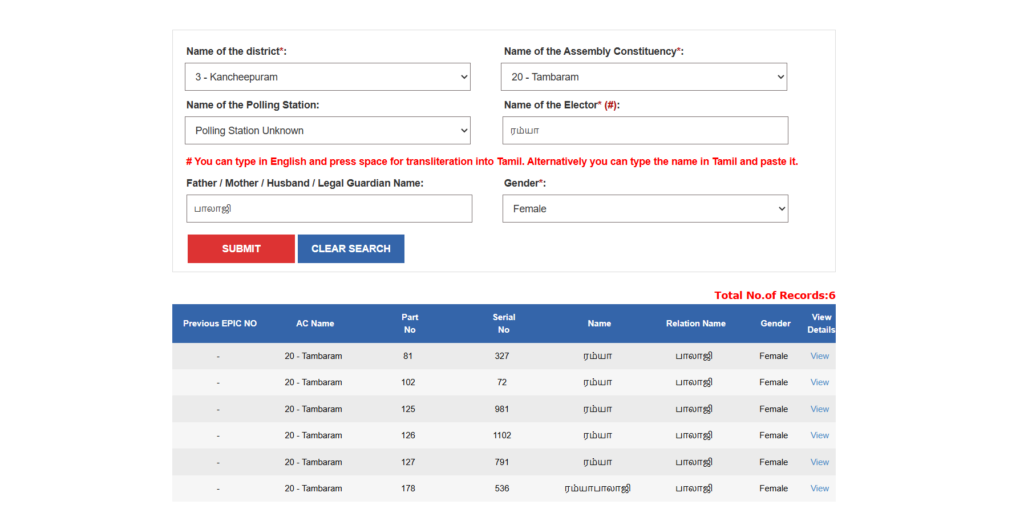
Ramadas, a 78-year-old resident of Madambakkam, describes the difficulty of tracing old records as he did not participate in the previous revision. “When I try to check my father’s details from the past revision, I have to look through the Kumbakonam list, where he lived. My father passed away at 87. Given my age, it’s difficult for me to trace the procedures from earlier revisions, and I don’t even remember what happened during the last one.”
Difficulty in accessing old details
Thomas Franco, Coordinator of the People’s Movement for Protection of Voters’ Rights, warns that the present exercise demands information linked to citizenship, even though voter ID is not proof of citizenship. “Entering the realm of citizenship verification, especially when other instruments like the NRC exist, raises questions about its need.”
He adds that the reliance on 2002 or 2005 data makes the process cumbersome for both citizens and BLOs. “Forms have now been converted into PDFs that need to be printed and manually uploaded. When older records cannot be found, BLOs often mark them as ‘not available’, which puts people at risk of having their names removed, if not thoroughly verified.” Those who have moved away may even have to travel back to their hometown just to verify whether their name is still on the rolls. Migrant workers are especially vulnerable, as the form may never reach their temporary addresses. Once the final list is released, the window to file an appeal is too short.
Human rights activist Usha Ramanathan, a human rights activist, highlighted in the Electoral democracy conclave at Chennai that the ECI has no mandate to determine citizenship. “The burden of proving citizenship has shifted from the state to individuals, many of whom cannot furnish the required evidence. People are being transformed from citizens into subjects who must continually prove their legitimacy. For many, the documents required are simply unattainable,” she adds.
Civil society groups and analysts insist that vigilance is essential because the consequences of exclusion from the voter roll could hinder democratic participation.
Step-by-step: filling the SIR form
Part 1: Fill basic details (everyone)
- This section contains the common fields required for all household members. Provide:
- Date of birth,
- Aadhaar and contact number,
- Father/guardian’s name,
- Father/guardian’s EPIC number,
- Any other basic contact/household details requested.
- Date of birth,
- If you do not know an entry exactly, write what you are reasonably certain of and mark “don’t know” only if required by the form.
Part 2: for persons born before 1987
- If the individual’s birth year places them in this category, fill the additional fields asked in Part 2 (as printed on the form). This section seeks information about any previous voter registration or earlier entries, including details from the last time they participated in the SIR process. Provide the requested details about earlier registration or earlier entries as applicable.
Part 3: for persons added after the 2005 SIR revision
- If the person was added to the rolls after the 2005 revision, complete Part 3 with the details requested for such entries. This section largely covers individuals born after 1987, as they would not have taken part in earlier SIR exercises.
The “relative who attended the last SIR” field
- The form asks for details about the relative who attended the last SIR. If your family is unsure which relative is being referred to, or if the question is ambiguous, write the name and relationship of the relative your household believes attended the last revision. If you truly do not know, leave a note for the BLO to clarify on site and ask the BLO to mark the entry “to be verified.” (If the BLO cannot clarify, ask them to record what the household provides rather than leaving it blank.)
If someone is absent, shifted or deceased
- If a listed person is not living at the address any more, tell the BLO so they can mark the household accordingly. BLOs verify deaths through neighbour signatures; provide neighbours’ corroboration if possible.
- If a person has shifted but remains “ordinarily resident” here by law, explain the situation to the BLO and ask them to note it; if they are absent during enumeration they may be marked for follow-up.
If you lack old voter details
The form may demand older serial numbers or previous roll information (2002/2005). If you do not have this information, tell the BLO and ask them to note “not available” rather than guessing. The BLO will guide whether a Form 6 (new entry/rectification) is needed.
Also read:
- ‘Malleable, uncertain but determined to vote:’ Thoughts of a first-time voter from Mumbai
- Opinion: 11 reasons why voters must look beyond political manifestos