Vaccination for children, booster dose for seniors to start in January
In an address to the nation, Prime Minister Narendra Modi announced vaccination for children aged between 15-18 which will begin on January 3rd 2022. He also added that healthcare workers, those aged above 60, and those with co-morbidities, will be allowed a third (booster) dose of the COVID-19 vaccination from January 10th.
The Prime Minister added that currently 90% of all those eligible for vaccines have had the first dose and 61% of eligible people has had both doses.
Source: Economic Times
Delhi’s Sarojini Nagar market to follow odd-even rule
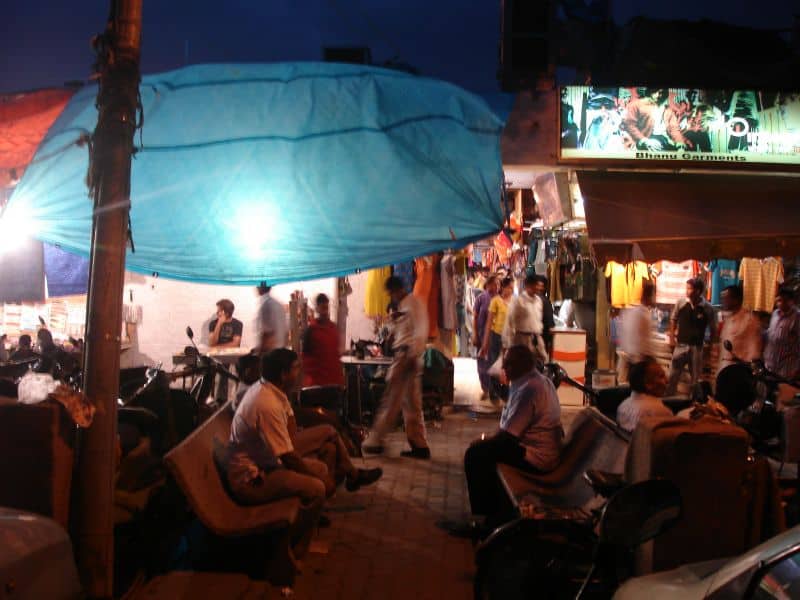
The national capital is witnessing a surge in Omicron cases, with 180 new confirmed cases of the variant reported in 24 hours. The total number of active COVID-19 cases stood at 782 on December 24th, the highest in six months.
The Delhi government has now ordered crowd control at the popular Sarojini Nagar market. For the weekend of December 25th and 26th, the government mandated an odd-even rule to curb overcrowding in the market.
More restrictions are likely if Omicron numbers continue to rise.
Source: DNA
Very Poor is an ‘improvement’ in Delhi’s air quality
After four days of air quality being in the ‘severe’ category, Delhi Air Quality Index (AQI) improved to ‘very poor’ on December 25th. From a reading of 433 on December 24th, the AQI recorded a reading of 398 by the 25th.
Weather experts say that, ‘slowing down of winds due to a western disturbance affecting northwest India is leading to accumulation of pollutants, and high moisture content in the air makes pollutants heavier, making dispersion difficult.’
Recent emergency measures like the complete ban on construction and demolition seem to have had little effect on Delhi’s air quality.
Source: Hindustan Times
100% first dose of COVID-19 in Delhi
On December 24th, Delhi reached a milestone of 100% first dose vaccination among eligible adults.
“Delhi completes the first dose to 100% eligible people — 148.33 lakh. Salute to doctors, ANMs, teachers, ASHAs, CDVs and all other frontline workers. Congratulations to DMs, CDMOs, DIOs and all district functionaries,” the Chief Minister tweeted. During the week, recorded COVID-19 cases were averaging at 144 a day, as opposed to 71 cases the previous week.
Apart from monitoring regular vaccination, the Delhi government is working on its COVID-19 infrastructure for testing and treating patients. On December 23rd, Arvind Kejriwal said that his government plans on building the capacity to treat 1 lakh patients a day and test 3 lakh citizens a day.
Incidentally, Bangalore urban is the only district in the country so far to claim 100% double dose vaccination.
Source: Indian Express
Read more: Know more about the new vaccines that could accelerate India’s COVID vaccination drive
States impose night curfew as Omicron spreads vastly
As Omicron continues to engulf the country, states across the country have reintroduced night curfew and other restrictions.
The Madhya Pradesh government along with Gujarat, Uttar Pradesh and Haryana has imposed night curfew from 11 pm to 5 am . The Brihanmumbai Municipal Corporation (BMC) has introduced mandatory RT-PCR for those entering Mumbai from Dubai. Most states have banned large gatherings during new year and other public celebrations that could potentially become hotspots.
While most Omicron cases have had mild symptoms or been asymptomatic, a disturbing factor is that more children are now testing positive as compared to the recent past. And some experts are predicting an Omicron wave in the first few months of the new year.
Source: Economic Times
(Compiled by Saachi D’Souza)