On Wednesday, January 26th, Tamil Nadu State Election Commissioner, V Palanikumar announced that elections to various urban local bodies across the state will be held on February 19 and the date for counting of the votes as February 22.
This announcement comes a day after the Madras High Court gave the green signal to go ahead with the polls, in response to a Public Interest Litigation filed in the court, asking for local body elections to be deferred owing to the COVID-19 situation in the state. Rejecting the plea, a bench consisting of acting Chief Justice MN Bhandari and Justice PD Audikesavalu, stated that the Election Commission can go ahead with the polls by strictly following the COVID-19 protocols and guidelines issued by the Union Government.
Read more: Chennai in 2022: The time for participatory governance is now!
Addressing the media, Palanikumar stated that elections for the 21 corporations, 138 municipalities and 490 town panchayats will be held in a single phase. Candidates can file their nominations from January 28th onwards.
The last date for filing nomination is February 4, after which the Election Commission will scrutinize the nominations on February 5. Candidates can withdraw their nominations on or before February 7.
As far as the Corporation of Chennai is concerned, the city is divided into three regions: North Chennai, Central Chennai and South Chennai. These three regions are further divided into 15 zones, consisting of 200 wards.
You can find the ward map as well as details of the various wards and zones here.
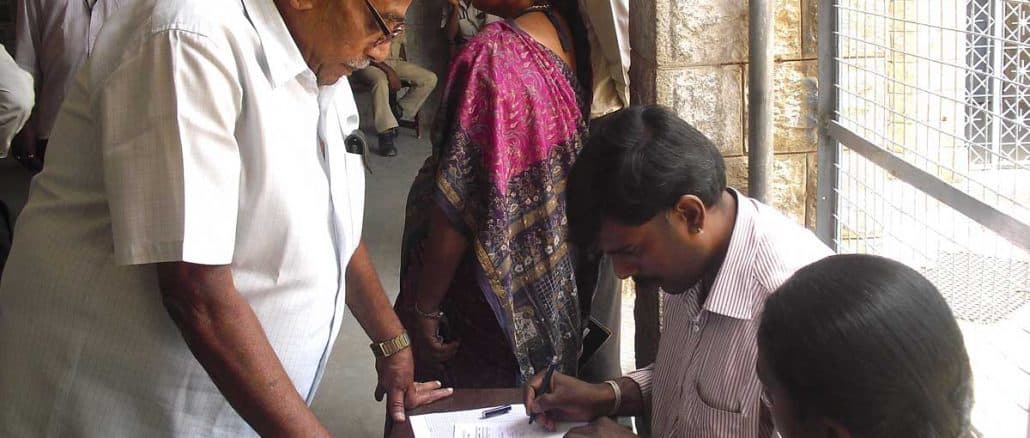
The Greater Chennai Corporation has gone without an elected local body council for an entire term since 2016, which was when the term of the last council came to an end. Over this period, that is since October 2016, GCC, the civic body that governs Tamil Nadu’s capital city, has been administered by a set of officials led by a Commissioner, who is an IAS officer.
Read more: Explained: How GCC administers the city and why we need an elected council
This, however, is not the first time that the GCC, which is also India’s oldest municipal institution, is operating in the absence of an elected council. In 1973, when the Dravida Munnetra Kazhagam (DMK) government was in power in the state, the Corporation Council in Chennai was suspended following the muster roll scandal. The administration of the corporation then, as it is now, was handed over to a special officer of the IAS cadre.
While the councillors for the various corporations, municipalities and town panchayats will be elected directly, the selection of Mayors and deputy mayors for the corporations and chairman and vice chairman in municipalities and town panchayats will be done separately on March 4. According to a government order released earlier this month, the mayoral post for Chennai has been reserved for a woman candidate belonging to the Scheduled Castes.