Chennai grapples with severe flooding, transportation disruptions and health concerns after cyclone
The aftermath of Cyclone Michaung continues to severely impact Tamil Nadu, particularly Chennai, with incessant rainfall causing extensive flooding, waterlogging and power outages. The city’s schools and colleges are closed. Relief efforts are underway, with the Indian Air Force air-dropping 2,300 kg of relief materials in flood-affected areas and the Southern Railway cancelling train services. The effects of the cyclone also include disruptions to operations in many industries in Chennai. The Tamil Nadu government and various organisations are actively engaged in relief work, and Prime Minister Narendra Modi has directed the release of financial assistance to the affected states. The situation remains dynamic, with ongoing weather predictions raising apprehensions about prolonged disruptions and increased health risks for the affected population.
Sources: DT Next | Livemint
Mild tremors of 3.2 magnitude recorded
On the morning of December 8, 2023, a mild tremor measuring 3.2 magnitudes was recorded in Chengalpattu district, Tamil Nadu, as reported by the National Centre for Seismology. Similar tremors were also noted in parts of Gujarat and Karnataka. Meteorologists in Chennai categorised the tremors as mild and data transmitted to the National Centre for Seismology suggested that such seismic activity might occur after heavy rainfall, particularly post-monsoon. The collapse of cavities in the upper layers of the earth’s crust due to the percolation of a large volume of water at a depth of about 5 km was cited as a potential cause.
Sources : Times of India | The Hindu
Read more: Cyclone Michaung: North Chennai people left to fend for themselves
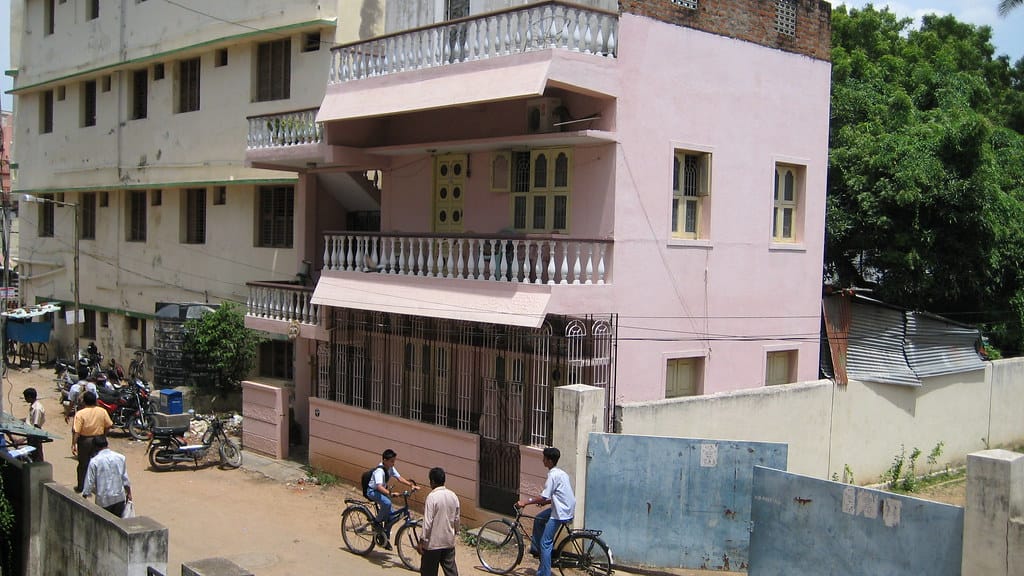
3-tier guideline value for apartments in Chennai
The Tamil Nadu government has introduced a significant policy shift affecting home-buyers and developers in Chennai and its suburbs. The new measure establishes a three-tier guideline value system for apartment complexes in various neighborhoods. Unlike the current practice where guideline values can differ between projects on the same road in the same area, the new approach ensures uniform values for three categories: basic, premium, and ultra-premium projects.
For instance, under the recent announcement, Mylapore has guideline values set at 16,000, 18,000, and 22,000 per square foot for basic, premium, and ultra-premium projects, respectively. This means that no residential unit in Mylapore can be booked for a guideline value lower than 16,000 per square foot. The move aims to bring consistency and transparency to the real estate market, impacting property prices and transactions in the designated regions.
Source: Times of India
Read more: Chennai’s growing tryst with alcohol, cannabis and LSD and how to curb it
Chennai police arrest 90, seize 79 kg of ganja in week-long anti-drug drive
In a week-long crackdown against ganja, Chennai police apprehended 90 individuals, seizing 79 kg of the contraband. The operation, part of the ongoing ‘drive against drugs,’ also led to the confiscation of 240 over-the-counter painkiller tablets, six mobile phones, an autorickshaw, and a light motor vehicle used by the accused. Additionally, the authorities recovered ₹1.23 lakh in cash from the arrested individuals. This initiative is part of broader efforts, with 814 cases registered and 1,700 arrests made by Greater Chennai Police in the ongoing year.
Source: Times of India
Chennai metro records strong November ridership, serving 8 million passengers
Chennai Metro Rail Limited (CMRL) reported a robust ridership in November, with an average of 2.66 lakh passengers per day and a monthly count reaching 80.01 lakh passengers. The peak passenger flow of 3.35 lakh was observed on November 10. The report highlighted the use of contactless smart cards, paper QR tickets, NCMC Singara Chennai card, and online platforms for ticketing. The figures showcase a significant reliance on digital solutions for metro travel in Chennai.
Source: Times of India
[Compiled by Athira Elssa Johnson]