Cyclone Michaung affected most parts of Chennai with the city receiving an average of 300 mm of rains on December 4th. The incessant downpour stopped around Tuesday midnight, bringing some respite to citizens; although the relief was only temporary, with the aftermath of the rains throwing up difficult and challenging situations for both citizens and civic workers.
The unprecedented rains have triggered a variety of issues including heavy waterlogging in many areas, swinging NDRF personnel into action to rescue residents stranded in submerged areas, with boats. Other issues faced in various areas include loss of vehicles submerged in water, power cuts that have not yet been restored, spotty phone connections, rationed availability of milk, amongst others. A drive through some parts of the city from 10 am to 4 pm on Tuesday, gives us a glimpse of the city shaken by a rough storm, still struggling to recover from the devastation.
Trip route: Taramani–Vijaya Nagar bus terminus–Bypass road (Velachery lake)–Guru Nanak college–Checkpost–Halda–Guindy–Alandur subway–St.Thomas mount–Ashok pillar–Miot hospitals Kolapakkam–Saidapet–Cenatoph road–Kotturpuram–Halda–Checkpost–Vijaya Nagar Bus terminus.
The trip was undertaken between 10 am and 4 pm.
Vijaya Nagar bus terminus. 10.15 am.
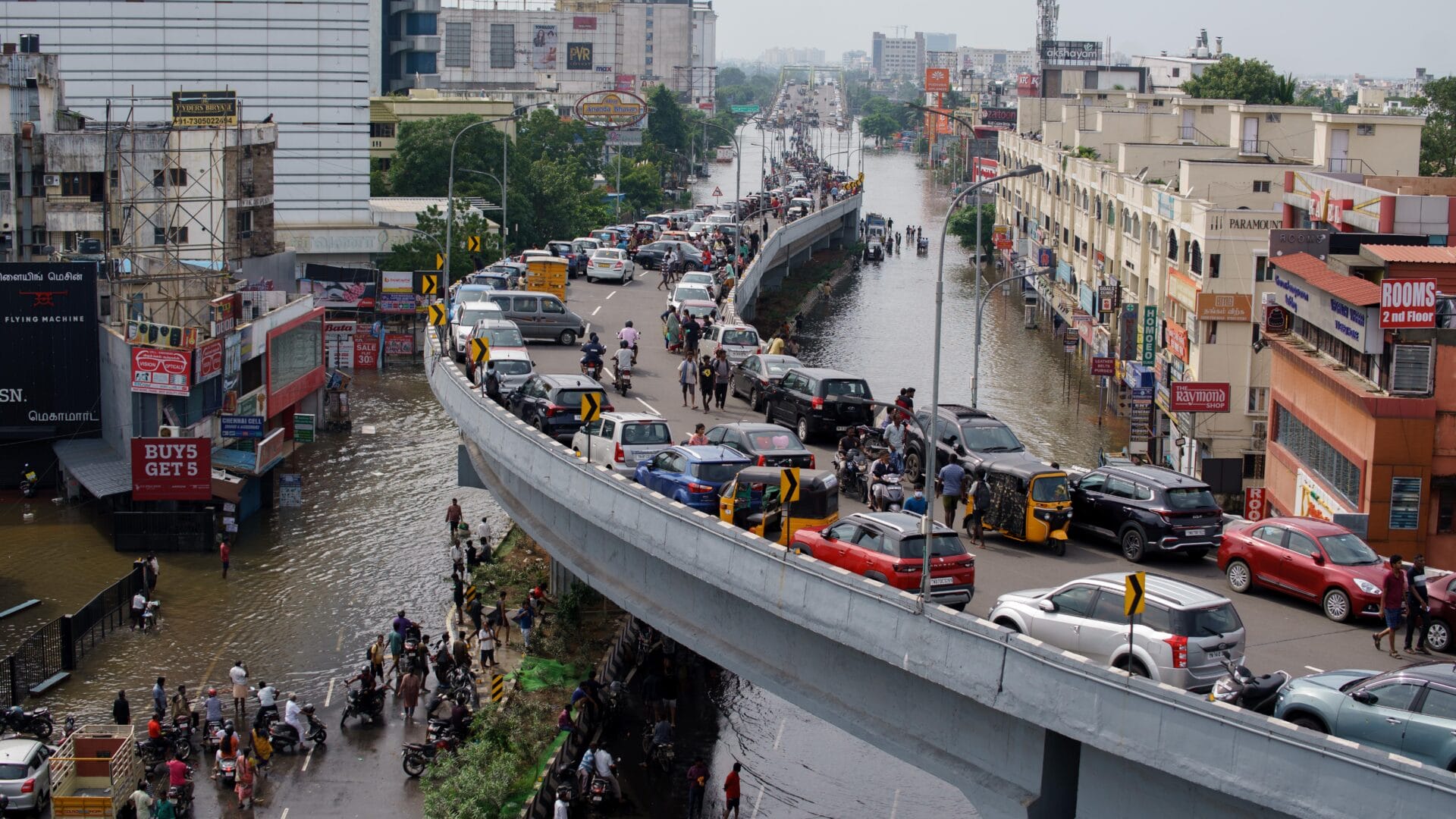
Flyover connecting Velachery bypass road and Velachery- Tambaram main road. The areas surrounding Velachery (including Taramani, Perungudi, Ram nagar, Pallikaranai and large parts of Madipakkam) are heavily waterlogged, making it impossible for the residents to move out of the neighbourhood. Boats are plying to some of the interior localities as part of rescue operation, to provide food, as well as to evacuate people. Residents from the surroundings inundated areas have parked their vehicles on the flyover.
Checkpost, Five Furlong road, Velachery. 11.30 am.
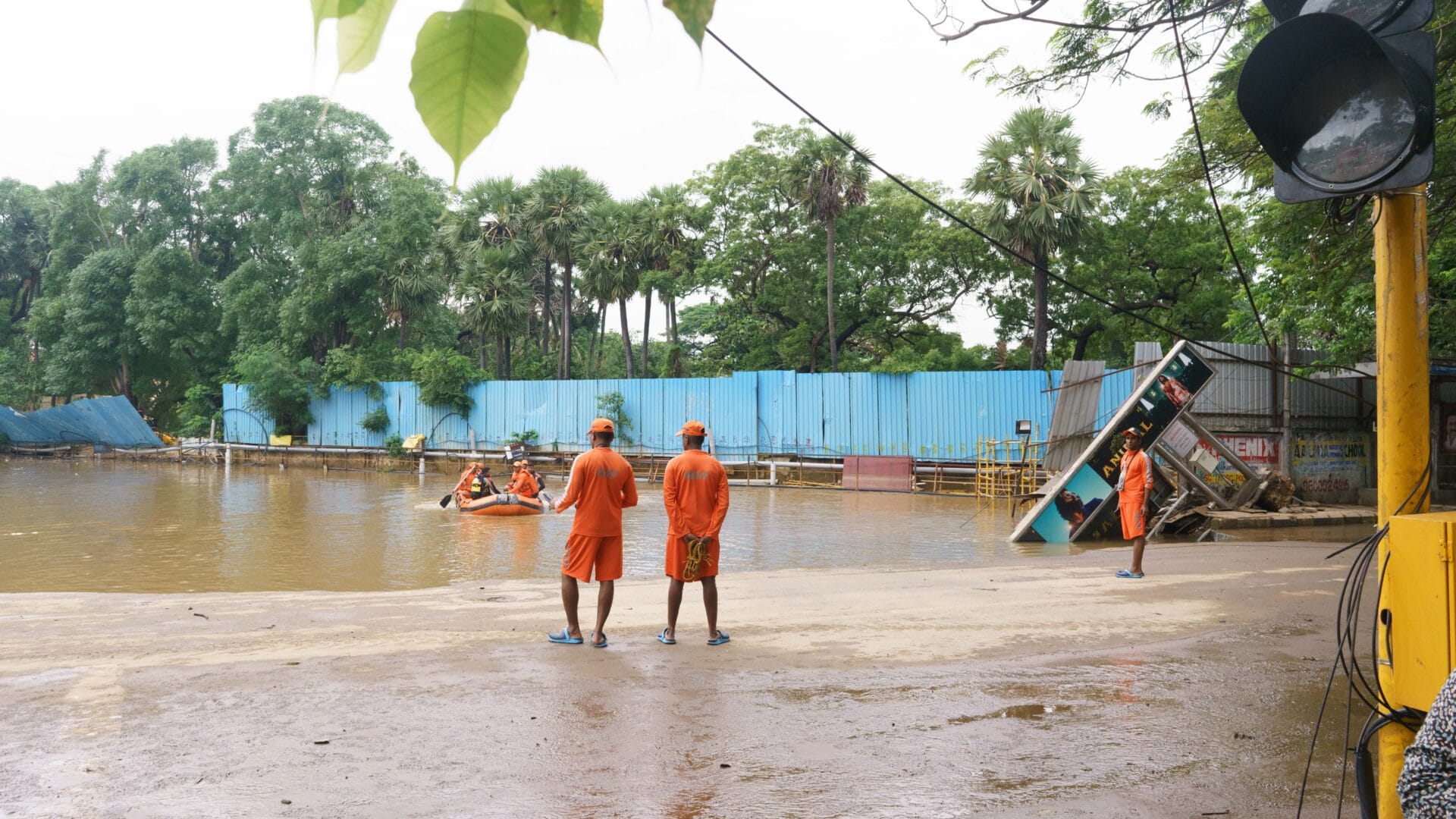
NDRF personnel and civic workers searching for three workers trapped in a container truck in a 40-feet pit dug up for construction. The rain water draining into the pit, has made the search difficult, with the NDRF persisting with the rescue operation with the help of divers. The search had not been successful until 3 pm.
Read more: Frontline workers in Chennai battle the rains with poor support and scarce empathy
St. Thomas Mount. 12.15 am.
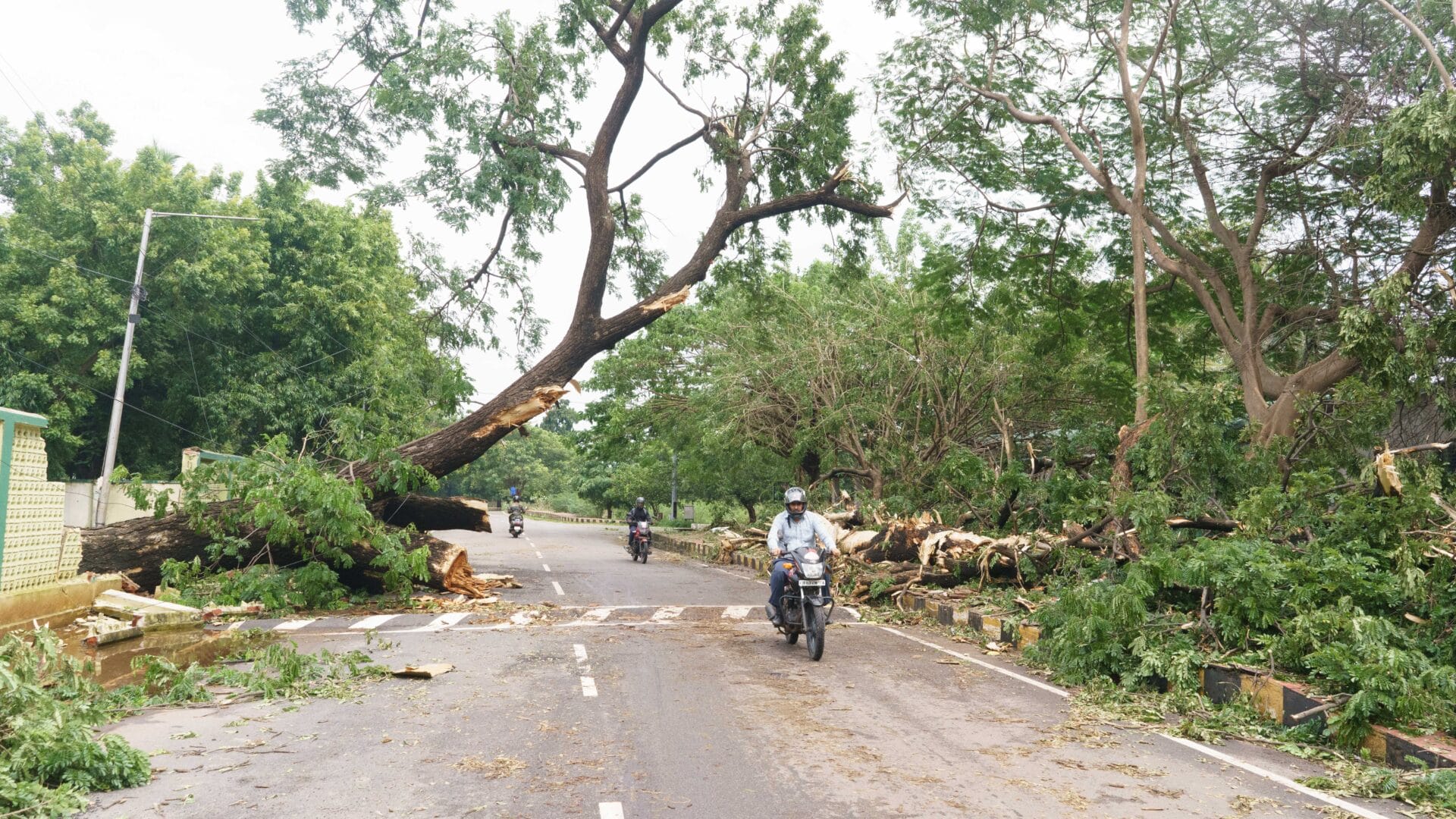
Huge trees were uprooted by the storm and toppled on the road in multiple places in the city, resulting in damage to compound walls, gates, vehicles and electricity lines.
Ekkaduthangal bridge. 1.15 pm.
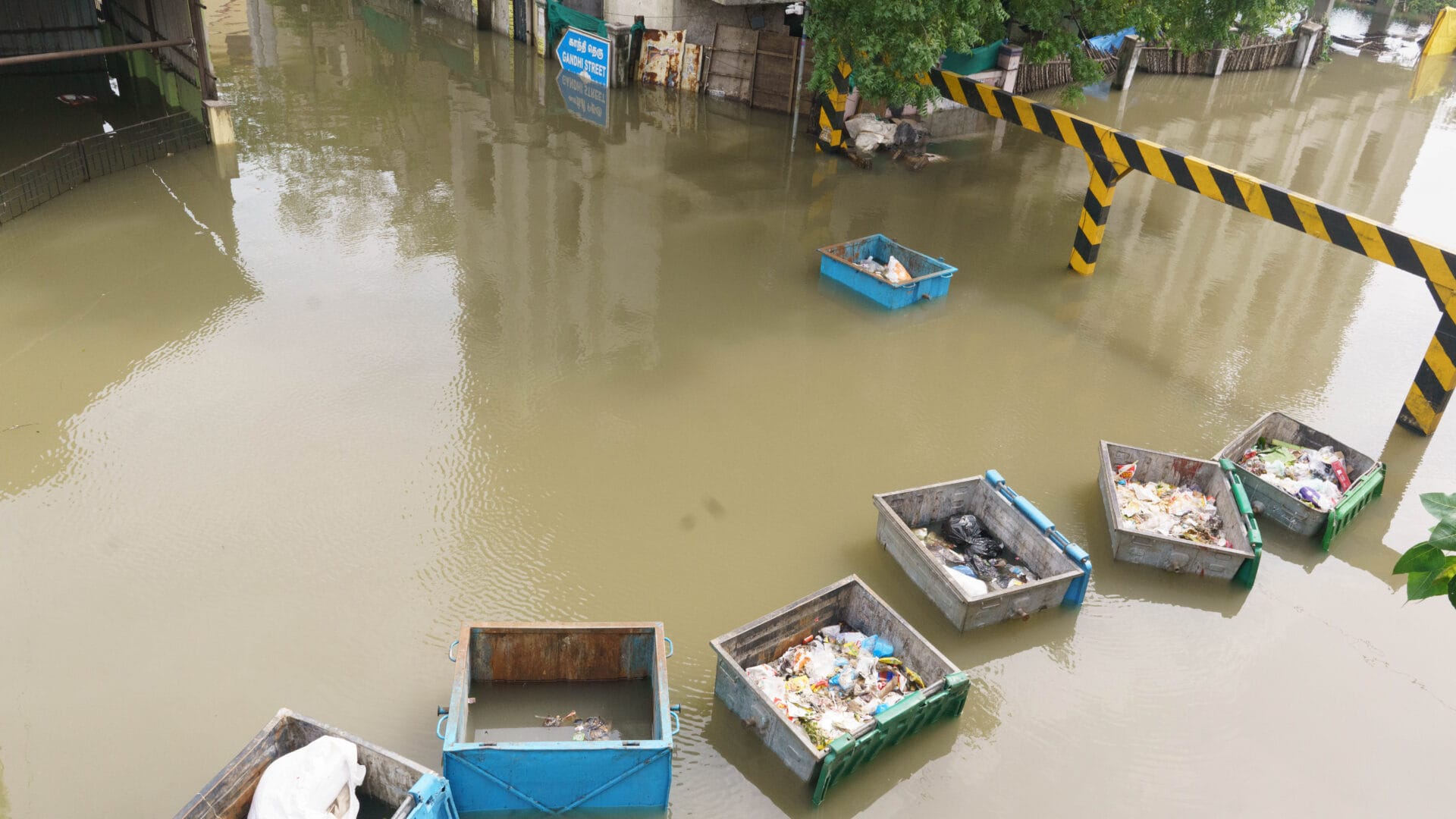
In a lot of areas, garbage bins and sewage have mixed with the stagnant water, causing further concern over the danger of water-borne diseases.
Read more: Are Chennai’s monsoon vagaries an indication of global climate change?
Manapakkam. 1.45 pm.

Ongoing rescue operations in Manapakkam. One resident residing in an apartment building next to the Adyar river in Manapakkam said, “After the 2015 floods, the river bunds of Adyar river had been raised and this has definitely resulted in much less damage.” Despite these measures, few of the neighbouring localities are facing severe water stagnation.
Nandambakkam. 2.15 pm.
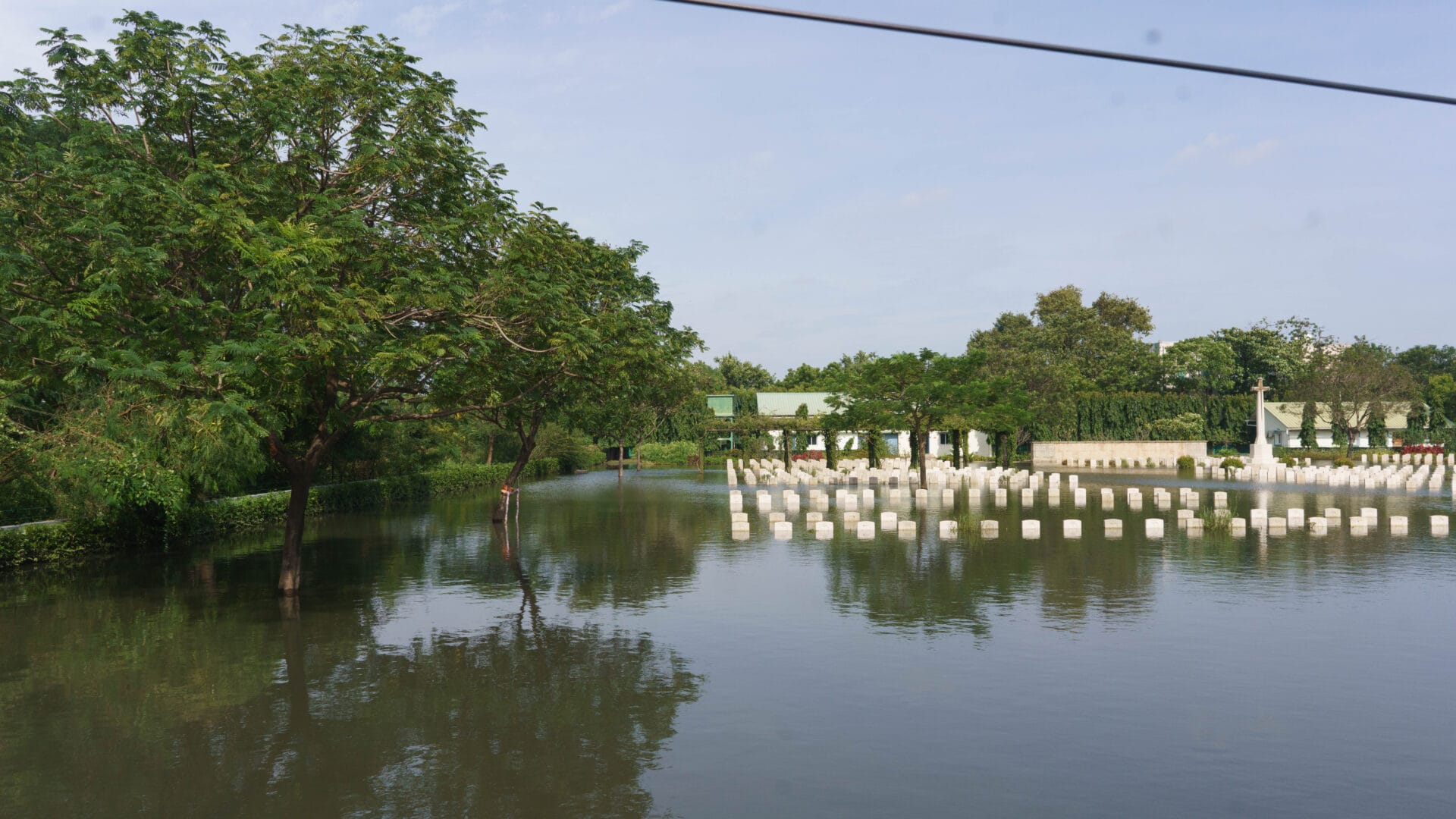
The Madras War Cemetery, partially submerged in rainwater.
Saidapet bridge. 3 pm.

Hutments on the Adyar riverside in Saidapet, almost completely submerged with the rising water levels. The residents have moved out and are staying in various marriage halls and schools in the neighbourhood. Few of the residents of the slums mentioned, “As usual the municipality did not warn us of the incoming floods. The electricity board did not turn off the electricity, until we had to call them repeatedly to warn them of the danger of potential electrocution. The water started rising to dangerous levels on Monday late evening.”