In January 2025, the Central Pollution Control Board (CPCB) reclassified Waste-to-Energy (WTE) plants under a newly introduced ‘blue’ category of industries. This change, framed as part of “essential environmental services,” signals a significant policy shift, one that many experts fear could normalise a polluting technology under the garb of progressive waste management.
At first glance, the revised classification system seems technical and benign. But behind the bureaucratic language lies a fundamental question: how can an industry once categorised as ‘red’, the most hazardous tier, suddenly become ‘blue’, a category reserved for supposedly cleaner, essential services?
What does the classification system say?
India’s system of classifying industries dates back to 1989, when categories were first used to regulate polluting industries in Uttarakhand’s Doon Valley. The Ministry of Environment and Forests introduced the classification system, and in 2016, the CPCB developed the Pollution Index to categorise industries. This helped SPCBs and PCCs streamline consent management, prioritise regulatory oversight and monitoring, and make decisions on the location of units.
Over the decades, this system expanded nationwide, helping regulators decide which industries need stricter monitoring and consents to operate.
However, the latest update from CPCB introduces sharper criteria through the Pollution Index (PI), a scoring system based on three groups of pollutants: water, air, and waste. Each group is scored out of 100 depending on pollution potential. Based on the score, sectors are slotted into categories:
- Red Category: PI ≥ 80 (highest pollution potential)
- Orange Category: 55 ≤ PI < 80
- Green Category: 25 ≤ PI < 55
- White Category: PI < 25 (least pollution potential)
Using this framework, CPCB has listed 419 sectors/sub-sectors:
- Red: 125
- Orange: 137
- Green: 94
- White: 54.
The ‘blue’ category: Essential or exempt?
However, the most significant change is the introduction of a fifth category, ‘blue’. The CPCB does not assign a Pollution Index (PI) score to industries in this category. Instead, these industries are expected to self-assess their scores based on established criteria. The ‘blue’ category is designed to encompass “Essential Environmental Services” (EES), which include industries that manage household waste. These include sewage treatment plants, composting units, construction and demolition waste facilities, and now, WTE plants.
The rationale is that household waste is unavoidable, and facilities handling it must be treated as essential services. Blue category projects are positioned as necessary for society, not optional polluters. To incentivise them, these units even receive two extra years of consent validity compared to other industries.
Moreover, CPCB has reserved the power to expand ‘blue’ at its level only; state boards (SPCBs/PCCs) cannot independently add sectors. Therefore, the inclusion of WTE systems in this category comes from the Centre.
Read more: Blog: Conversations in the shadow of Okhla’s waste to energy plant
The precautionary principle
The CPCB’s own document acknowledges the precautionary principle: “when human activities may lead to scientifically plausible but uncertain harm, regulators must act to avoid or minimise that harm.” In theory, this should have meant stricter scrutiny of WTE, which has a documented record of toxic emissions, ash mismanagement, and community opposition across India.
Instead, critics argue, the ‘blue’ categorisation does the opposite. By grouping WTE with essential services such as sewage treatment or biomethanation, the CPCB has effectively lowered the bar for compliance.
Siddharth G Singh, Programme Manager, Centre for Science and Environment says, “This is an industry with a long history of pollution, and placing it under a self-assessment framework is a serious risk, not just for communities living near the plants but for entire cities, because air pollution does not stay confined to the plant’s boundary. In such a system, trusting self-reporting alone is nearly impossible unless there are strict penalties and continuous monitoring.”
Compare this to Common Biomedical Waste Treatment Facilities (CBWTFs), which also rely on incineration. But every boiler is connected to the State Pollution Control Board’s (SPCB) real-time monitoring system.
“If biomedical waste incinerators are monitored in real time, why should WTE plants be any different? Their boilers must also be checked regularly at both state and central levels, with mandatory public reporting of emissions. Transparency means disclosure. If plants are monitored locally, their emissions and compliance data must be public. That’s the real precautionary principle, holding polluters accountable and not lowering the bar for them,” Siddharth adds.
Blue categorisation: How it affects communities
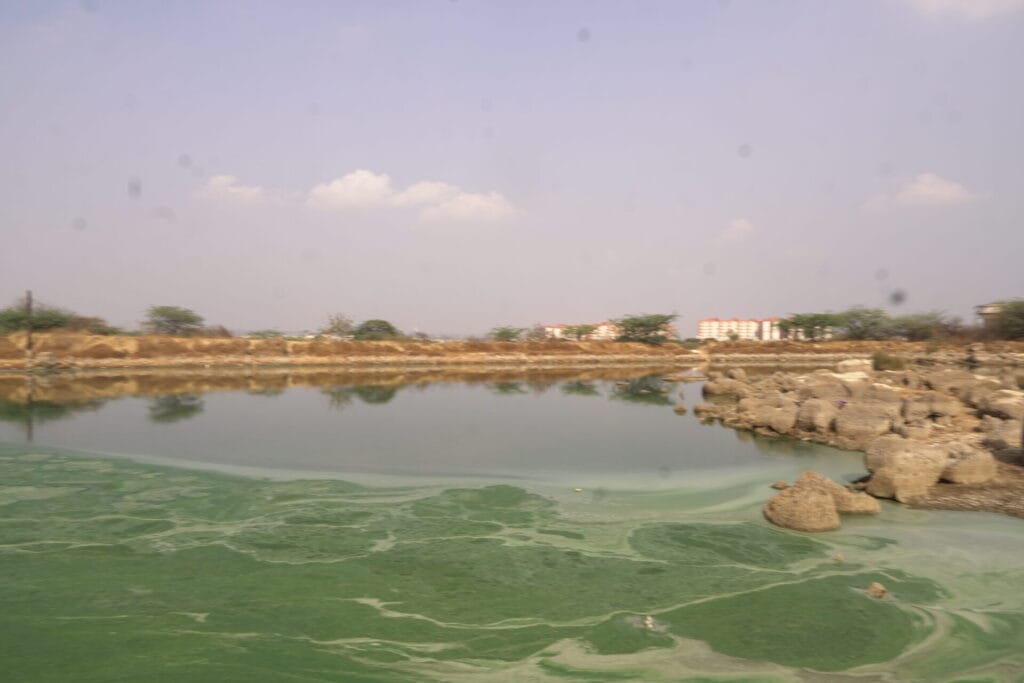
To the communities affected, this categorisation feels less like a policy shift and more like a denial of their lived reality. Residents living near existing WTE plants around the country have fought for years against pollution, filing cases and staging protests.
“For the past 6–7 years, we’ve been fighting against the dump yard, but the situation on the ground has only become more dangerous. When the WTE plant came up, many of us thought it might save us from the dumping crisis. But instead, we are now suffering from both the dumping yard and the plant,” says Shelesh Sandeep Raj, President of the Navodaya Welfare Society, Karmikanagar, who lives close to the Jawaharnagar plant in Hyderabad.
The government claims these plants are ‘essential for the public,’ but in reality, it’s the public that is bearing the brunt. Around 97% of the people living near the Jawaharnagar dump yard are below the poverty line.
“Families here simply don’t have the means to seek proper medical treatment, so people buy medicines without prescriptions just to cope with respiratory illnesses. Our children are falling sick with lung infections, leachate flows through our streets during the rains, and every day we live with the stench, and the fear. This is what the so-called ‘essential service’ looks like for us,” Shelesh adds.
Ground reality of waste-to-energy plants
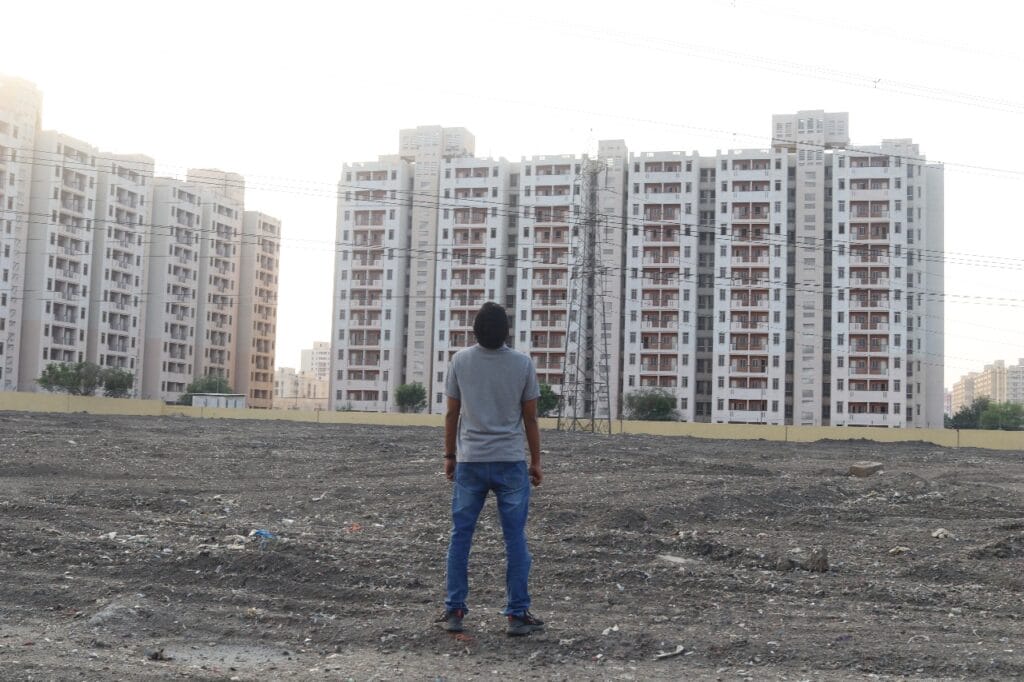
Not just in Hyderabad, WTE projects in Delhi, Bengaluru, and Chennai have faced shutdowns, public protests, and legal challenges. A report by civil society groups and local communities in the Delhi-NCR region highlighted that WTE plants in the capital were emitting dioxins, highly toxic compounds that accumulate in the food chain and pose serious risks to reproductive health and immunity. The report called for sustainable management of solid waste and urged the government to halt the expansion of incinerator-based projects.
The recent closure of the Chinna Mathur plant in Manali, Chennai, for failing to comply with standards, is a stark reminder that WTE systems often struggle to meet basic environmental safeguards. Yet, under the ‘blue’ category, such plants are bundled with composting or biomethanation facilities that genuinely align with sustainable waste management.
Tamil Nadu has so far prioritised composting, biomethanation, and material recovery for decentralised waste management. However, the state now plans to set up a waste-to-energy (WTE) plant in Kodungaiyur, Chennai. When Citizen Matters reached out to the TN Pollution Control Board on the reclassification of WTE as ‘blue’ and its implications for health, safety, and community protections, officials chose not to respond.
WTE: Policy shifts and loopholes
The reclassification also signals a larger policy shift. Experts say that by calling WTE “essential services,” CPCB is not just changing colours on a chart; it is reshaping the compliance landscape:
- Reduced monitoring burden: Blue units enjoy extended consent validity, meaning fewer renewals and checks.
- Easier siting approvals: Being seen as essential, WTE plants may find it easier to gain entry in states where they were earlier resisted.
- Confused messaging: At a time when India is talking about decentralised, low-emission models such as segregation-at-source, composting, and biomethanation, the ‘blue’ push risks diverting focus back to large-scale incineration.
Swati Singh Sambhyal, a senior circular economy expert, says, “Our solid waste management policy does not prioritise incineration as the first step; it considers other options. Classifying a highly polluting entity like WTE under the ‘blue’ category effectively favours centralised infrastructure over decentralisation, which is concerning.”
While biomethanisation represents a green form of waste-to-energy, incineration-based WTE plants operating with mixed waste clearly do not align with these principles. The policy isn’t the issue, it’s the enforcement and monitoring that need to be scrutinised, she adds.
“Government research entities such as CSIR-NEERI have shown that these plants pollute and operate with mixed waste. We need more stringent monitoring strategies, both by independent third parties and government authorities, with frequent assessments to track the harm these plants cause.”
Pollution control board’s stance
In response to Citizen Matters’ queries on the reclassification of Waste-to-Energy (WTE) plants, the CPCB defended its decision using Pollution Index (PI) scoring.
Saubhagya Dixit, Scientist ‘D’(mid senior level officer) at CPCB’s Industrial Pollution Control Division, says in an email reply that WTE plants have a cumulative PI score of 97.6, with water, air, and waste scores of 45, 95, and 60, respectively. Under the 2025 system, a new blue category was created for facilities handling domestic waste, such as sewage treatment plants, municipal solid waste units, and WTE plants. The blue label does not dilute safeguards; plants must still comply with all CPCB norms. The only change is a longer Consent to Operate (CTO) validity of 5+2 years, recognising their role in reducing waste littering, the official adds.
However, CPCB’s response sidestepped key concerns. It did not explain why WTE plants, long deemed highly polluting, were shifted despite a PI score above the ‘red’ threshold. Nor did it address hazardous by-products like fly ash and dioxins, the risks of self-assessment, or the decision’s alignment with India’s climate and air quality goals.
By shifting WTE into ‘blue’, CPCB risks creating a policy contradiction, branding as “essential” a technology that produces emissions, ash, and toxins directly at odds with climate goals. Adding to the concern, a report submitted by the CPCB to the NGT revealed that real-time monitoring of these plants is often inaccurate and poorly implemented.
The question is whether this reclassification is truly about environmental management or about easing the pathway for contested technologies. For the environment and communities near WTE plants, the stakes are high.