A ‘hummingbird’ in Lalbagh!

You might confuse this creature with Hummingbird - but it’s not! Meet the unique species that has helped in enriching the fauna in Lalbagh.

Dhiraj Gaurh was astounded by a very large creature, which, he felt, might be a Hummingbird. Here are the excellent shots he got, of the creature drinking nectar from Aster flowers:
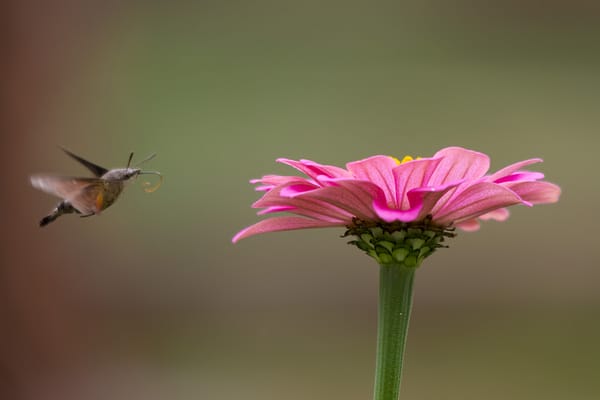
He posted the link to the photos in the egroup of the Bird Watchers’ Field Club (contrary to its name, this is a group of enthusiasts of all forms of wildlife and nature.) Several people (Rachna Shetty, Gautam Krishnan, Vijay Krishna, Ravi Vaidyanathan, Anubhav Vanamamalai, Nandhu Sridhar)  promptly responded to him,  identifying this, not as a Hummingbird (we do not have them in India), but as the Hummingbird Hawk Moth
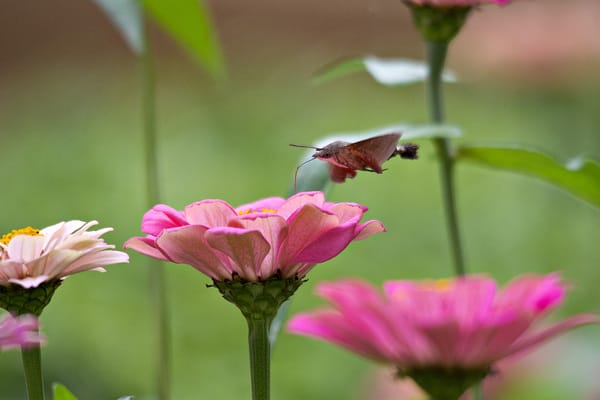
Its hovering behaviour, accompanied by an audible humming noise, makes it look remarkably like a hummingbird while feeding on flowers.

So…the next time you see something which might be a bird…it might not, actually, be one!

Comments:

  1. Amruta says:

    nice clicks of hummingbird

  2. ridhima says:

    nice photographs and thanks for bringing this to attention.

  3. Roli Srivastava says:

    Thanks for the information. I saw exact same creature in my terrace garden and took it for a humming bird

Leave a Reply

Your email address will not be published. Required fields are marked *

Similar Story

Stop Hebbal Short Tunnel project: 20,000 residents and activists sign petition

Citizens demand an immediate halt to Bengaluru's short tunnel project, citing ecological damage, flood risks and an absent EIA.

More than 1,000 trees to be cut. Close to 100 bird species and 400 plant species endangered. All this for a project that covers just about two kilometres and costs a whopping ₹1,140 crore. Residents and activists in Bengaluru have vehemently opposed the Karnataka government's Hebbal Short Tunnel project, launching a petition to halt construction immediately. Environmental activists and experts warn that the project threatens Bengaluru's cascading lake system and increases flooding risks. There is growing public concern that the tunnel will cut through one of North Bengaluru’s last major green-blue landscapes and cause lasting environmental damage. The petition, started…

Similar Story

Why concrete lakes are pushing away Bengaluru’s waterbirds

As natural shorelines vanish and extensive restoration destroys habitats, city lakes see a sharp decline in special wetland bird species.

Since Bengaluru’s lakes were formed by damming water flowing down valleys, they are typically wedge-shaped, with a gentle slope and a deep basin towards the embankment. This promotes the growth of diverse vegetation and animals, each adapted to a particular water depth. The result is a natural zonation – reedbeds and shoreline vegetation at the edges, floating and submerged vegetation in the middle, and open water at the deepest end. During the Open City biodiversity datajam held in December 2025, our group examined the ecological trends around Bengaluru’s lakes. In an earlier article, we examined how migrant and resident waterbirds…