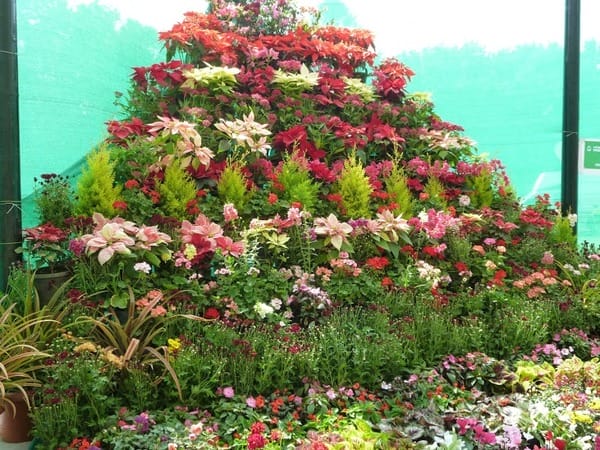
A feast for the eyes: Lalbagh Flower Show

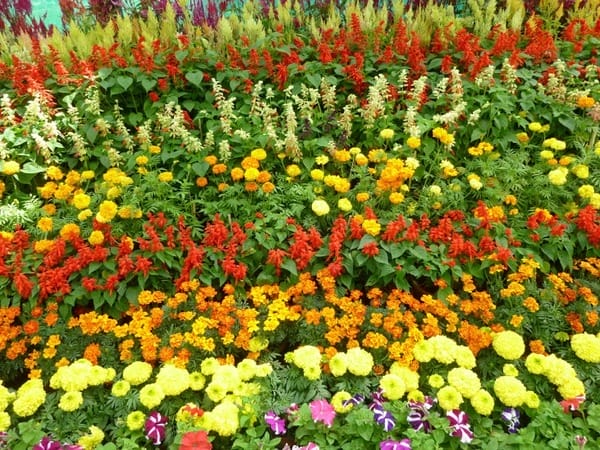
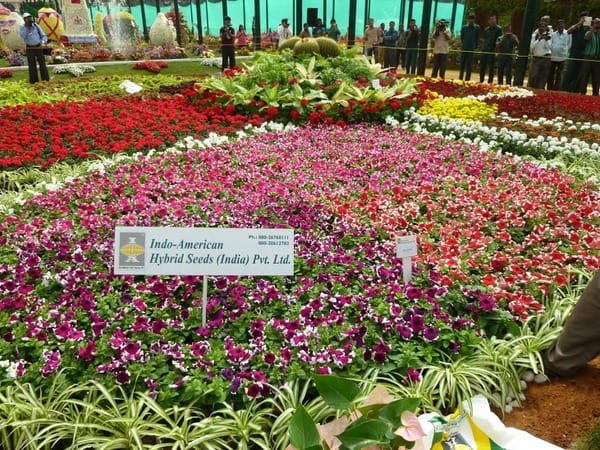
The 199th edition of the Lalbagh Flower Show is truly a feast for the eyes.

The Lalbagh Flower Show in Bengaluru needs no introduction really, but the January 2014 edition of the show is rather special. The flower show, currently in its 199th edition, is just one short of completing its bicentennial. That’s not all; this edition also marks the 50th year of the Horticulture Department.

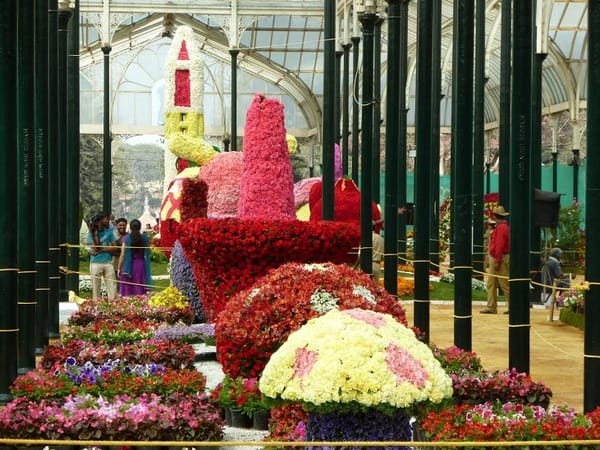
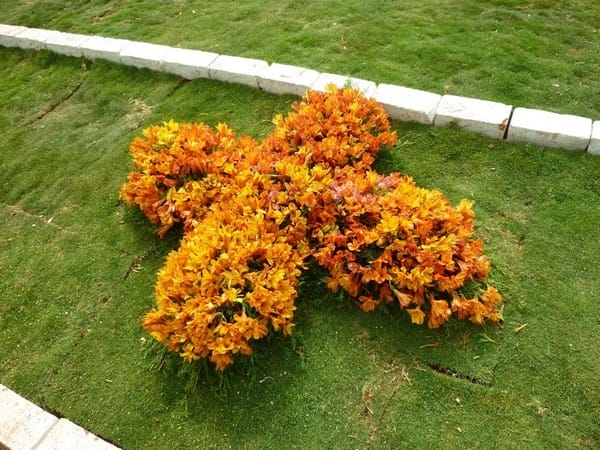
Over 200 varieties of flowers and vegetables are on display. The showcase also features huge floral structures in the shape of mushrooms, bananas, coconuts and more. With props that act as the eyes and lips, these structures make for a quirky spectacle. There is also a huge 18 foot floral pillar on display.

Inaugurated on 17th January, the Lalbagh Flower Show will be open up to 26th January, from 9 am to 6 pm. The tickets are priced at Rs 10 for children and at Rs 40 and Rs 50 for adults, on weekdays and holidays respectively. The Lalbagh Flower Show is a must do trip for everybody.

View pictures of the Flower Show here. Photo credits: S Srinivasan.



Comments:

  1. Prasanna Kumar says:

    owsome

Leave a Reply

Your email address will not be published. Required fields are marked *

Similar Story

The wild in the city: What citizen scientists tell us about Bengaluru’s biodiversity

Spatial and temporal biodiversity patterns, as observed by citizen scientists in the city during 2016-2025, were studied at a datajam in December 2025.

Imagine you’re out on a morning walk, phone in hand, when you spot a butterfly you’ve never seen before. You snap a photo, log it into a citizen science app, and voila! You’ve just contributed to crucial biodiversity monitoring. This isn’t just a hobby; it’s part of a global movement where ordinary people collect, record, and sometimes analyse data about plants, animals, and ecosystems. Citizen science stretches the reach of ecological research. Every observation adds to unique longitudinal datasets that reveal phenology — periodic events in the life cycle of a species — along with species distribution shifts and population…

Similar Story

Air quality management is a governance problem, not just an environmental one

Despite massive funding, Indian cities face weak governance, poor data, and limited capacity, as air pollution continues to worsen.

Indian cities are struggling to breathe. Air pollution is a year-round governance challenge. In 2024, 35 of the 50 most polluted cities globally were in India, with PM2.5 concentrations above 66.4 μg/m3. This is at least 13 times the World Health Organization (WHO) guidelines and at least 1.6 times the National Ambient Air Quality Standards (NAAQS) in India. Citizens continue to bear the brunt of worsening air quality, and urban local governments (ULGs) are at the forefront of the problem, being primarily accountable for their citizens' first mile. While they do have a role to play in addressing this threat,…