On March 2, women from several walks of life assembled at Jayanagar’s Kittur Rani Chennamma stadium and used their art to oppose sexual violence against women and gendered minorities. Organised by several women’s and civil rights organisations, the ‘Aman Chowk’ or Peace Square meet, was in line with One Billion Rising (OBR), a UN campaign aimed at stifling sexual violence against women.
There were workshops, dance and musical performances, poetry recitals, conversations and artwork. Amid exhibitions depicting women rising against injustice, there was an ‘aman ki razi’ or harmony quilt that was being meticulously stitched by women. This was followed by them reciting their favourite poems at the poetry corner. A ‘mannat ka ped’ or tree of wishes was erected in the middle where participants could leave a note of their wishes or aspirations for the country.
“One of the unique aspects of Aman Chowk is that it marks the coming together of cis and trans women on a single platform,” said Akkai Padmashali, founder of Ondede. The event, she said, was planned in such a way that art forms like poetry and performances could help women understand the politics of violence.
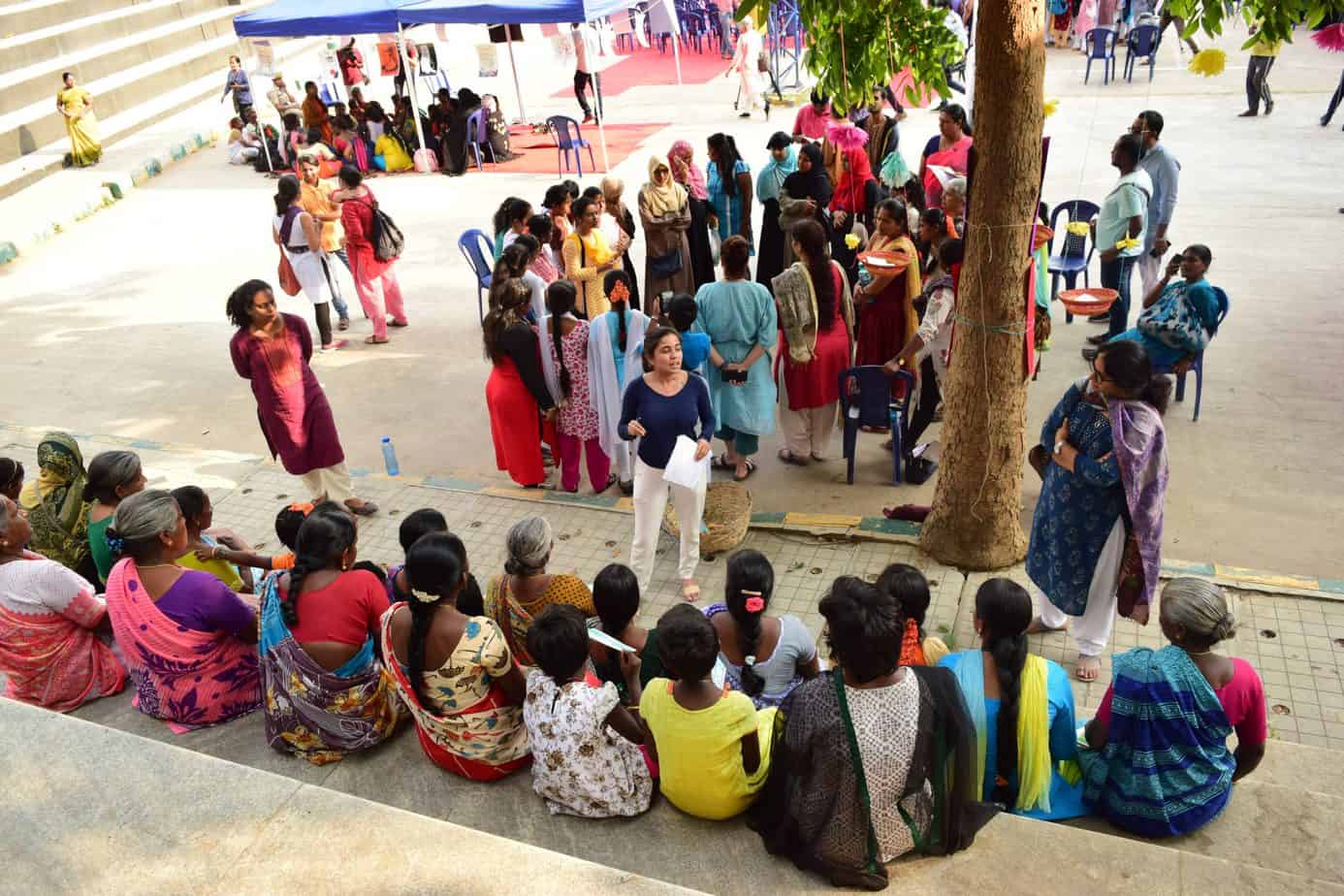
Women used their artistic skills to voice their opposition to sexual violence at an event titled Aman Chowk, in Bengaluru on March 2
Workshops amplified the voices against violence while another explained the basics of Indian Constitution, its history and the importance of the Preamble. The facilitators at the ‘Namma Samvidhaana Namma Abhimana’ (Our Constitution, Our Pride) workshop made sure to eliminate political jargon and switched to regional languages to help women follow debates comfortably.
Citing that awareness was another central theme of the event, Meenakshi M from Hasiru Dala said, “Facilitating the reach of information to those who do not have means of accessing them is the aim. We want to equip them with knowledge, to help them make decisions independently”.
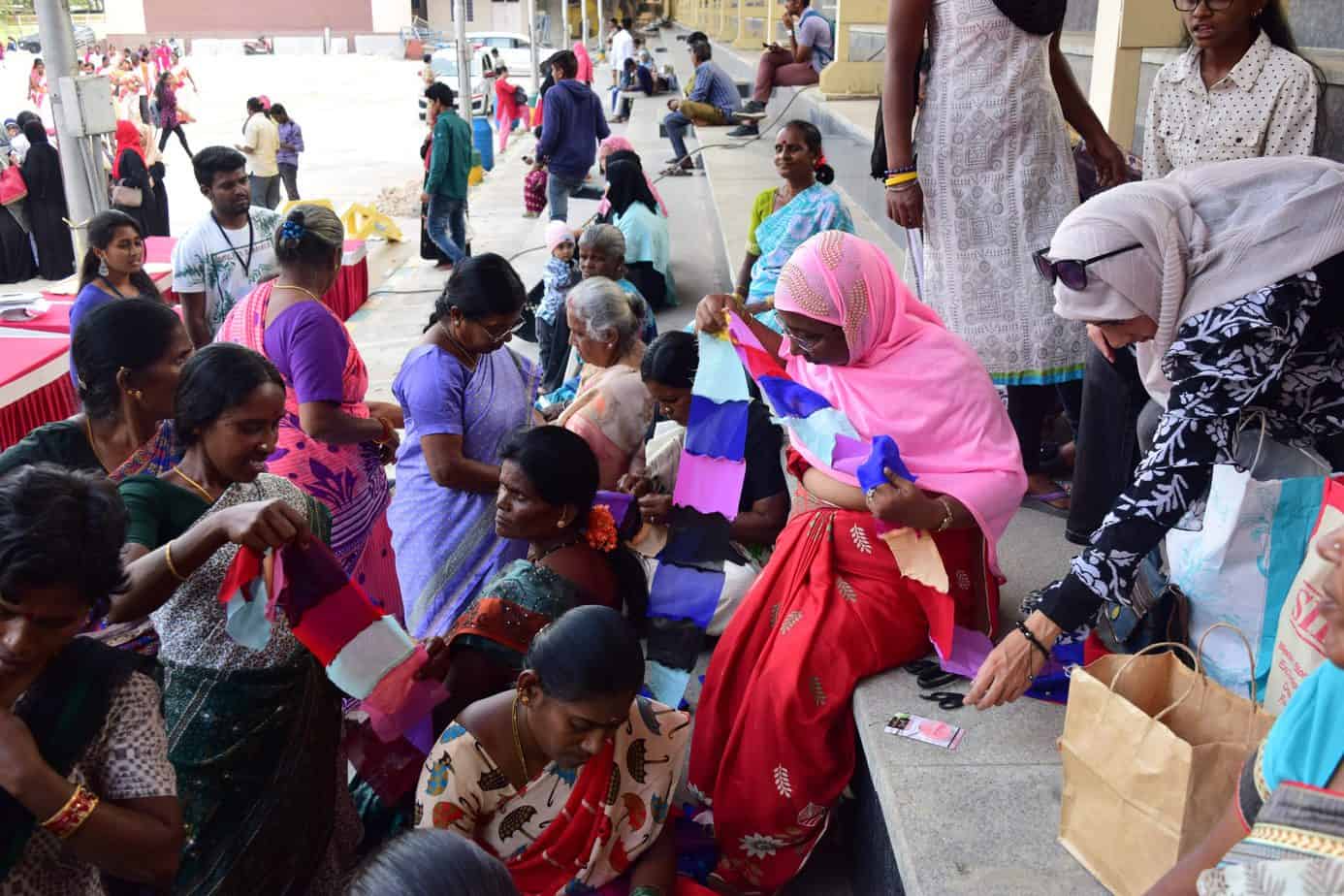
Women stitched a ‘Harmony Quilt’ at Aman Chowk, an event where they used their creative skills to oppose sexual violence against women.
Geetha Menon of Stree Jagriti Samiti said organisations similar to hers have come together to form a network against the hate and abuse that women and gender minorities face in their everyday lives. “They have been facing domestic abuse, social and economic violence in the form of deprived rights and opportunities for some time now. This negates their productivity as part of the economy,” she said, adding that in the wake of Delhi riots, it is now more important than ever to talk about peace.
Her thoughts were echoed by Tasneen Farzana, one of the organisers who spoke about the importance of consolidation of efforts against injustice in a democracy.
When asked if they faced any opposition from agencies of the State, Geetha Menon said there was minimum resistance on that front. “In fact, the Deputy Commissioner of Police for South Bangalore, Rohini Katoch was very eager and supportive when we pitched the programme.” She added that they were, however, discouraged from talking about anything ‘political’. Congress MLA from Jayanagar constituency, Sowmya Reddy. joined the participants.
‘Preethiya Kathegalu’ or stories of love was another main attraction at the multicultural event. Participants exchanged stories of love and gratitude. Rajni, a flower vendor from Bannerghatta, spoke passionately about the perils of female infanticide and dowry. “It is disheartening to see what the plight of women in this country is,” she said, stressing on the need for active resistance.
Yugashree S A, an art educator, exhibited a canvas of crudely-drawn impressions of the Preamble. It was, she said, part of a travel exhibition drawn by kids she taught the Indian Constitution to. Recalling an instance where a married housewife came up to her and admitted that she had never held a pen in her 24 years of marriage, she said, “Aman Chowk is important for giving space to those cis and trans women who never have had autonomy, and who have never been given a space or a voice. This is very liberating for them.”
The programme also saw renditions of songs on peace and coexistence by M D Pallavi, a dance performance by Anuradha Venkataraman, and a kolaata performance as well.