A flower-seller weaving mozhams of jasmine, men reading newspapers, and cackling children playing games — these are common sights across city parks. As Chennai saw temperatures cross 40°C this May, seekers of shade, couples stealing time together, and informal workers turned to parks for solace.
Parks and open spaces are crucial for residents in congested areas, many of whom live without air conditioning. But open spaces in Chennai are shrinking. The Urban Regional Development Plans Formulation and Implementation (URDPFI) guidelines mandate 10 to 12 sq. m of open space per person, yet the Chennai Metropolitan Area has roughly just 0.65 sq. m per capita, says architect Ammu Pradeep. Meanwhile, in the city’s core area, where population density reaches around 30,000 people per sq. km, residents often have little to no access to public open spaces.
In the past few decades, large forested areas in Chennai have given way to in-situ spaces like corporation parks, says botanist Dr Israel Oliver King ED. The coastal city’s landscape was initially dominated by groves, palm trees, and mangroves, as noted in neighbourhood names such as Pulianthope (Tamarind Grove) and Purasawalkam (rooted in the Purasai tree).
Chennai lags behind in park spaces
In 1981, Chengalpattu and the then Madras accounted for a total forest area of about 439 sq km, with a variety of vegetation from thorny shrub to scattered shrubby facies, according to the book, The Flowering Plants of Madras City and Its Immediate Neighbourhood. In 2023, Chennai had 21.12 sq km of forest cover, and Chengalpattu had 250.74 sq m.
With rapid urbanisation, parks accounted for 2% of the city’s area, notes the Chennai Metropolitan Development Authority’s second master plan. In 2008, the city had 195 parks, varying in size from 150 sq.m. to 3.5 hectares and totalling more than 60 hectares.
| Number of public parks in Chennai | 835 |
| Number of traffic islands | 113 |
| Central medians with greenery | 104 |
Courtesy: GCC website.
Now with 835 parks, Chennai still lags behind major metros like Delhi and Mumbai, which have over 1,000 parks. On paper, the number of parks has increased in the city, but 92% of the 835 in Chennai are less than 1.2 acres, according to news reports.
Over the years, Chennai’s parks have steadily shrunk. The once 116-acre People’s Park gave way to buildings and infrastructure, leaving only My Ladies Park in its memory. Elsewhere, the city’s green cover has been eroded by rampant urbanisation and encroachments, as seen in the degradation of the Pallikaranai Marsh and the conversion of Kodungaiyur’s wetlands into a landfill.
Read more: Flooded lands, disappearing birds: Pallikaranai wetland tour highlights impact of shrinking lakes
Inequality in access
While the city’s urban area has increased by 25 sq km per year, park areas have not expanded with this boom, finds a study by researcher P Sudhakar. As cities get hotter, parks are valuable in reducing the urban heat island effect, filtering particulate matter, providing refuge to species, and retaining rainwater, he adds.
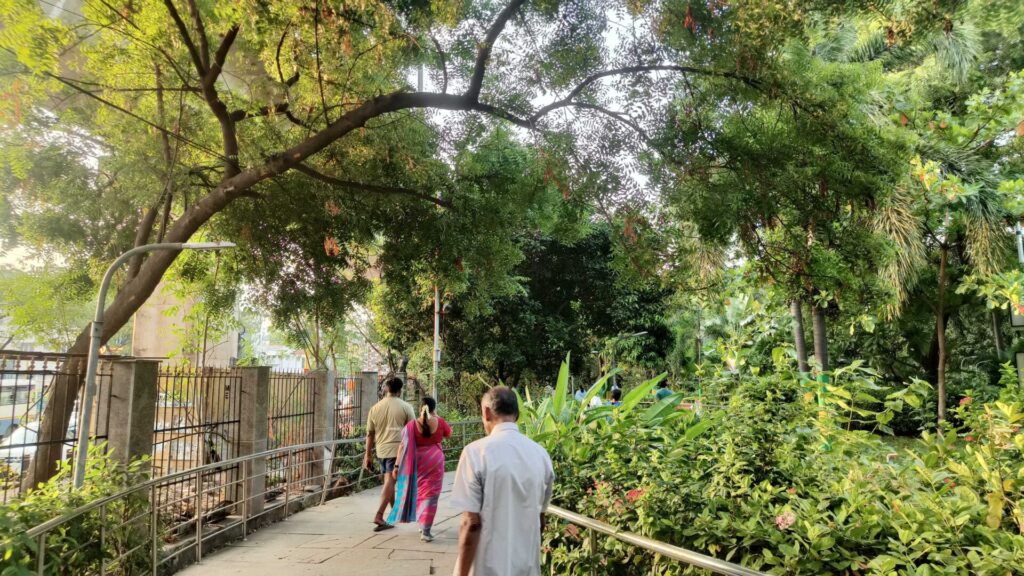
“Plenty of buffer trees and open space create a microclimate that reduces the temperature, while rejuvenating groundwater in the neighbourhood,” says Nivedha GG, landscape architect. With space constraints, small parcels of parks pepper the city.
Parks also highlight the city’s green inequality, with slum-dominated areas suffering from low tree cover and poor access to parks, finds a 2026 study. For example, neighbourhoods like Nochikuppam and Ayothikuppam have fewer than one park per sq. km, sparse green cover, and extreme urban heat island intensity.
In 2022, zones in North Chennai had half the number of corporation parks compared to zones in southern and central Chennai. Thiruvottiyur had only four parks, the lowest of any zone, with Adyar having the highest count at 51.
Read more: In pictures: A stroll through parks in North Chennai
Dangers of ornamental trees, invasive species
Beyond the inequality in park numbers, another issue that plagues green spaces is the presence of vegetation that is not suited to the local ecosystems.
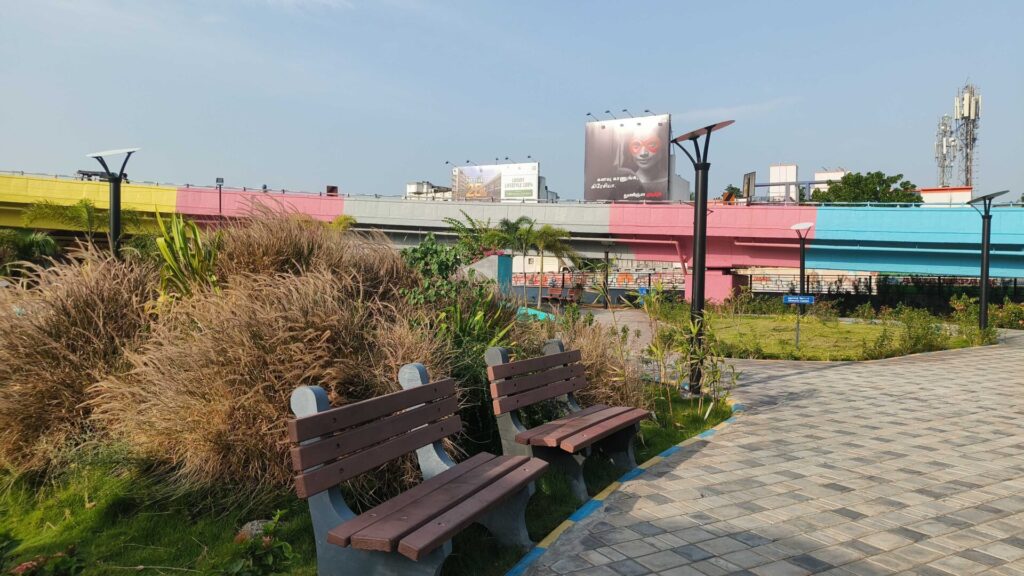
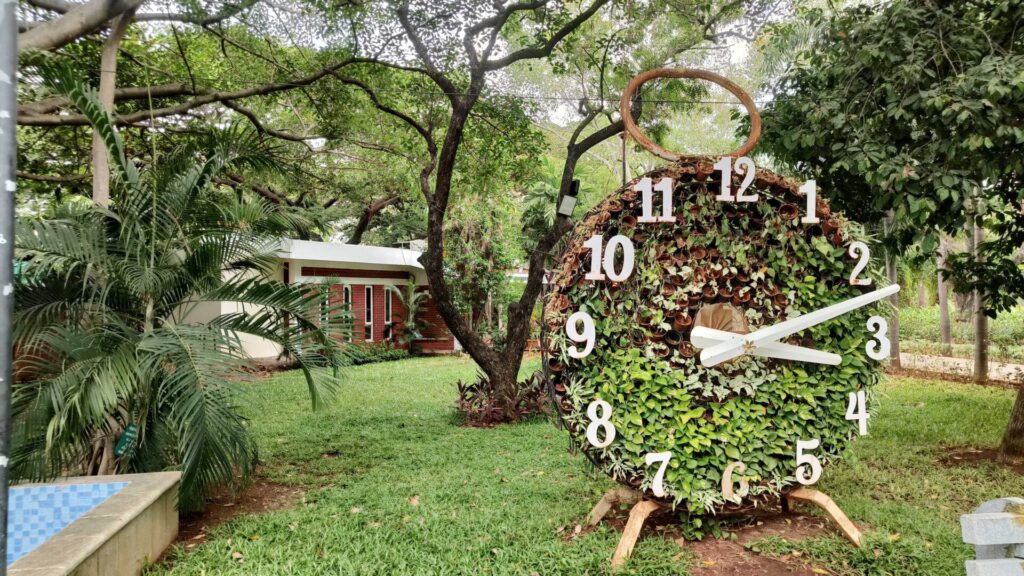
Recently, the Greater Chennai Corporation (GCC) identified 17 parks across15 zones to plant and grow 50,000 native tree saplings. But often, non-native invasive species have been spotted across parks such as river tamarind in Adyar Eco Park, coral vine and Prosopis juliflora at the Guindy National Park.
“Cities like Chennai are water-scarce, but we will see vehicles watering these plants. Native options don’t require as much maintenance,” points out Shruti Tharayil, researcher and educator from Forgotten Greens. From the colonial era, plants like lantana and water hyacinth were introduced for beautification purposes, she adds.
During visits to 10 parks across the city, the author noticed ornamental plants like Dracaena draco, Ficus benjamina, Geranium, bamboo, and St Augustine grass in a few parks, alongside native species. However, Nivedha points out that most GCC parks also have locally-grown plants like mehendi, hibiscus, and neem.
And here is why growing native plants is important: In Bengaluru, 90% of trees uprooted during the rains were ornamental trees, which require focused management. During cyclone Vardah, 77% of the uprooted trees in surveyed areas of south Chennai were exotic, while 22% were indigenous species, found a survey by Nizhal and TEEMS India. Of the wind-thrown trees, 60% were exotic and 39% were indigenous.
But why do ornamental trees fall down? “Many exotic tree species, even old and large ones, tend to fall over during storms because their root systems aren’t suited to our conditions,” says Oliver, adding that native trees act as a shelter belt with stronger root architecture that withstands high-velocity winds.
Choosing the right trees
“Native species have wider canopies that help mitigate heat. The choice of species [in parks] must account for canopy and root strength,” Oliver adds. Native evergreen species like Punga Maram and Neem provide more cooling effects in Chennai’s urban parks, finds a study. Ornamental trees use up more water as well, point out Vishvaja Sambath of the Chennai Climate Action Group, and Shruti.
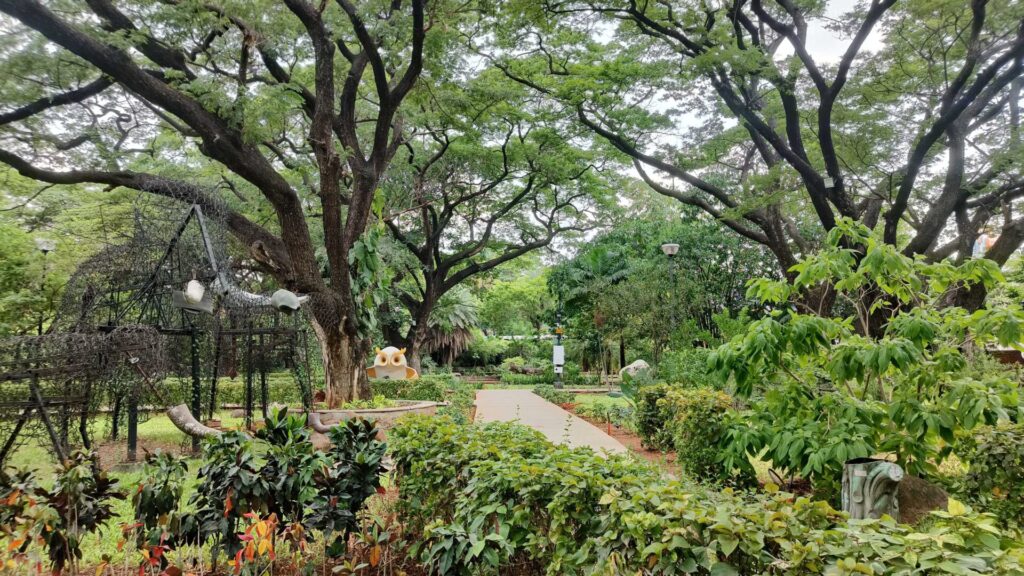
Instead of arbitrary planting, Oliver emphasises quality greening connected to restoring local species-specific restoration. “For example, imagine a location that once had a water tank, a sacred forest, or a temple with an aalamaram (sacred banyan tree), which was lost over time.When designing a new park, one can support the propagation of these species,” he says and recommends species such as:
- Magizham (Mimusops elengi)
- Palai (Manilkara hexandra)
- Kurundhu (Atalantia monophylla)
- Pungam (Pongamia pinnata)
- Punnai (Calophyllum inophyllum)
- Poovarasu (Thespesia populnea)
- Marutham (Terminalia arjuna)
- Banyan (Ficus benghalensis)
- Peepal (Ficus religiosa)
- Naval (Syzygium cumini)
According to Oliver, planting native species have clear advantages:
- Better adaptation to local soils and climate, including seasonal droughts and rainfall patterns.
- Root systems suited to local soil conditions, often allowing effective water and nutrient acquisition.
- Better establishment and survival when planted in appropriate native habitats.
- Stronger ecological relationships with local fungi, microorganisms, pollinators and other organisms.
- Some native species develop deep or extensive root systems, improving soil stability and reducing erosion.
- Native species can be more resilient to local pests, diseases and climatic stresses.
Citizen feedback and tailoring species to the local habitat are key,” says Nivedha. For instance, creating a pond makes sense in a wetland area, but not near a beach. With the right modifications, parks can capture monsoon runoff and recharge groundwater, she adds.
Recommendations from residents and experts:
- Choose plants based on hyperlocal needs, a mix of ornamental and native species.
- Build parks slightly lower than the streets. This lets rainwater flow in and infiltrate into the ground, which can reduce surface temperature turning parks into mini sponges and heat sinks.
- Engage youth and citizens in the conservation and stewardship of trees and culture
This article is first of a two-part series on Chennai parks and their role in heat mitigation. In the second part, we examine facilities in 10 of the city’s parks and what is needed to make them truly accessible to everyone.