Urban flooding is no longer a seasonal surprise but a predictable outcome of poor stormwater drainage planning, construction, and maintenance. While crores are spent on building and upgrading stormwater drain networks, there is often little transparency or citizen oversight in how these assets are managed.
This masterclass sits at the intersection of these two trajectories: a legacy of infrastructural stress and neglect, and a growing urgency to rethink how urban water systems function and are governed. Drawing from Bengaluru’s context and global examples, the session introduces how cities around the world are rethinking the fundamentals of stormwater management to adapt to climate change and build long-term resilience.
Inspired by the Lake Governance framework, this masterclass will introduce a structured approach to storm water drain governance. We will explore key components of the drain network — from primary and secondary drains to culverts, silt traps, gradient design, encroachments, and outflow connections to lakes and valleys. The session will offer a practical audit checklist for citizens and community groups to evaluate the health and function of storm water drain infrastructure in their neighbourhoods.
This masterclass is open to residents, students, professionals, practitioners, and anyone curious about how the city works. No technical background is required. The session is designed to be accessible, visual, and grounded in everyday urban experience.
Read more: Lack of stormwater drain planning in Bengaluru is a risk factor for future floods
What it’ll cover:
- Understand how stormwater moves through the city
- Identify common issues affecting flooding and water quality
- Recognise stormwater drains as shared civic assets
- How can we start thinking about the system for resilience
- Participate in structured, safe, and meaningful citizen audits
Guided Citizen Audit:
Guided citizen audits equip volunteers with the dashboard’s citizen-audit tool to assess rajakaluves conditions in neighborhoods. Participants document flooding, water quality, waste management, public spaces, and community efforts, feeding live data into a database. These audits foster civic observation and local stewardship with hyperlocal insights.
Event details
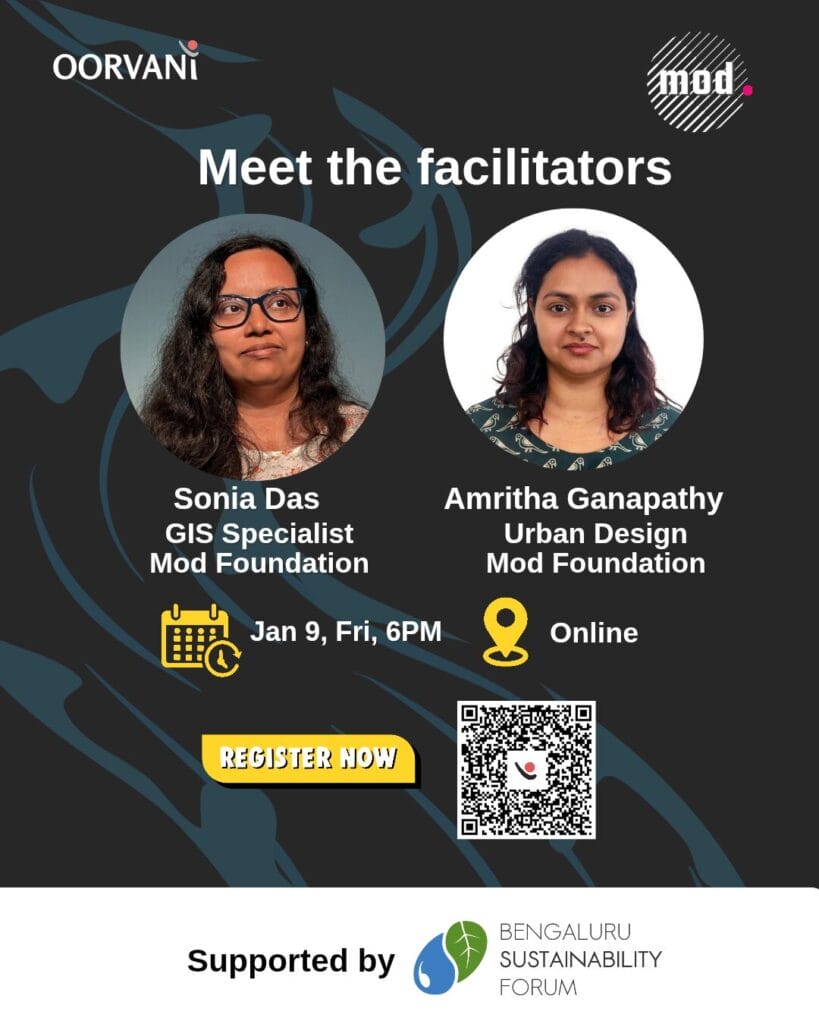
- Title: Masterclass: Citizens & Stormwater — Participatory audits for better cities
- Date: 09 Jan 2026
- Day: Friday
- Time: 6 PM
- Online event: Register https://forms.gle/tiQMrtyfYUohdX4Y7