In 2014, Srividhya didn’t imagine she would help dozens navigate through mental illness, consistently pushing them to reflect and dream of a better life. The 55-year-old’s routine involves shuttling between ten homes for the mentally ill run by The Banyan, a Chennai-based NGO, across Kovalam.
A long list of daily tasks ensues — attending to the mental health needs of service users, supervising hygiene, functioning, and vital signs, and noting medications, as well as participating in group discussions, among others. “When clients say they are glad I’m coming, it feels like a certification beyond money, pride and fame. It feels like a success and a miracle,” says the personal assistant to service users.
Over a decade ago, Srividhya found herself entangled in grief. Challenging life circumstances, dowry harassment, and the loss of both parents led her to an unrecognisable world. “Back then, I didn’t have a sense of my surroundings. After my mother died, I struggled for food, clothing and shelter. In June 2014, a neighbour called the Banyan staff, who picked me up. I didn’t want to go to their centre initially. But then with medicine, rest and vocational training, it felt like I could have a life and a future.”
In her journey, love, empathy, community and shelter were crucial, she says. “If we nurture resilience and believe in ourselves, there’s no problem we can’t solve,” she says. In her conversations with people living with mental illness, she encourages them towards recovery, eases their tension, and helps them reflect.
Srividhya’s journey reflects India’s mental healthcare system, how recovery is possible, and how lived experience remains marginal to policymaking. Recovery and resilience are at the centre of the Keshav Desiraju Lived Experience Repository, created by The Banyan and the Banyan Academy of Leadership in Mental Health (BALM). This archive, a mixture of physical books, films, podcasts and comics, was launched on December 6th. It curates and covers the journeys of those like Srividhya.
Most mental health professionals rely on handbooks such as the Diagnostic and Statistical Manual of Mental Disorders or the International Classification of Disease. But lived experience experts like Srividhya are crucial in forming a vocabulary of care, say experts and persons living with mental health issues. Assistants like Srividhya often help reframe care practices and highlight policy gaps.
According to a study in the academic journal The Lancet, lived experience is knowledge that comes from having first-hand experience of mental health challenges now or in the past. This is “invaluable in shaping mental health activities, including (and not limited to) better alignment with research priorities, enhanced intervention design, improved service delivery, implementation considerations, dissemination of interventions and study findings, and addressing crucial ethical and accessibility concerns,” notes the study.
Repository centring resilience, lived experiences
Around 10.6% of adults in India live with mental illnesses, and over 90% receive no formal treatment, according to the National Mental Health Survey (NMHS) 2015–16. However, data only shows part of the picture, often missing the impact of caste and gender on mental health.
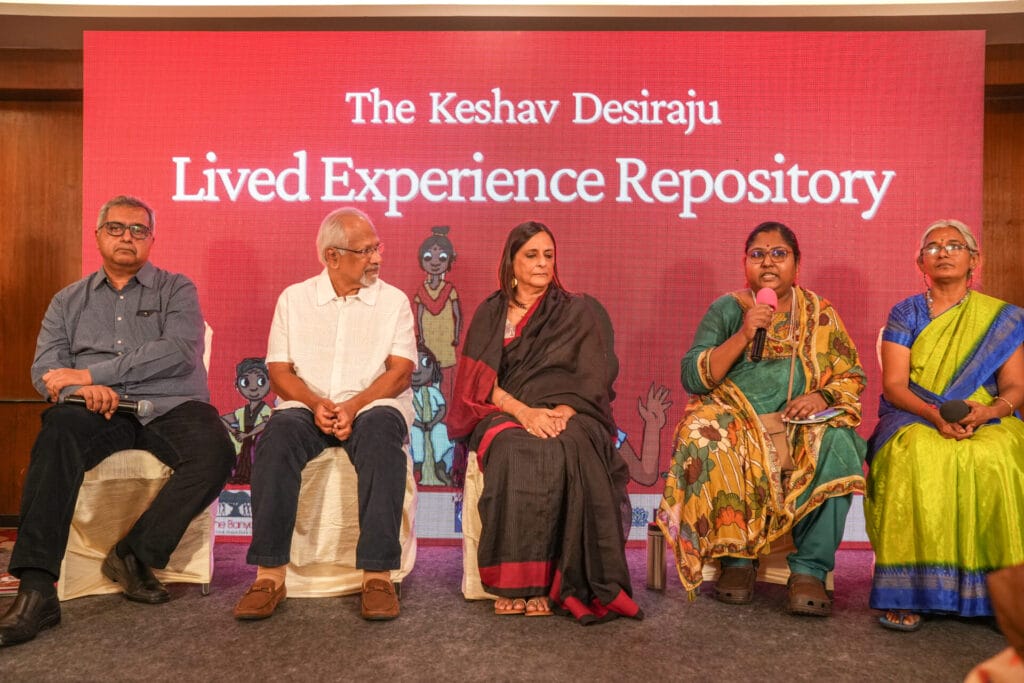
The repository—which has been over 10 years in the making—aims to centre voices from the margins, moving away from English-speaking, urban, homogenous experiences. “One of the goals of the repository is to present lived experience, as there are diverse ways in which people experience ‘madness’, experience life and emotions,” says Vandana Gopikumar, co-founder of The Banyan. The project currently includes three books and will soon expand to comics, podcasts, films and more. The archive was named after Keshav Desiraju, architect of the Mental Health Act and former Union Health Secretary.
These stories are crafted for those in search of wisdom, words of reassurance or messages of grit. It could answer a host of questions: How do people combat their personal turbulent times? How did they get through their challenges? What does the word ‘recovery’ mean to many?
Read more: Expenses, social stigma deter urban poor in Chennai from seeking mental health care
Removing stigma and labels
Moreover, modern psychiatric care often traces back to asylums and treatment methods. Sifting through the archival records from the Madras Presidency, Lakshmi Narasimhan, a mental health researcher and practitioner, flags how the medical world has focused on categorising and labelling people. “What is actually missing is the person themselves talking about their story or even some sense of a clinician having written from the person’s perspective.”
Beyond this, this walking, talking knowledge repository shows that mental illness can happen to anyone regardless of age, gender, or socio-economic status, says Kavipriya, a lived experience researcher and junior research associate at BALM. “It removes fear and stigma, while normalising treatment. Not everyone may recover in a conventional sense, but people can still lead a life of dignity,” she says, adding her journey from service user to someone who now speaks to others has been empowering.
Reframing care, out-of-the-box solutions
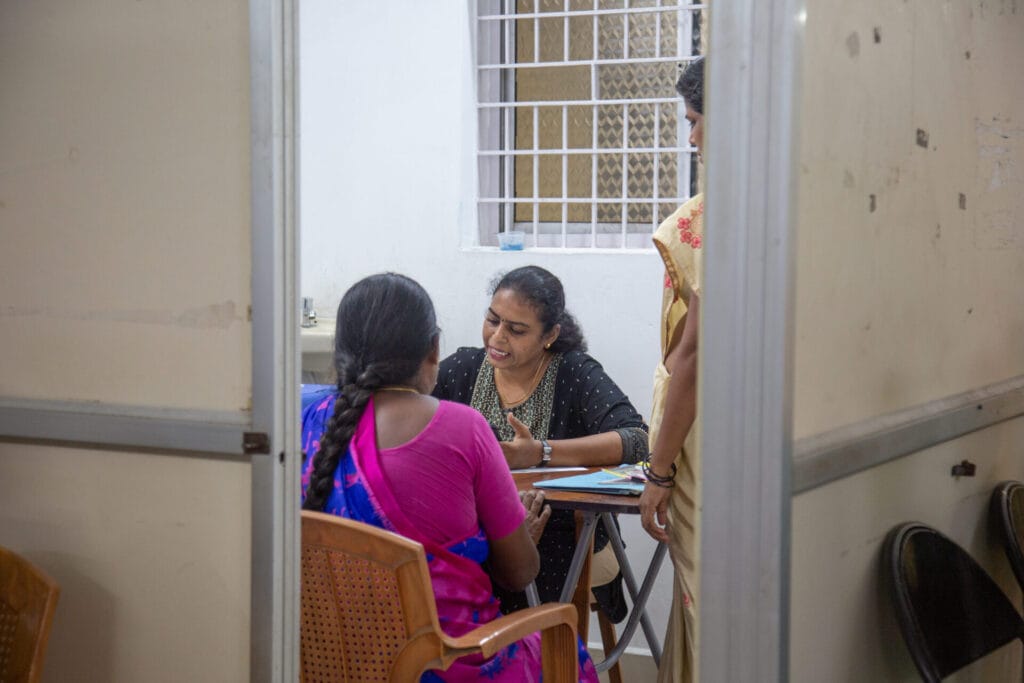
Often, stories of mental health chronicle suffering and trauma, but what if they centred humour or resilience or adaptive methods? ‘Waggy Tails’ by Arundhati Sathish, part of the repository, begins with how an indie dog, Meenakshi, entered her family’s life, bringing “light in our dark.”
The 16-year-old’s series follows the lives of dogs in the Banyan, spotlighting how they were a part of the Banyan community and played a crucial role in helping people with mental illness. “In a way having the dogs around lifts a certain load off the heavy atmosphere. The dogs bring lightness and joy to the lives of those caring for them or around them, which is very important and aids their recovery.”
“Such repositories flag to policymakers and people in power what exactly the challenges are and what people can achieve when they have the right kind of support. When we often design interventions or come up with frameworks and systems to help people with lived experience, we need them to tell us whether it will work or not,” says Lakshmi Venkatraman, psychiatrist and assistant director of psychosocial rehabilitation at Schizophrenic Research Foundation (SCARF).
First-hand experience helps design policies for on the ground and not limit it to theory, says Kavipriya. It has often changed standard operating policies and shaped policy at The Banyan. For instance, the homes removed a locked ward system and removed a policy that separated children and mothers with mental health conditions or situations of street precarity, after listening to service user’s feedback.
Tips for mental health professionals:
- Listen empathetically. Consider inputs from lived experience experts to frame policy.
- Have open dialogues and share models across institutions.
- Dismantle hierarchies.

Instilling hope, focusing on acceptance
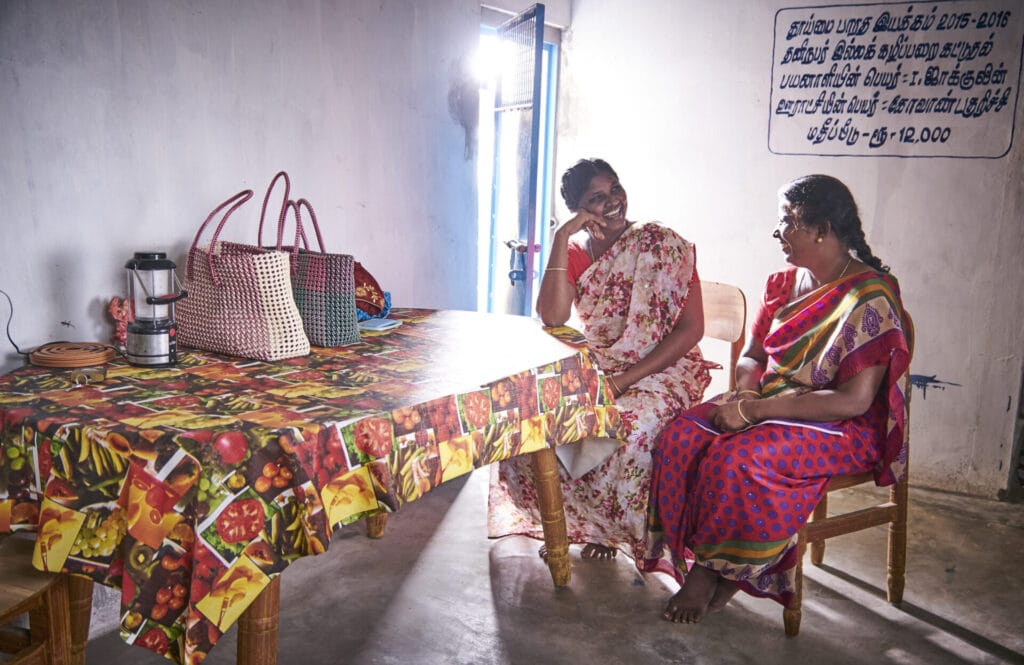
“Let our story be evidence that there are people—thousands of them, including us—waiting to…accept you wholly, and stand by you marvelling as you bloom,” says the foreword in the book, Jacklin and Amali, penned by Regha Jha, published in the archive. This story chronicles two sisters as they navigate mental health challenges and eventually start Home Again, a centre for women in Tiruchirapalli.
For Amali Margaret, who is featured in the book, good and bad memories rush in when she sees this hardcover. “Usually, we see books about Kamaraj and Ambedkar, and they have the power of carrying our words even in a world after us.”
To carry these words to more worlds and reduce stigma, Vandana suggests that the government can use public spaces and state buildings to showcase these stories.
To provide more holistic care, experts and stakeholders demand:
- Livelihood opportunities for people who live with mental illness, and reasonable accommodations, such as fewer hours at work.
- Social welfare benefits such as cash transfers, ration cards, Aadhaar cards, and housing for service users.
- Localised mental health interventions and responses that move beyond broad central policies.
- Prioritisation of small integrated homes instead of large institutions.
- Appointment of counsellors to create safe spaces in schools and provide support to youth.
For more information on the archive, or to access this archive, citizens can reach out to ashok.kumar@thebanyan.org