Till about a year back, many residents of Jayanagar used to be troubled by the spot adjacent to 3rd Block post office being used as a public urinal. Even though there is a Nirmala Shouchalaya right next to it, people would relieve themselves right in the open, as they were unwilling to shell out a rupee to use the clean facility next door. Many commercial establishments like fast food joints, garment stores, offices, grocers, chemists etc. are located within a few yards of this place.
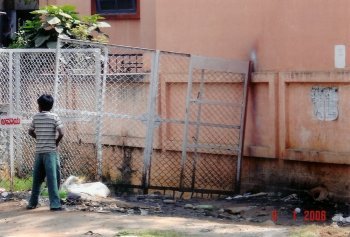
Before: a public nuisance (pic: Hamsa)
This is typical of many places in Bangalore; yet typical public apathy prevents most of us from complaining to the authorities about such stinking roadside urinals.
I felt that something must be done about it and talked to various people – residents, shop owners and even big firms who had their offices close by. I was disappointed to find no support from anybody. It is a shame that we seem to have lost our sense of hygiene and cleanliness. I even contacted a global pizza chain and a global financial services provider, both situated right opposite to this spot – they were curt and totally disregarded the issue.
I wrote to a local neighbourhood newspaper about it. I received just one reply to the letter – from Dr. Purushottam (ENT Specialist from Jayanagar 4th T block) who offered to donate money. With the help of a nearby shop owner, I managed to get the place fenced and planted a few saplings. Neighbours were not even ready to spare a few buckets of water for the plants that we have planted.
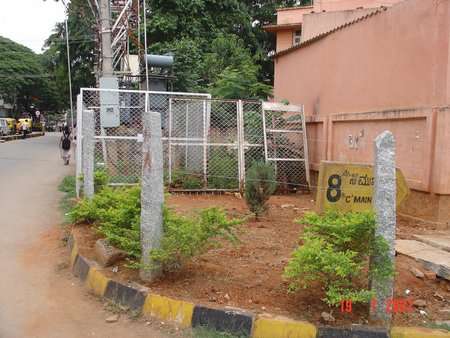
After: Clean Park (pic: Hamsa)
Now the plants are doing well. The park presents a pleasing picture to all neighbours and passersby. We Bangaloreans need to realize our civic duties. People should not think the government is somebody sitting in Vidhan Soudha. Instead of sitting quietly and blaming the government, we can start taking necessary steps to correct small problems around us. We have to start treating our city like our own house.
What an inspiration! This was a very proactive approach. As Hamsa rightly pointed out, we can all take small, baby steps to address the issues around us. Also, the local civic bodies will be compelled to take action when they see such passionate volunteers. Hats off !!