Air quality dips in city; Andheri in ‘poor’ category
Mumbai’s air quality deteriorated on Monday and fell under the ‘moderate’ category on with Air Quality Index at 149, according to System of Air Quality Forecast and Research (SAFAR). It remained in moderate zone until Thursday, as the city recorded an AQI of 152.
An AQI between 201 and 300 is considered ‘poor’, 301-400 ‘very poor’ and 401-500 ‘severe’, while the AQI between zero and 50 is considered ‘good’, between 51 and 100 ‘satisfactory’ and between 101 and 200 is ‘moderate’. Within the city, on Thursday, the data showed Worli’s AQI as 45 and BKC’s AQI as 93. Mazagaon’s AQI and Andheri’s AQI continued to stay in the ‘poor’ category at 204 and 211, respectively.
Source: Mid-Day
First 24-hour facility for cardiac arrest sufferers at KEM
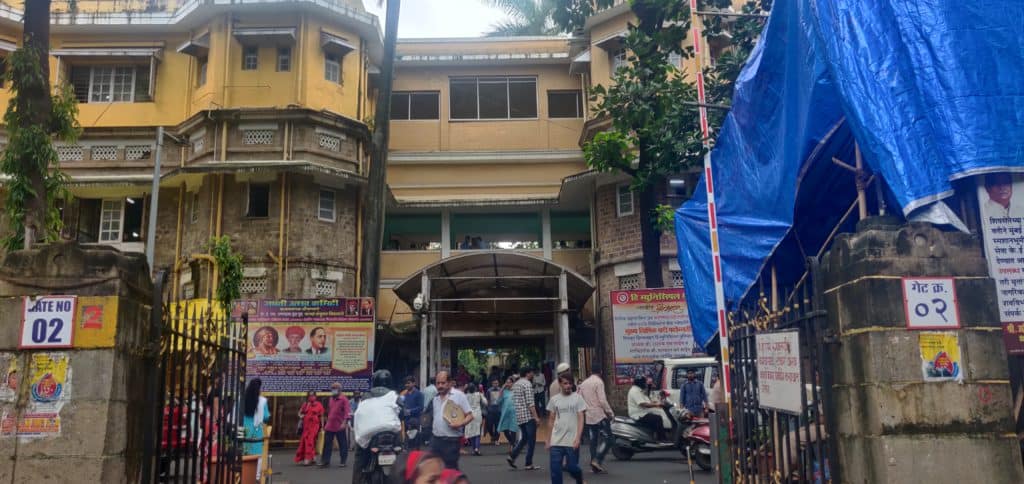
King Edward Memorial (KEM) Hospital plans to start a 24-hour facility for patients sufferring cardiac arrest, to avoid fatalities caused due to time delays. The hospital will be providing angioplasty to these patients on priority.
The announcement has made KEM the first public hospital in the city to provide this service. Brihanmumbai Municipal Corporation (BMC) officials said that the centre at the hospital will even allow people to share their electrocardiogram (ECG) reports with the doctors through WhatsApp. The patient would be brought to the facility once the doctors are sure that the they need the angioplasty.
Source: Hindustan Times
Read more: A look inside BMC’s non-communicable disease screening centres
Think-tank report suggests poor handling of COVID orphans
A survey titled ‘Vulnerable Children of Maharashtra’ by Vidhi Centre for Legal Policy, an independent think tank, examined governance responses to children orphaned because of COVID-19 in the state and interviewed authorities and institutions under the Juvenile Justice Act to understand the implementation of support measures. The survey found that although the government was quick to track and offer financial assistance to orphans, just a blanket set of schemes were not enough.
According to data from the Ministry of Women and Child Development released in February this year, out of nearly 10,386 children who lost their parents to the virus, as many as 718 are from Maharashtra. The state is amongst the top five with the highest number of children orphaned in the two years of the pandemic.
Source: The Times of India
BEST ridership increases in Mumbai
More and more people have started using city buses for daily commute as data shows that the number of passengers per bus per day has gone over 1,000, with an average of 58 commuters per trip daily. Ridership on a little over 3,600 BEST buses has been growing fast and is now more than 35 lakh.
Transport experts believe this is because there has been a migration from taxis to buses as the fares have reduced, and there is also more comfort and convenience for commuters with new AC electric buses. This has resulted in an increase in the number of commuters per bus lately.
Source: The Times of India
200 four-wheeler passengers pay Rs 200 for flouting seatbelt rule
On November 1, Traffic police started enforcement of the new rule that makes seatbelts mandatory for all the passengers travelling in a four wheeler. More than 200 passengers were caught flouting the rule and were issued challans the first day. The fine amount is Rs 200.
The authorities are also conducting an awareness drive alongside. As per media reports, 204 challans were issued in south and central Mumbai. Of these, 36 challans — the highest among the different divisions — were issued by the Worli traffic division, followed by Dongri traffic division. No challans were issued by Dadar and MRA Marg traffic divisions.
Source: The Times of India
[Compiled by Eshan Kalyanikar]