In view of rising COVID cases, on April 2, the Karnataka State Disaster Management Authority (SDMA) issued an order imposing restrictions in public spaces.
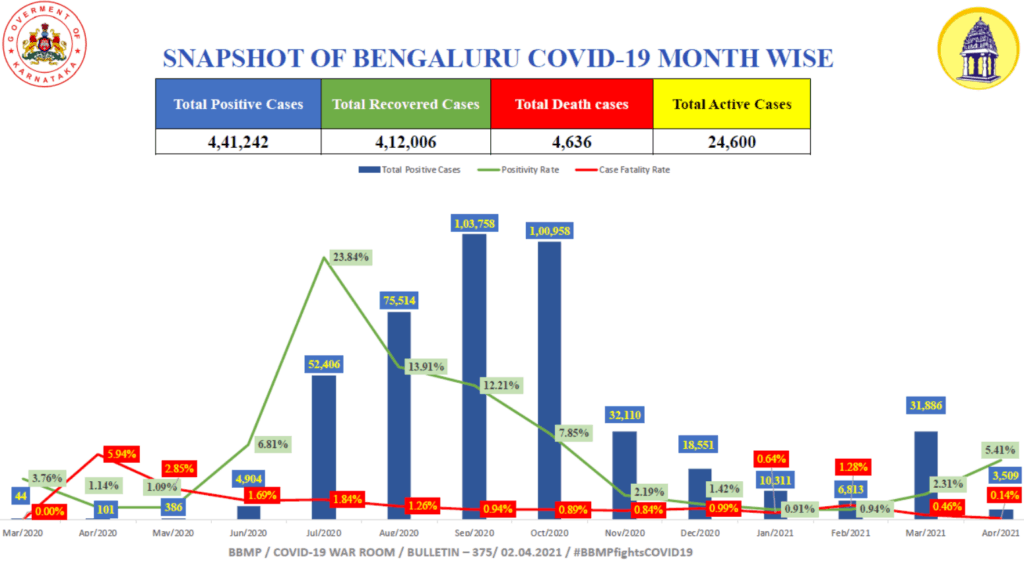
The situation of COVID in Karnataka has been reviewed and it has been observed that there has been a persistent rise in the number of COVID cases in the State during the last month, the order said. Further, a large number of social, religious and public gatherings like marriages, political rallies are being witnessed in which COVID appropriate behaviour is not being followed which may cause a setback in the appreciable gains made in the suppression of the chain of transmission of COVID cases in Karnataka.
Read more: BBMP stepping up fight against second wave
Exercising powers conferred under Section 22 of the Disaster Management Act, 2005, the State Executive Committee, SDMA, directed BBMP Commissioner, Deputy Commissioners, and all authorities concerned to ensure that a list of restrictions be enforced, along with the observance of COVID appropriate behaviour, it said.
The restrictions imposed are:
- Classes 6 to 9 including Vidyagama shall be suspended. Classes 10, 11 and 12 can continue in the existing mode. However, attendance to these classes in person is not mandatory.
- Classes of higher & professional courses shall be suspended, except classes due for Board/University examinations and of Health Sciences.
- Boarding schools and residential hostels shall be closed, except for the students of classes 10, 11, 12 and for students of higher and professional courses appearing in Board/University examination and Health Sciences.
- In the places of worships individuals are permitted to visit and offer prayers only. There shall be no gatherings, functions, etc.
- In Apartment complexes, the common facilities like gym, party hall, club house, swimming pool, etc shall remain closed.
- Gym and Swimming Pools shall remain closed.
- Rallies, dharnas, etc for any reason shall be prohibited.
- Number of persons in public transport, shall not exceed the seating capacity.
- The practice of work from home shall be followed in offices and work places as far as possible.
- In cinema halls, alternate seating subject to a maximum of 50per cent seating capacity only shall be allowed in the districts of Bengaluru Urban and Rural including BBMP, Mysuru, Kalburgi, Dakshin Kannada, Udupi, Bidar and Dharwad. Strict COVID Appropriate Behavior (CAB) like ensuring wearing of masks, physical distancing, provision of hand sanitizer/hand wash shall be enforced.
- In the districts of Bengaluru Urban & Rural including BBMP, Mysuru, Kalburgi, Dakshin Kannada, Udupi, Bidar and Hubali-Dharwad, the number of customers in pubs, bars, clubs, restaurants shall not exceed 50 per cent of the capacity.
- COVID Appropriate Behavior (CAB) like ensuring wearing of a mask, physical distancing provision of hand sanitiser/hand wash shall be enforced. If there is any violation in pubs, bars, clubs, restaurants, the facility shall be closed till the COVID epidemic is over.
- In shopping malls, closed markets, departmental stores, etc strict enforcement of COVID Appropriate Behavior (CAB) like ensuring wearing of masks, physical distancing, provision of hand sanitiser/hand wash shall be enforced. If there is any violation, the facility shall be closed till the COVID epidemic is over.
- The restrictions on public gatherings and congregations during religious festivals and jathras/fairs shall continue.
- The number of persons permitted for different activities will continue as per the circular issued on March 12, 2021.
- The existing regulations/orders regarding wearing masks and maintaining physical distancing in public places shall be strictly implemented by the police authorities and local bodies.
Read more: It isn’t over: Bengaluru’s fight and the pandemic
In case any person is found violating the aforesaid instructions, the defaulting person(s) shall be proceeded against as per the provisions of section 51 to 60 of Disaster Management Act, 2005, Section 188 of IPC and Section 4, 5 and 10 of the Karnataka Epidemic Diseases Act, 2020.
The above restrictions and prohibitions will be in effect till April 20, 2021.
[This article is based on an order issued by the Executive Committee of the State Disaster Management Authority (SDMA) dated April 2, 2021, and has been published with minimal edits.]
Also Read: